Introduction
Human Resources has evolved far beyond administrative paperwork and hiring processes. Modern HR departments are responsible for attracting talent, improving employee experiences, supporting workforce development, and helping organizations achieve strategic goals.
Artificial Intelligence is helping HR teams become more efficient by automating repetitive tasks, improving hiring decisions, analyzing workforce trends, and enhancing employee engagement.
Organizations that successfully integrate AI into HR can improve productivity while creating better experiences for both employees and job candidates.
To understand how AI supports organizations across departments, start with our AI in Business guide.
Why AI Is Becoming Important in HR
Managing a growing workforce can be complex and time consuming.
HR professionals often handle:
• Recruitment
• Employee onboarding
• Performance reviews
• Training programs
• Workforce planning
AI helps automate many of these activities while providing valuable insights that support better decision making.
According to Artificial Intelligence for Business, workforce management remains a major area of AI adoption across industries.
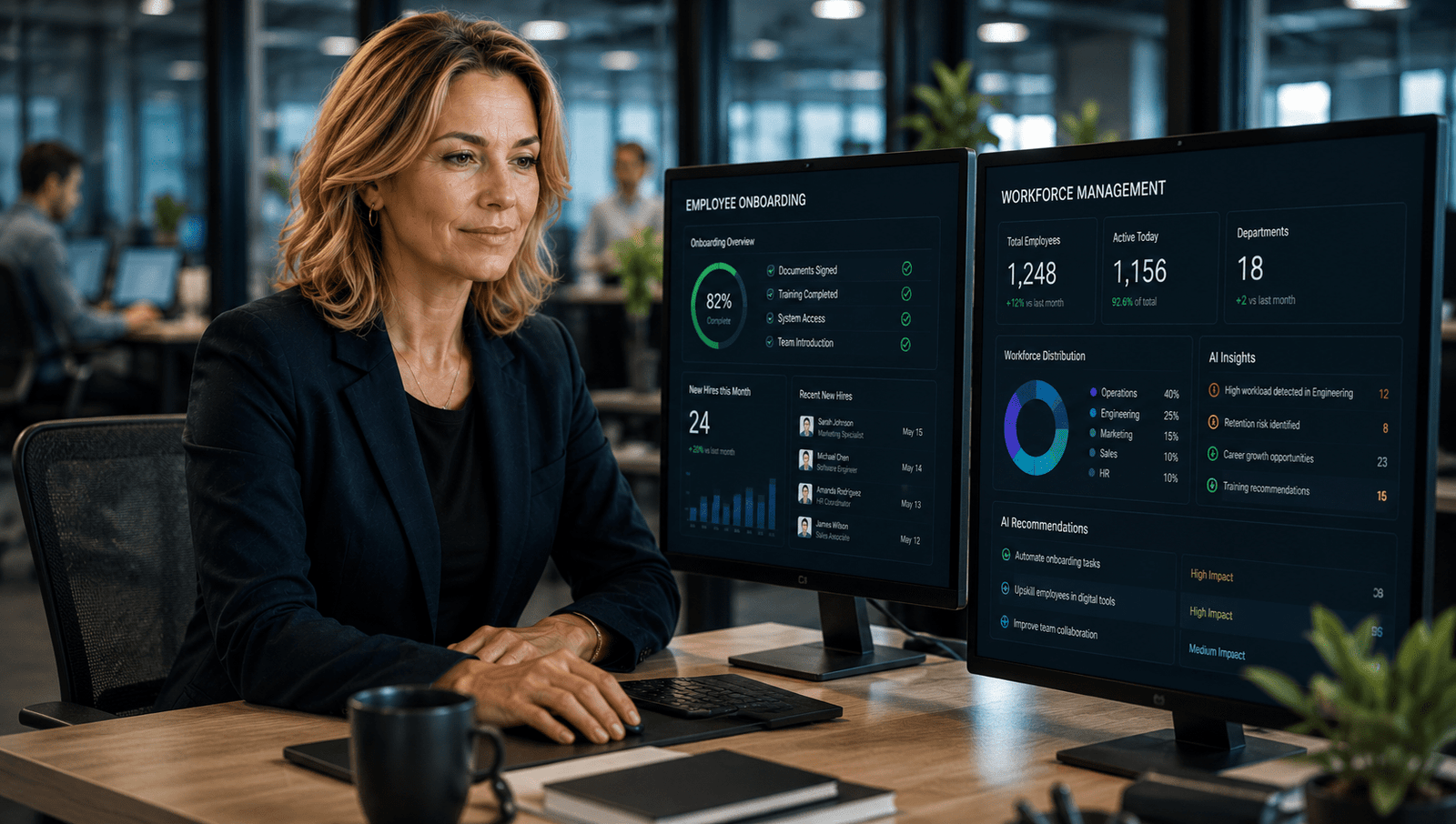
1. AI in Recruitment
Recruitment is one of the most common HR applications of artificial intelligence.
AI can help organizations:
• Screen resumes
• Match candidates to jobs
• Identify qualified applicants
• Reduce hiring time
This allows recruiters to focus on building relationships and evaluating top candidates.
Benefits of AI Recruitment
• Faster hiring processes
• Improved candidate matching
• Reduced administrative workload
• Better recruitment efficiency
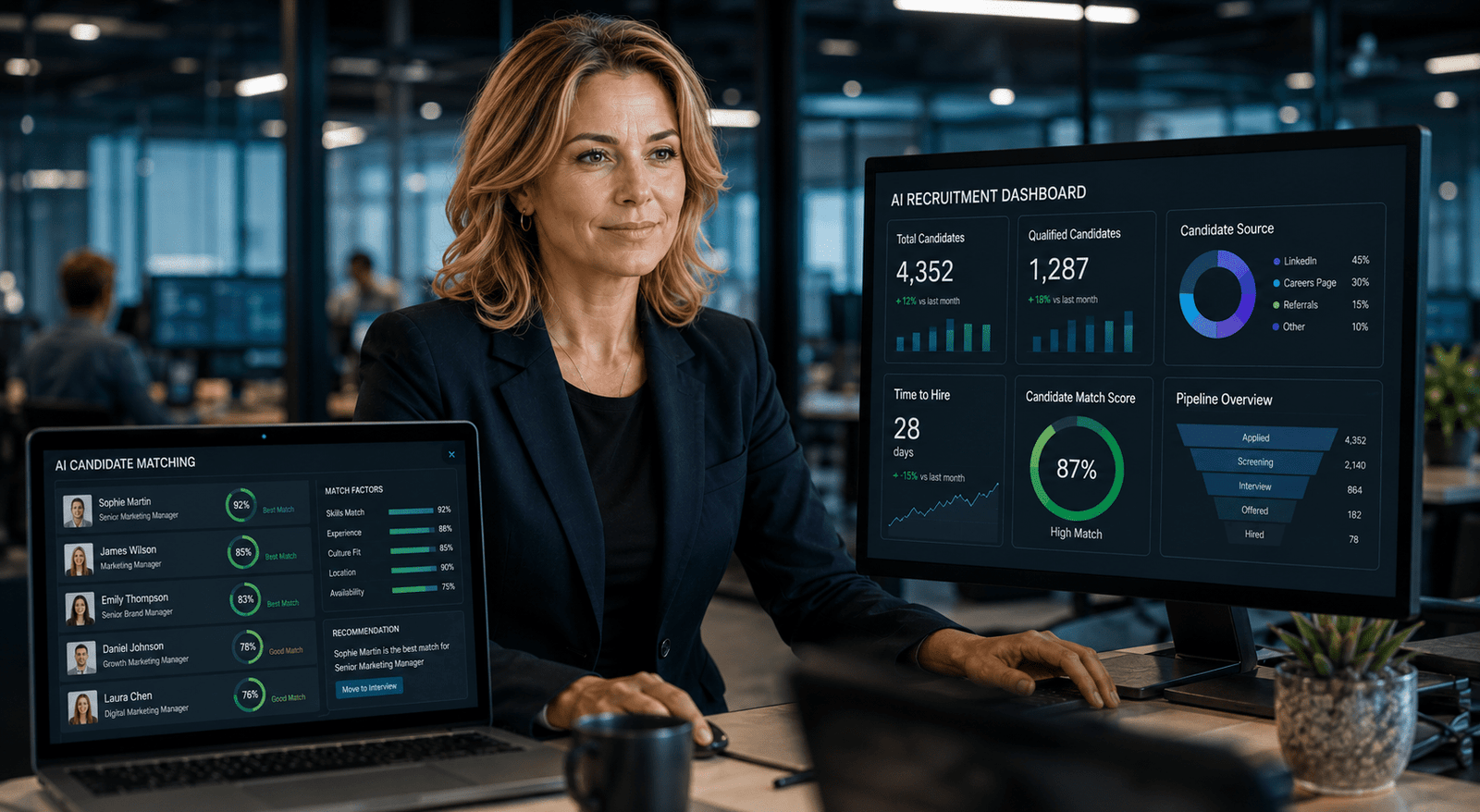
2. AI Powered Candidate Screening
Many organizations receive hundreds or even thousands of job applications.
AI systems can analyze resumes and identify candidates whose qualifications best match job requirements.
This significantly reduces manual screening time.
3. Employee Onboarding Automation
AI can improve onboarding experiences by helping new employees access information, complete training, and navigate company processes.
AI powered assistants can answer common questions and guide employees through onboarding steps.
4. Workforce Analytics
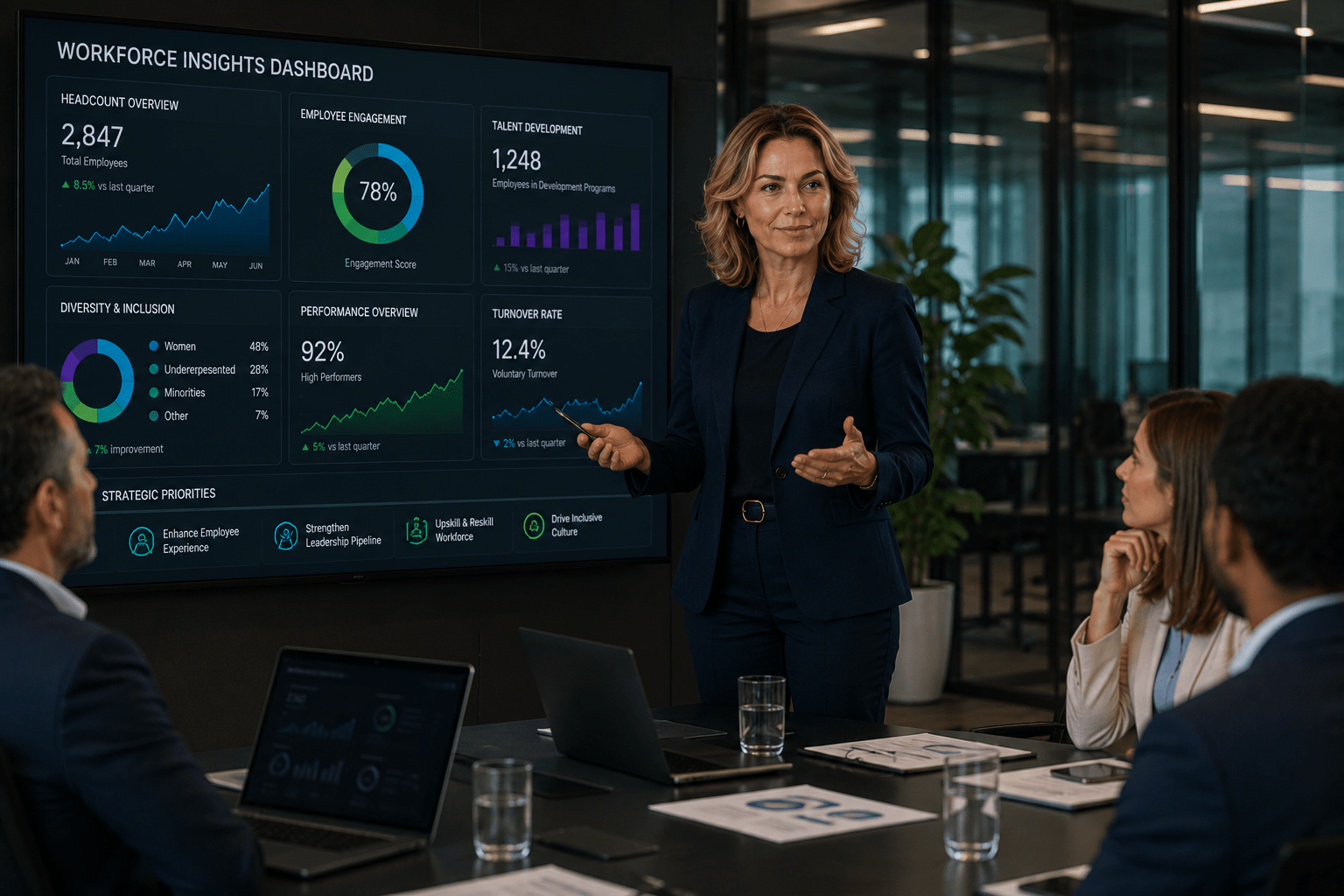
AI helps HR leaders analyze workforce data and identify trends that influence organizational performance.
Examples include:
• Employee turnover patterns
• Workforce productivity trends
• Training effectiveness
• Employee satisfaction
These insights support more informed HR strategies.
Research from Google AI highlights the growing role of analytics in workforce management and organizational decision making.
5. Employee Engagement
Employee engagement has become a major priority for organizations.
AI can help identify factors that influence engagement and recommend improvements that support employee satisfaction and retention.
6. Performance Management
AI powered performance management systems can help organizations:
• Track employee goals
• Monitor performance trends
• Identify development opportunities
• Support career growth
This helps employees and organizations achieve better outcomes.
7. Training and Development
AI is increasingly used to personalize learning experiences.
Employees can receive customized training recommendations based on their roles, skills, and career objectives.
Organizations using modern workforce technologies often combine them with the Best AI Tools in 2026 to improve efficiency and productivity.
Benefits of AI in Human Resources
Improved Hiring Efficiency
AI accelerates recruitment and candidate evaluation.
Better Workforce Insights
Organizations gain access to valuable workforce data.
Enhanced Employee Experience
Employees receive more personalized support and development opportunities.
Increased Productivity
Automation reduces administrative workload.
Better Strategic Decision Making
HR leaders can make data driven workforce decisions.
Challenges of AI in HR
Data Privacy
Employee information must be handled responsibly.
Bias in Algorithms
AI systems must be carefully designed to avoid unfair outcomes.
Employee Trust
Organizations should communicate clearly about AI usage.
Technology Adoption
Teams may require training and support.
Organizations continue developing standards for responsible artificial intelligence and ethical workforce management.
AI in HR for Small Businesses
AI is not only useful for large enterprises.
Many smaller organizations are adopting AI tools to improve recruitment, onboarding, and workforce management.
Business owners interested in practical AI adoption should also explore our AI for Small Business guide.
Frequently Asked Questions
Can AI replace HR professionals?
No. AI supports HR teams by automating tasks and providing insights, but human judgment remains essential.
What is the biggest benefit of AI in HR?
Improved recruitment efficiency and better workforce decision making.
Can small businesses use AI in HR?
Yes. Many affordable HR technologies are available for businesses of all sizes.
Is AI recruitment accurate?
AI can improve efficiency, but organizations should always include human review in hiring decisions.
Conclusion
Artificial Intelligence is transforming Human Resources by improving recruitment, workforce analytics, employee engagement, training, and performance management.
Organizations that combine AI technologies with human expertise can build stronger teams, improve employee experiences, and make more informed workforce decisions.