
Introduction
In our fast-paced world, many people are looking for sustainable ways to improve their health and live longer. One of the best-known approaches is the Blue Zone Diet, a nutritional model inspired by communities around the world where people consistently live longer and healthier lives.
The concept gained worldwide recognition through the research of Dan Buettner and the popular documentary “Live to 100: Secrets of the Blue Zones.” These studies identified several regions with exceptionally high life expectancies and examined the lifestyle habits that contribute to healthy aging.
What are Blue Zones?
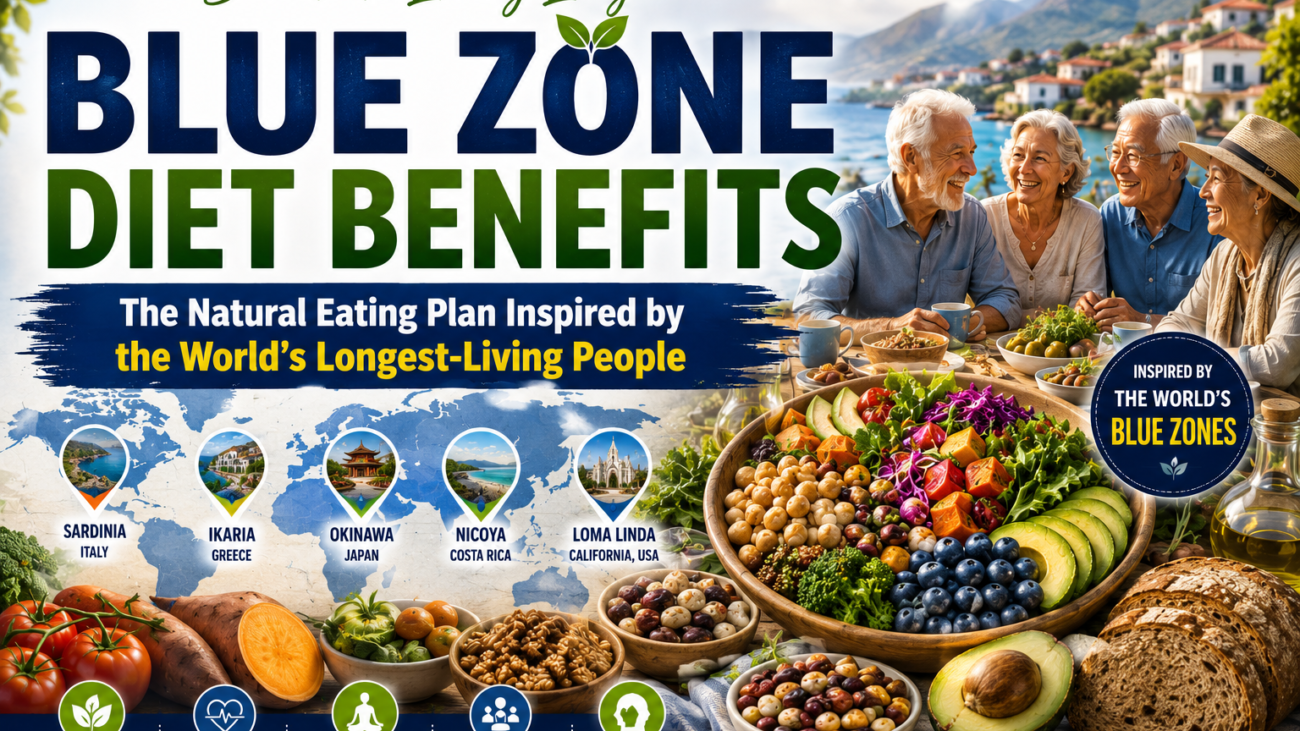
Blue Zones are regions of the world where people have an unusually high life expectancy and are more likely to live beyond 100 years of age. The five recognized Blue Zones are:
Sardinia, Italy
Okinawa, Japan
Ikaria, Greece
Nicoya Peninsula, Costa Rica
Loma Linda, California
Researchers have found that despite cultural differences, these communities share many common lifestyle habits, including similar dietary patterns that promote long-term health and longevity.
What is the Blue Zone Diet?
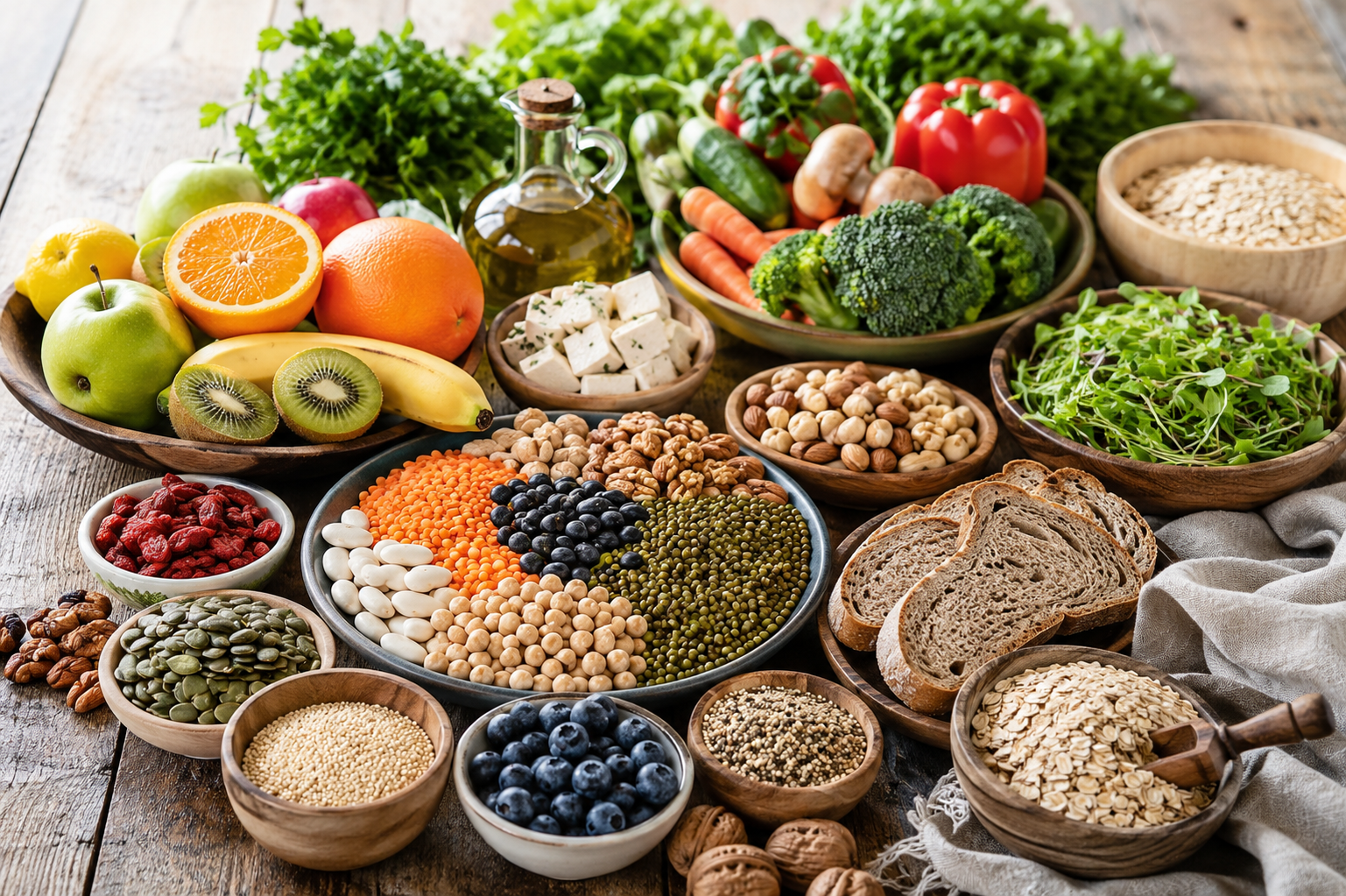
The Blue Zone Diet is a predominantly plant-based diet that favors whole, minimally processed foods. Approximately 95 percent of the diet consists of vegetables, fruits, legumes, whole grains, nuts, and seeds.
Instead of focusing on strict rules or calorie counting, the diet promotes balanced nutrition, mindful eating, and sustainable lifestyle habits.
Key Principles of the Blue Zone Diet
1. Prioritize Plant-Based Foods
Vegetables, fruits, legumes, and whole grains form the foundation of the Blue Zone Diet. These foods are rich in vitamins, minerals, antioxidants, and fiber, all of which contribute to better overall health and disease prevention.
2. Eat Beans Daily
Beans are among the most important foods in the so-called Blue Zones. Common varieties include:
Lentils
Chickpeas
Black Beans
White Beans
Soybeans
Regular bean consumption provides valuable plant-based protein, fiber, and essential nutrients.
3. Include Nuts in Your Daily Diet
Inhabitants of the Blue Zones regularly consume nuts. Recommended varieties include:
Almonds
Walnuts
Cashews
Brazil Nuts
Nuts provide healthy fats, protein, vitamins, and minerals that promote heart health and overall well-being.
4. Choose Whole Grains
Whole grains are preferable to refined grain products. Common foods include:
Oatmeal
Barley
Brown rice
Quinoa
Whole-wheat pasta
Sourdough bread
Sourdough bread is especially popular in some Blue Zones because it has a lower glycemic index and is easier to digest.
5. Eat Mindfully
A well-known principle from Okinawa, called Hara Hachi Bu, recommends stopping eating when you are about 80 percent full. This prevents overeating and supports healthy weight management.
6. Eat Earlier in the Day
Many communities in the Blue Zones eat their last meal in the late afternoon or early evening. This habit can promote digestion, metabolism, and overall well-being.
Typical Foods of the Blue Zone Diet
Vegetables
Kale
Spinach
Swiss Chard
Kale Leaves
Sweet Potatoes
Potatoes
Fruit
Blueberries
Cherries
Grapes
Melons
Avocados
Plant Proteins
Tofu
Beans
Peas
Lentils
Nuts
Whole Grains
Oatmeal
Brown Rice
Quinoa
Barley
Whole Wheat Bread
Drinks
Water
Tea
Coffee
Wine in Moderation
Foods to Avoid
The Blue Zone Diet advises against frequent consumption of highly processed and nutrient-poor foods, including:
Refined bread and pastries
Cakes, cookies, and donuts
Fast food
Processed snacks
Sugary drinks
Processed meats
Foods high in saturated fat
Reducing these foods can help lower the risk of obesity, diabetes, cardiovascular disease, and other chronic illnesses.

Sample Blue Zone Meal Plan
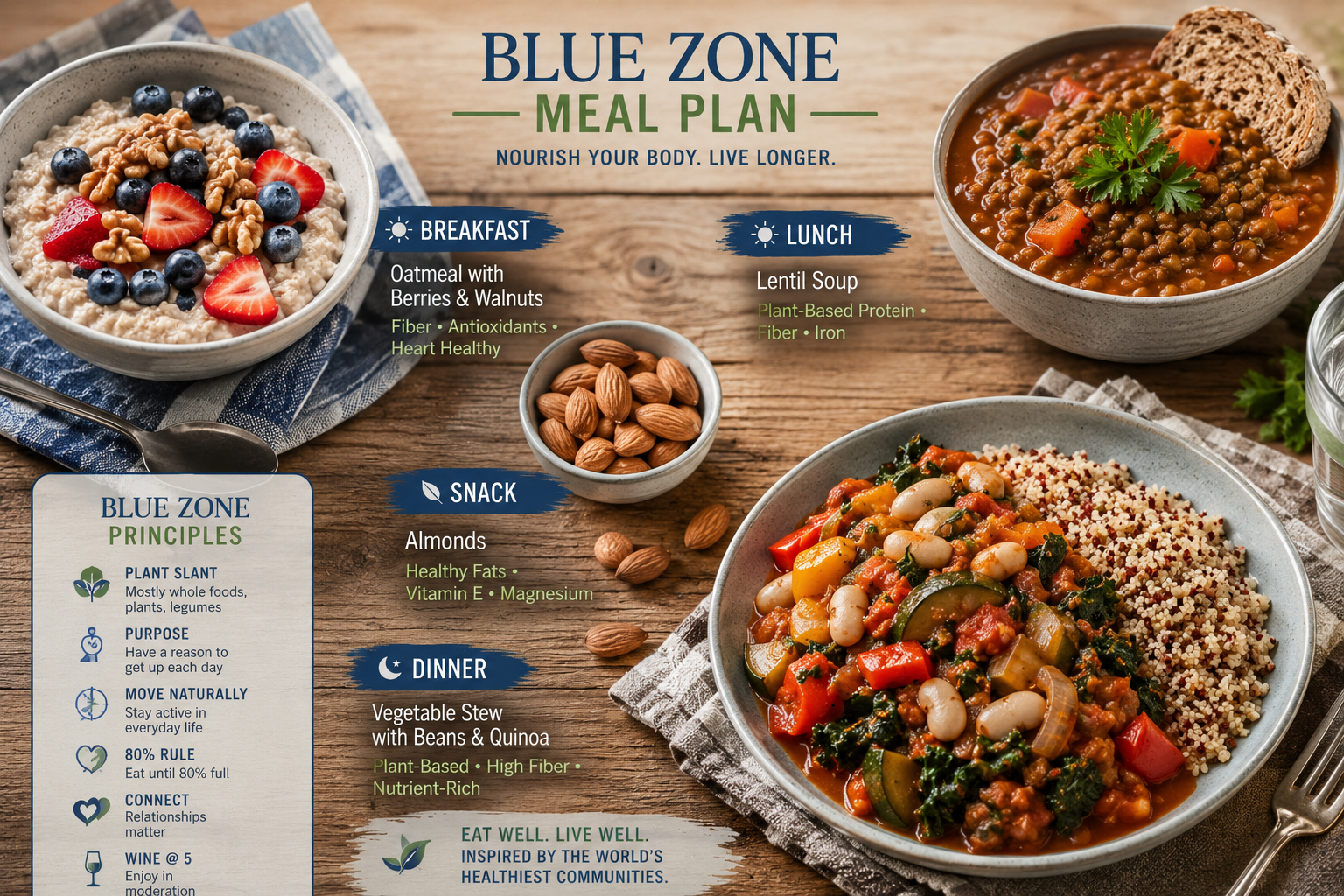
Breakfast
Oatmeal with fresh berries and walnuts, accompanied by tea or coffee.
Lunch
Lentil soup with a mixed salad and a slice of sourdough bread.
Snack
A handful of almonds and a piece of seasonal fruit.
Dinner
Vegetable stew with beans, served with brown rice or quinoa.
Is the Blue Zone Diet Scientifically Proven?
While research on Blue Zone populations provides valuable insights, experts caution that longevity cannot be attributed solely to diet. The available evidence is primarily observational, meaning it reveals correlations but not direct causation.
In addition to a healthy diet, Blue Zone residents typically cultivate the following characteristics:
Regular physical activity
Strong social connections
Good sleep
Effective stress management
A clear sense of purpose
These lifestyle factors likely contribute collectively to long-term health and longevity.

Conclusion
Eating according to Blue Zone principles is not a temporary diet but a sustainable approach to healthy living. By emphasizing whole, plant-based foods and mindful eating habits, it offers a practical framework for improving overall health and reducing the risk of chronic diseases.
While no single diet can guarantee a longer life, applying the principles used in the Blue Zones can help people enjoy better health, greater vitality, and a higher quality of life as they age.