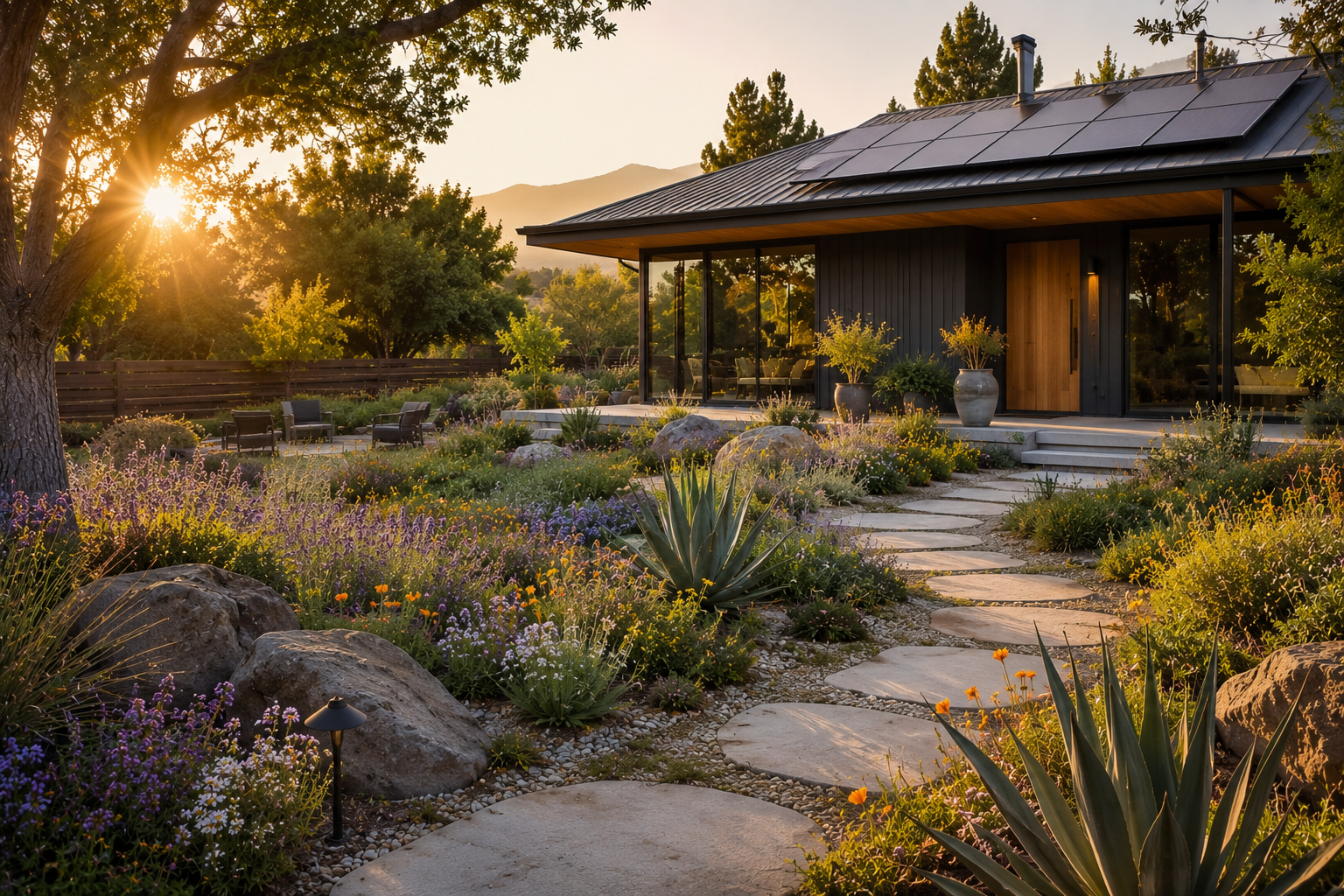
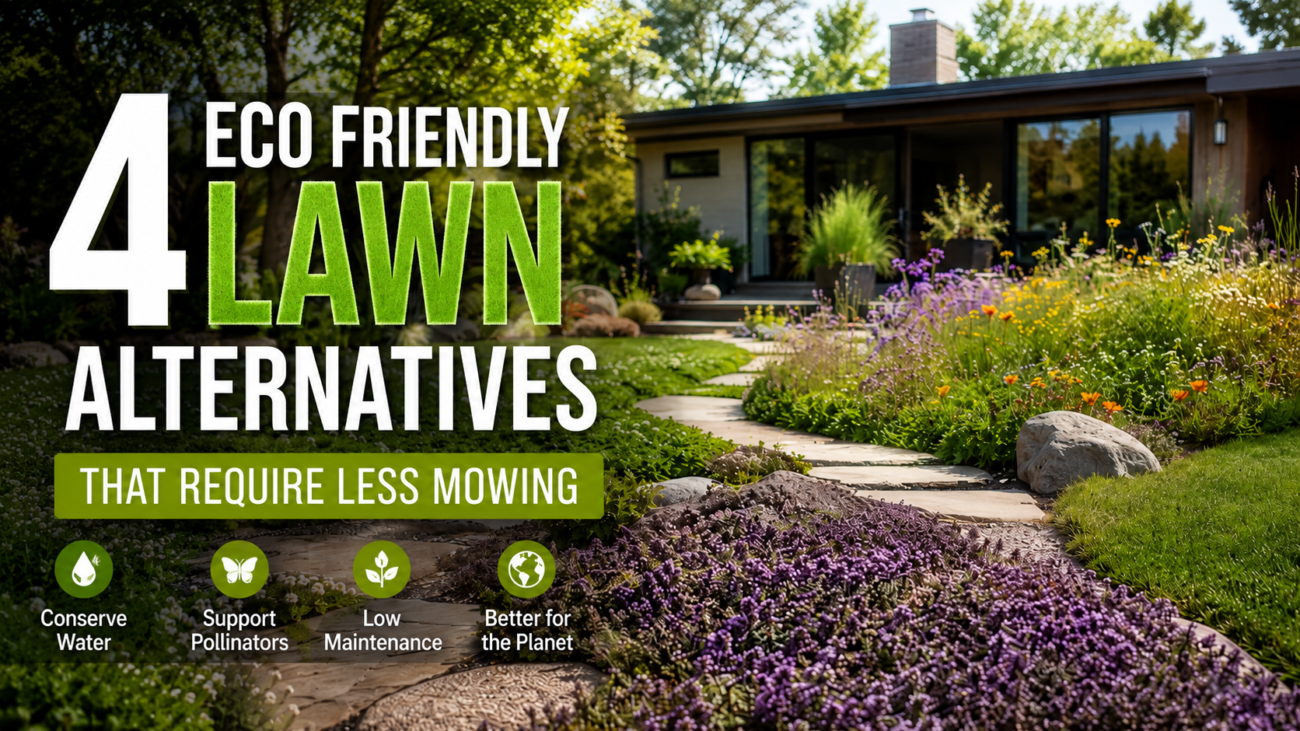
Most homeowners think a lawn is the easiest way to keep their garden looking well-maintained. In reality, however, the perfect green oasis requires constant mowing, watering, fertilizing, and upkeep. Especially in hot, dry climates, a conventional lawn can become expensive, as maintenance requires even more time and resources.
Fortunately, more and more homeowners are discovering an alternative: the low-maintenance lawn. Instead of relying on thirsty grass, these gardens utilize low-maintenance plants that remain attractive with significantly less effort. With increasing heat waves, droughts, and global biodiversity loss, more and more people are rethinking the traditional lawn and replacing it with sustainable alternatives.
Why Conventional Lawns Are Harmful to the Environment
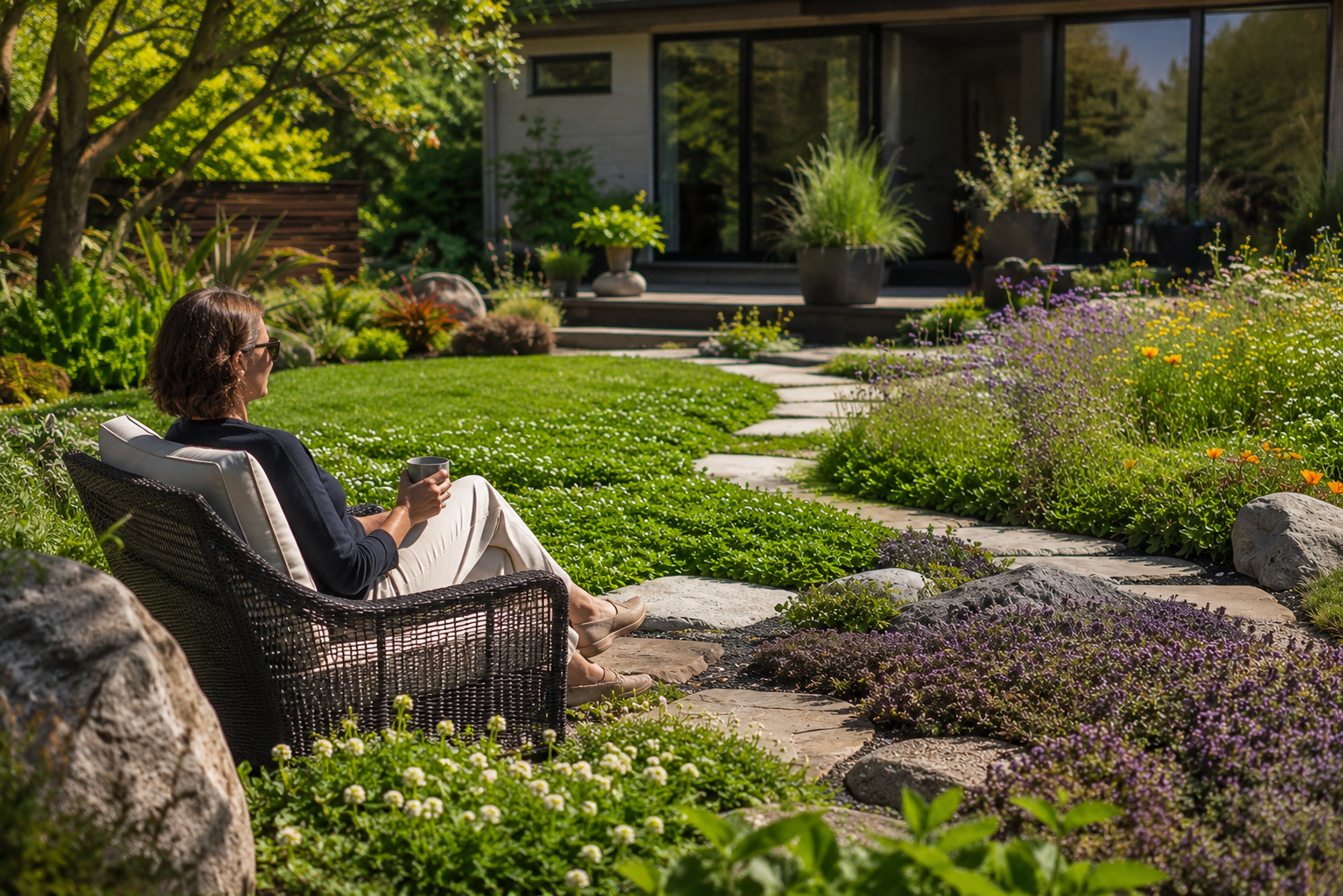
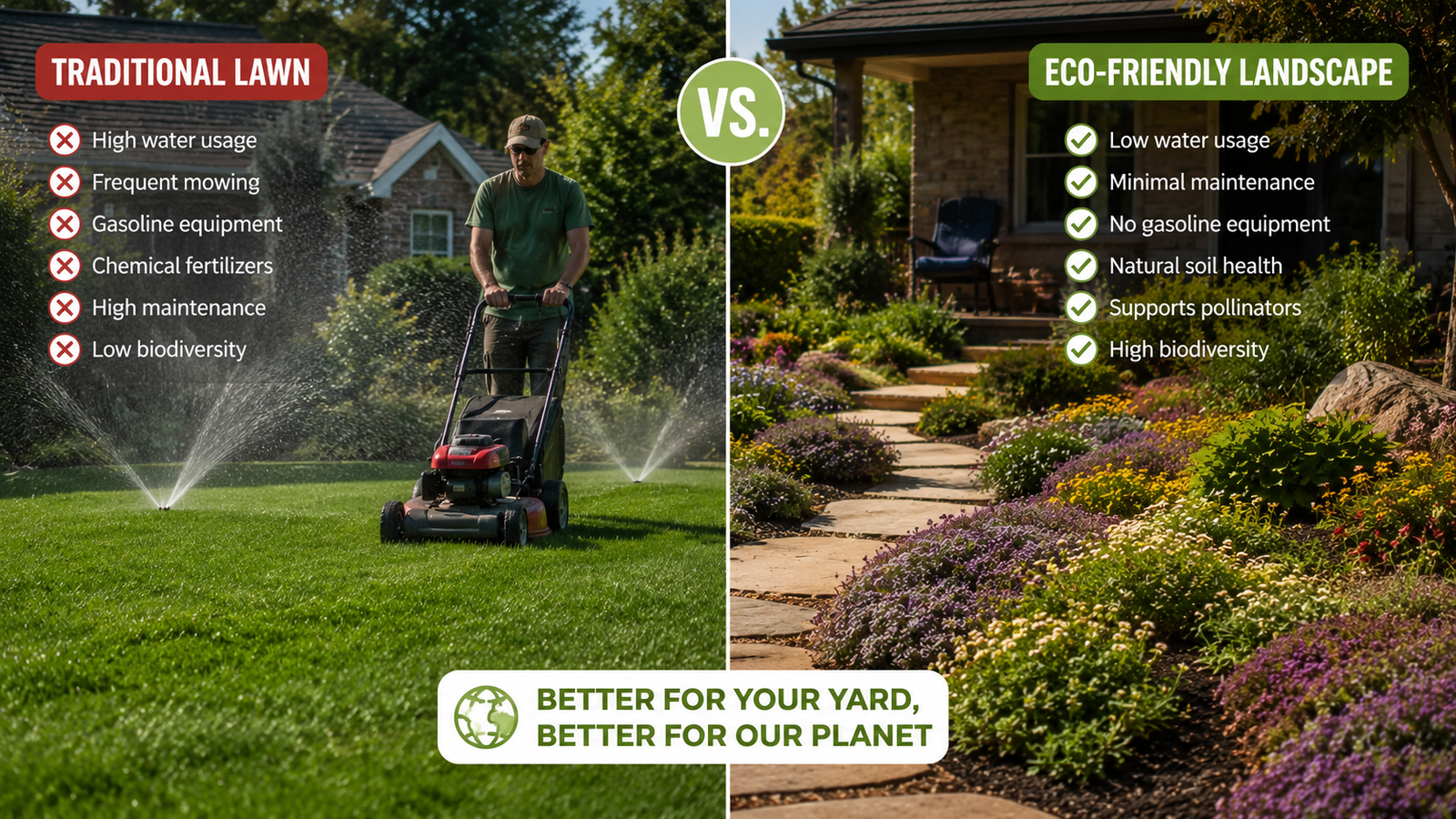
The growing interest in low-maintenance alternatives stems from the environmental costs of lawn care. Although lawns may seem harmless, they require enormous amounts of water, chemicals, and fuel to remain green and uniform.
Garden irrigation accounts for a significant portion of household water consumption in the United States. In arid regions, lawns require constant watering, further straining local water resources during droughts and heat waves. Even regions not typically arid can experience droughts, forcing homeowners to use more water to keep their lawns alive. Nationwide, billions of liters of water are used daily for garden irrigation alone.
Furthermore, conventional lawns rely heavily on fertilizers and pesticides to maintain a uniform, weed-free appearance. Excess chemicals from overuse are washed into rivers and lakes, damaging local ecosystems. Gasoline-powered lawnmowers create additional environmental costs by releasing carbon emissions and air pollutants with each use. Perhaps the most overlooked environmental impact is the impact on biodiversity. Conventional lawns create uniform landscapes that provide habitat for few pollinators, birds, or native plants.
What is a no-mowing lawn?
No-mowing lawns come in a variety of textures and styles, so the definition can vary depending on the landscape. Essentially, it’s a lawn designed to grow slowly or stay naturally short, reducing the need for frequent mowing and maintenance. These lawns often use drought-resistant and native grasses, ground cover, or other low-maintenance plants that require less water and fertilizer.
While a no-mowing lawn sounds like the perfect solution, it doesn’t mean it’s completely maintenance-free. Certain varieties require occasional trimming or seasonal care to stay healthy and attractive. However, not every type of lawn is suitable for every environment. Homeowners need to select plants that are appropriate for their climate, soil conditions, and the amount of sunlight their yard receives.
The Most Important Types of Low-Maintenance Lawns
Clover
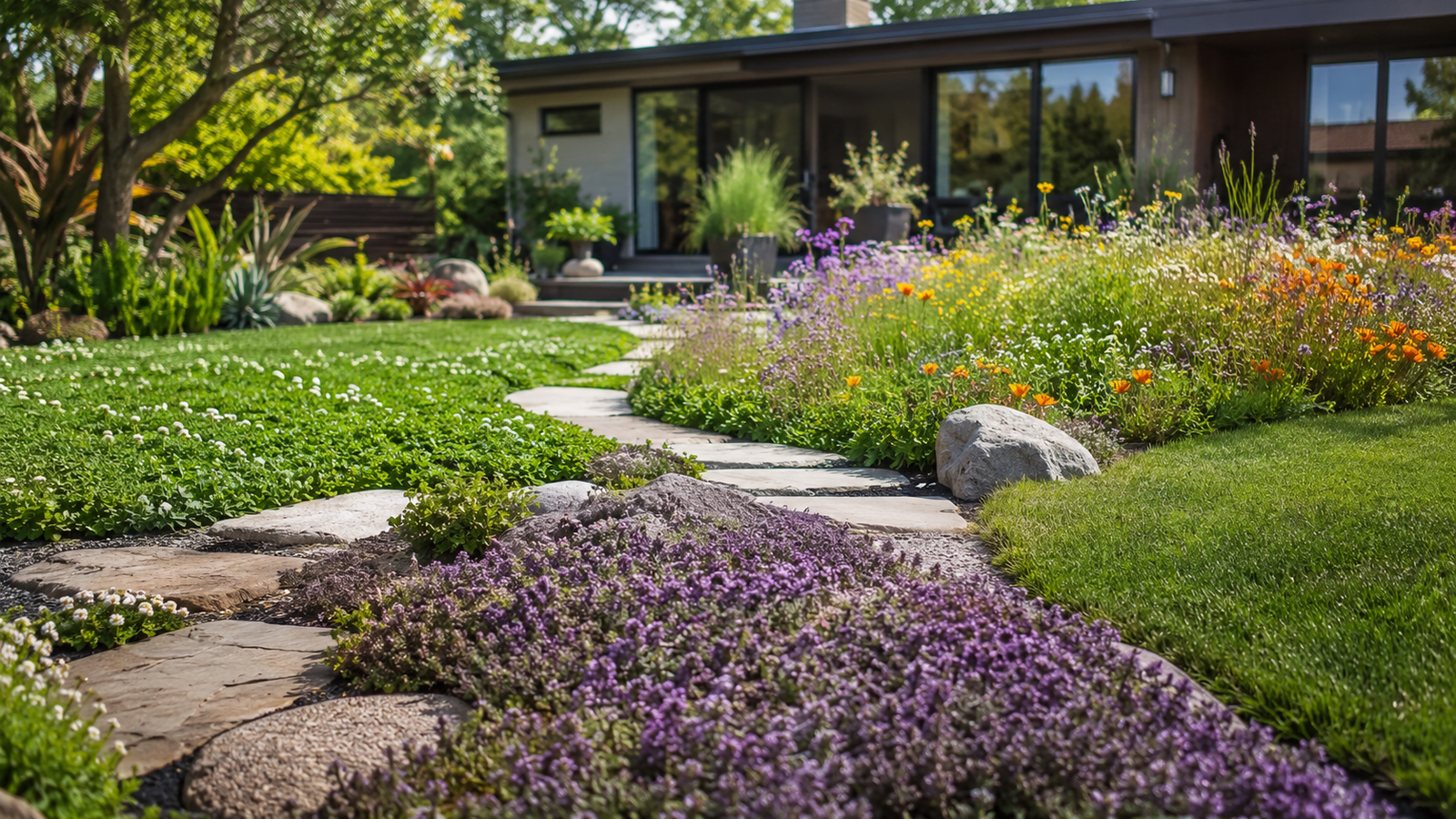
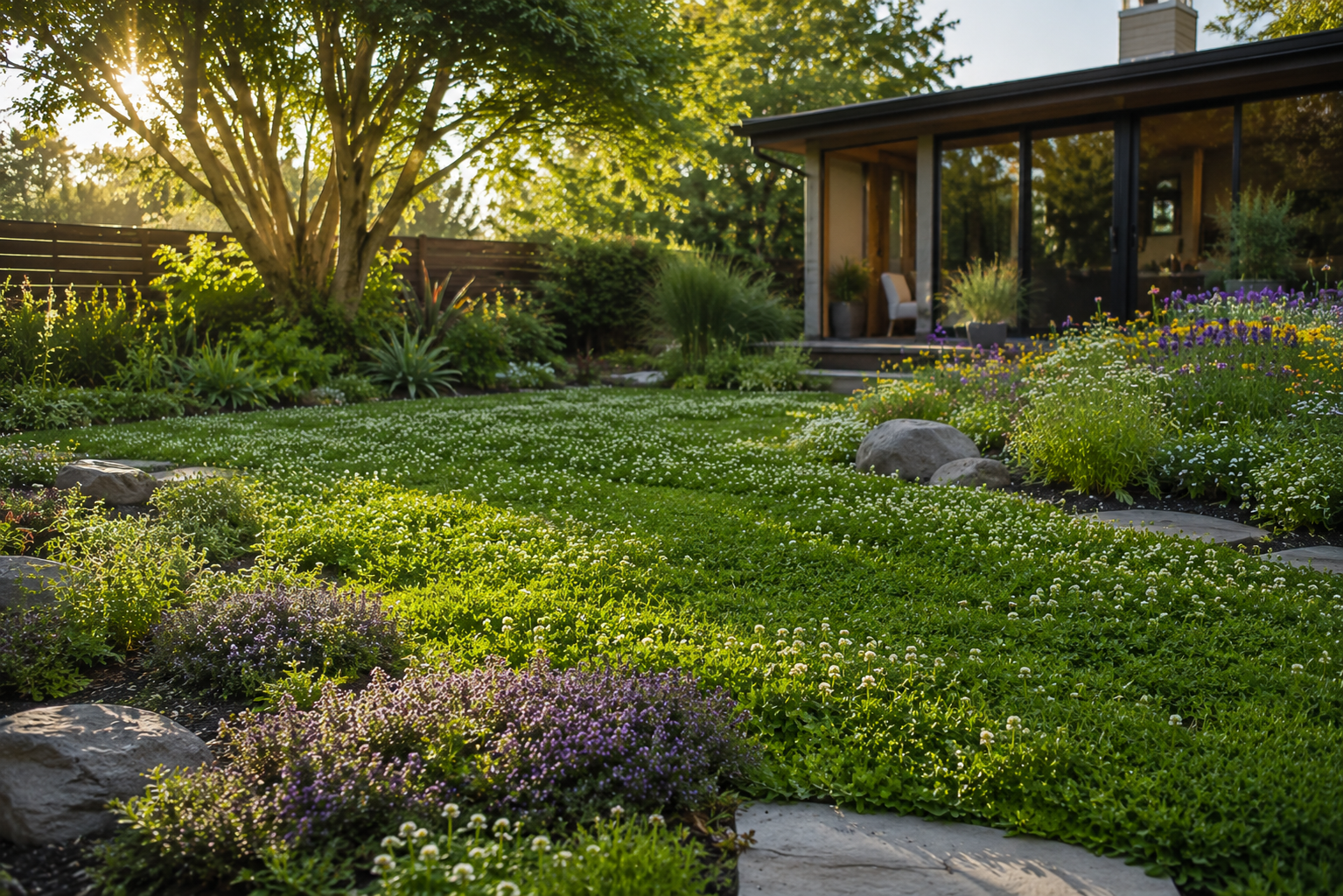
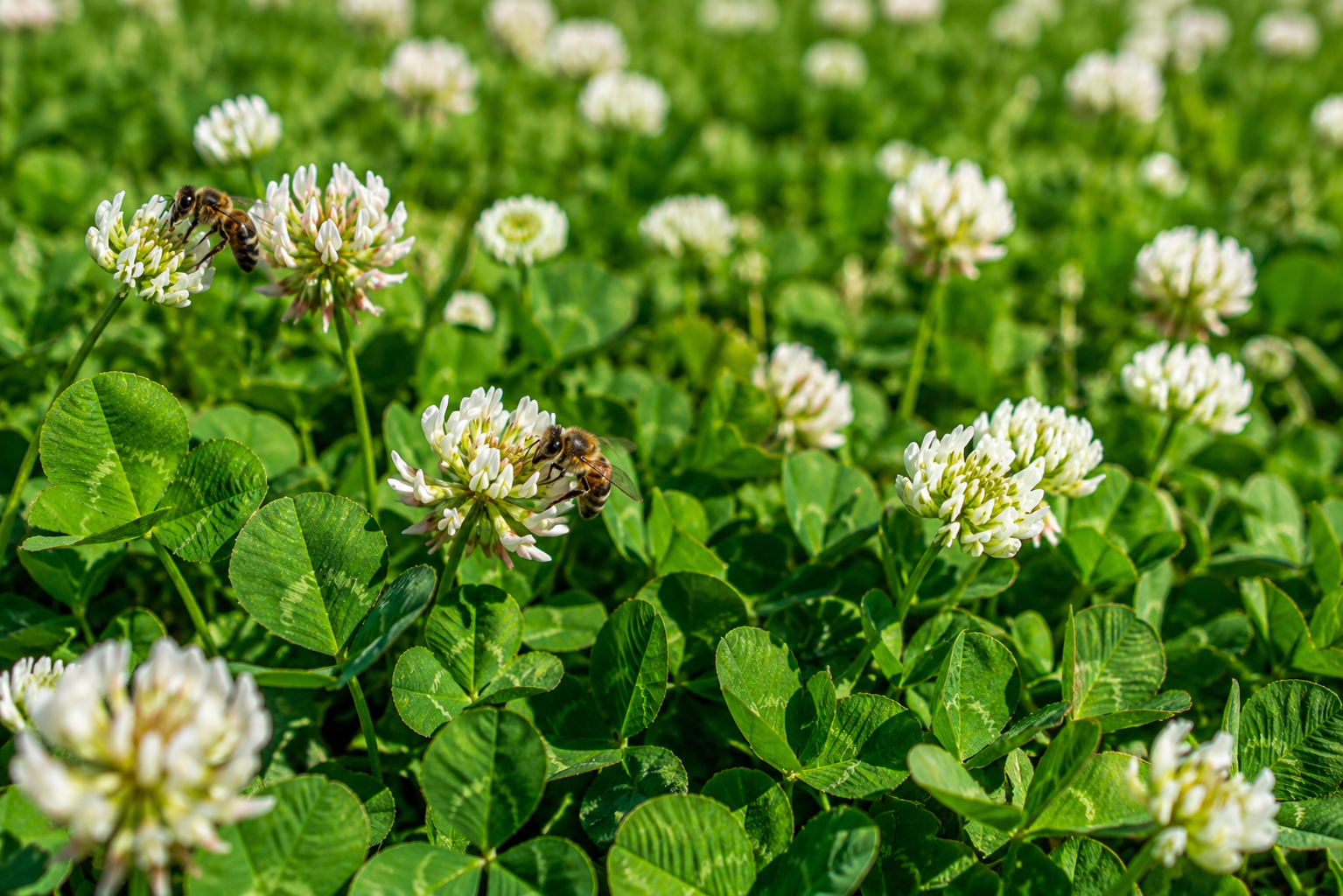
Clover lawns are among the most popular low-maintenance lawn types. They typically consist of white clover, red clover, or micro clover, all of which grow close to the ground. Because clover naturally stays short, homeowners rarely need to mow it to keep it looking neat.
Clover also offers several ecological benefits. As a legume, it naturally fixes nitrogen in the soil, reducing the need for fertilizer. It stays green longer, even in dry conditions, and requires less water than many grasses. Clover blossoms attract bees and other pollinators, helping to maintain the local ecosystem and biodiversity.
However, clover lawns also have some drawbacks. While pollinators are beneficial, the increased number of bees can be problematic for families with bee allergies. Clover is also less durable than conventional grass and may not withstand heavy wear or frequent outdoor use.
Meadow or Wildflower Lawns
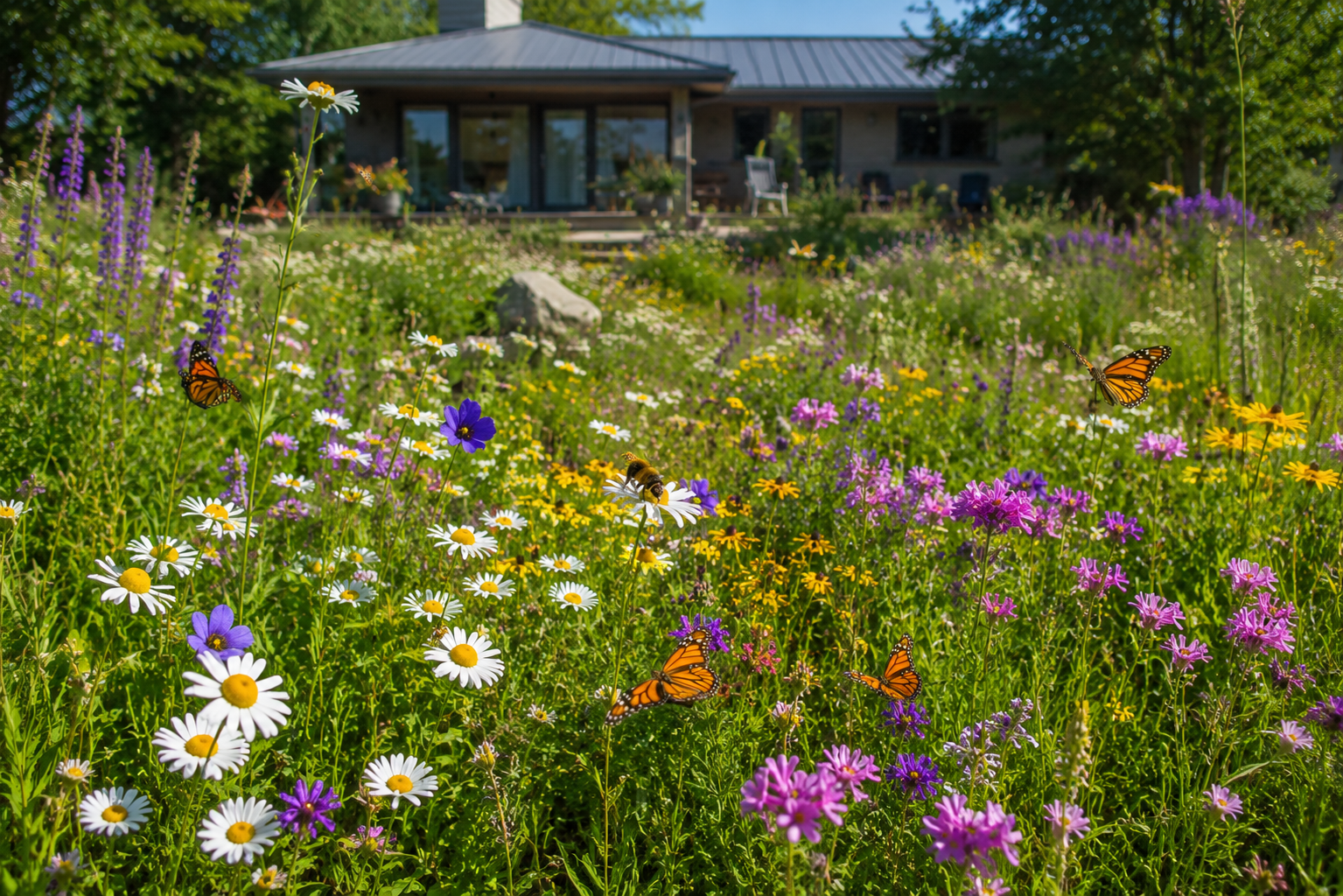
Meadow or wildflower lawns replace conventional lawns with a mix of native grasses and flowering plants. Unlike conventional lawns, these gardens are designed to mimic natural ecosystems and require significantly less mowing once established.
One of the biggest advantages of meadow lawns is their promotion of biodiversity. Native flowers and grasses provide food and shelter for pollinators, insects, and birds. These lawns also contribute to renaturalization, a landscaping approach that restores natural habitats and promotes urban biodiversity by reintroducing native plants and animals to built-up areas. Because meadow lawns grow more naturally, homeowners may only need to mow them once or twice a year, if at all.
However, meadow lawns can also present challenges. Their natural appearance may seem unkempt to some homeowners or violate the rules of certain homeowners’ associations (HOAs). Additionally, meadow lawns change with the seasons, so they are not consistently green or colorful year-round.
Creeping Ground Covers
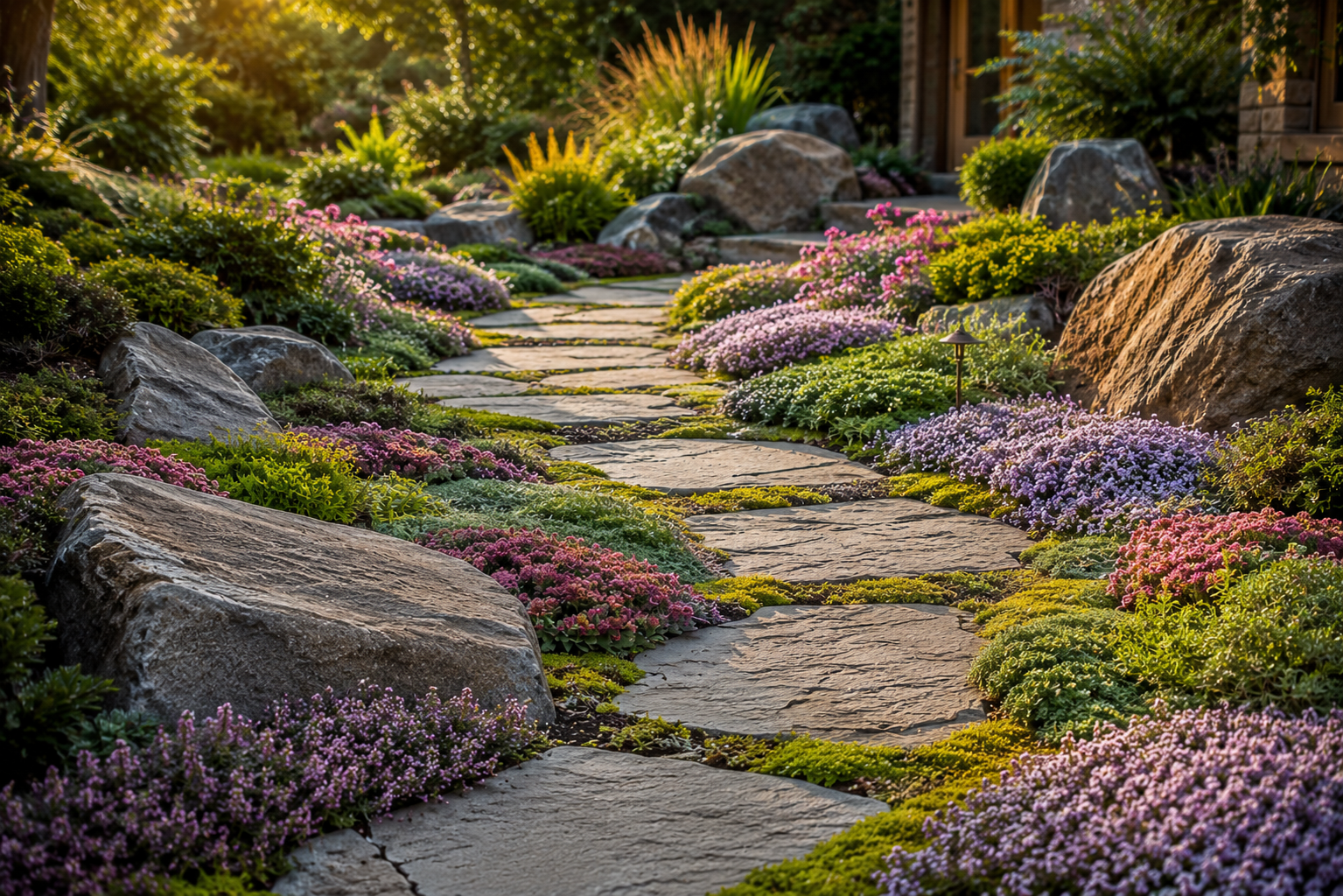
Creeping ground covers are a somewhat unusual alternative to traditional lawns. Well-known examples include creeping thyme, sedum, Irish moss, and Corsican mint. Unlike grass, these plants spread horizontally instead of growing upwards. This keeps them naturally short and requires little mowing or trimming. Many ground covers also produce small flowers or emit a pleasant fragrance, making them an attractive addition to any garden.
Creeping ground covers are well-suited for small gardens, decorative areas, or garden paths where aesthetics are more important than durability. Because these plants provide structure and color variety, they are often combined with stone paths, gravel, or other landscaping elements to create a more natural and appealing overall look.
However, keep in mind that creeping ground covers are not a perfect replacement for traditional lawns. Some varieties cannot withstand heavy use and can be damaged if children or pets play on them regularly. They work best when combined with other design elements, such as stone pathways or borders, rather than being used as a large, standalone lawn replacement.
Slow-Growing Grasses
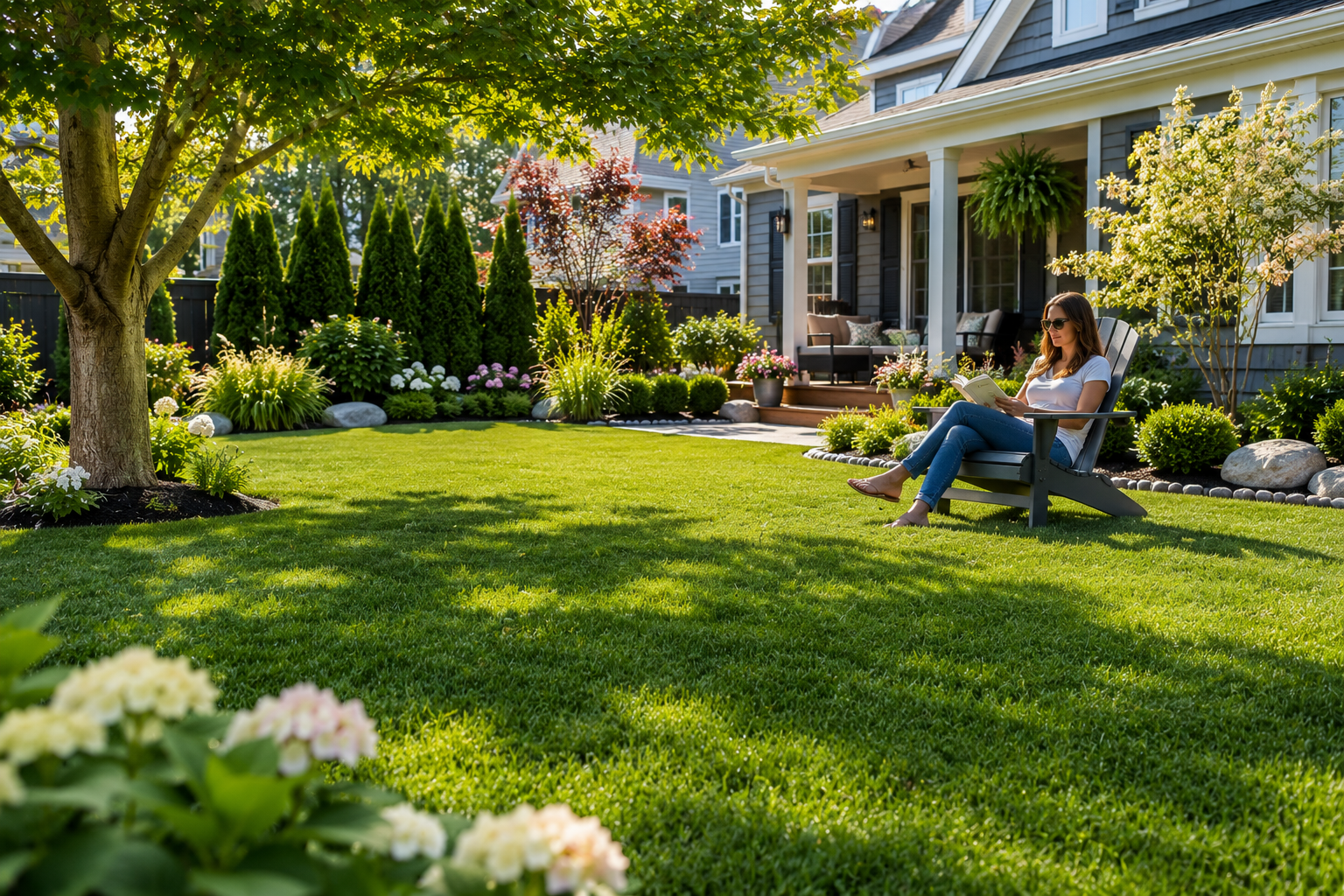
Some homeowners want the ecological benefits of a low-maintenance lawn without sacrificing the traditional look of a lawn. For these homeowners, slow-growing grasses offer a practical compromise.
Popular options include bison grass, fescue, and specially formulated slow-growing lawn mixes. These grasses grow more slowly than conventional lawn varieties and offer several ecological benefits. While not technically mowing-free, they require less maintenance. Because they grow more slowly, homeowners may only need to mow them a few times per season. Their traditional appearance also makes them a popular choice in residential areas with strict turf regulations.
The Future of Lawns
As our perception of the ideal lawn evolves, more and more homeowners are likely to opt for low-maintenance alternatives. Homeowners today no longer define the perfect garden solely by a perfectly manicured lawn, but by landscapes that conserve water, promote biodiversity, and adapt to climate change. The garden of the future may focus less on controlling nature and more on working with it.