
Back pain has become one of the most common complaints among remote workers.
While working from home offers flexibility and convenience, it often comes with a hidden downside. Many people spend hours sitting in the same position without enough movement throughout the day. Over time, this can lead to tight muscles, poor posture, reduced mobility, and persistent discomfort in the lower and upper back.
The good news is that you do not need an expensive gym membership or long workout sessions to feel better. A few minutes of movement can make a noticeable difference.
If you want a complete approach to workplace wellness, including nutrition, posture, healthy habits, and fitness strategies, read our guide on Health and Fitness for Office Workers.
This article focuses specifically on simple desk workouts that can help relieve back pain while supporting long-term spinal health.
Table of Contents
- Why Remote Workers Experience Back Pain
- How Sitting Affects Your Spine
- Benefits of 5 Minute Desk Workouts
- Complete 5 Minute Desk Workout Routine
- Common Mistakes That Make Back Pain Worse
- Additional Back Pain Prevention Tips
- Frequently Asked Questions
- Conclusion
Why Remote Workers Experience Back Pain
The human body was designed for movement, not prolonged sitting.
When you sit for several hours every day, certain muscles become overactive while others become weak. This imbalance often leads to discomfort and stiffness.
According to NHS Back Pain Guidance, poor posture and long periods of inactivity are common contributors to back pain.
Remote workers are particularly vulnerable because:
- Commutes have disappeared
- Daily movement is reduced
- Home workstations are often less ergonomic
- Breaks are frequently skipped
- Physical activity levels decrease
Many people do not notice the effects immediately. Instead, discomfort gradually builds over weeks and months.
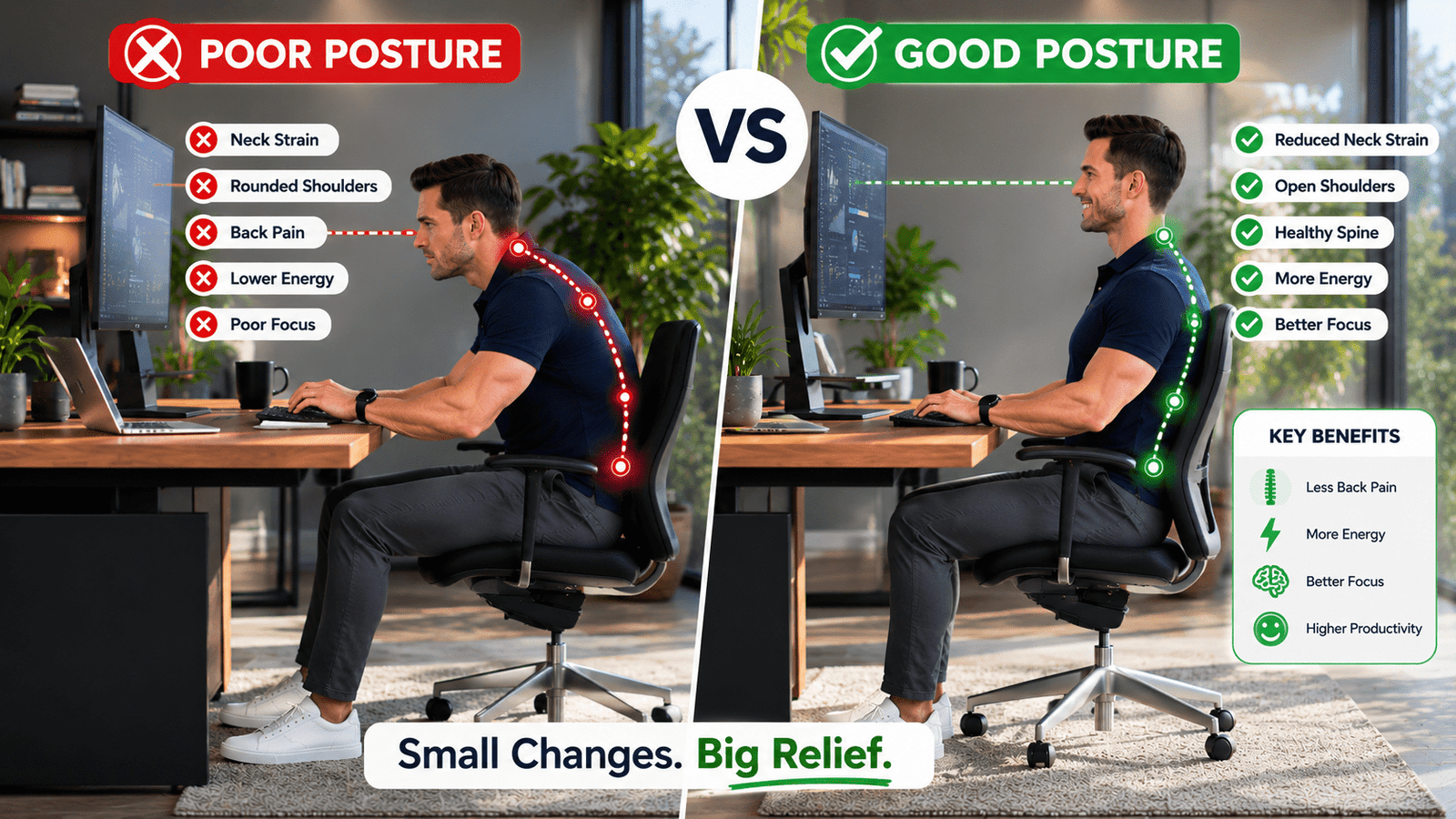
How Sitting Affects Your Spine
Long periods of sitting place pressure on the spine and surrounding muscles.
Several issues commonly develop:
Tight Hip Flexors
Hip flexors shorten while sitting, which can pull the pelvis forward and contribute to lower back pain.
Weak Core Muscles
When core muscles become weak, the lower back often compensates by working harder.
Rounded Shoulders
Hours spent looking at screens can create poor upper body posture.
Reduced Blood Flow
Remaining inactive for long periods limits circulation and increases stiffness.
Research highlighted by Harvard Health Publishing shows that regular movement and stretching can help reduce musculoskeletal discomfort associated with prolonged sitting.
Benefits of 5 Minute Desk Workouts
Many people underestimate the impact of short movement sessions.
You do not need a one-hour workout to experience benefits.
Even five minutes can help:
- Improve circulation
- Reduce stiffness
- Support posture
- Increase mobility
- Improve focus
- Boost energy levels
- Reduce muscle tension
Consistency matters far more than intensity.
Small daily actions often create significant long-term improvements.
The Complete 5 Minute Desk Workout Routine
Perform each exercise for approximately one minute.
The entire routine takes only five minutes.
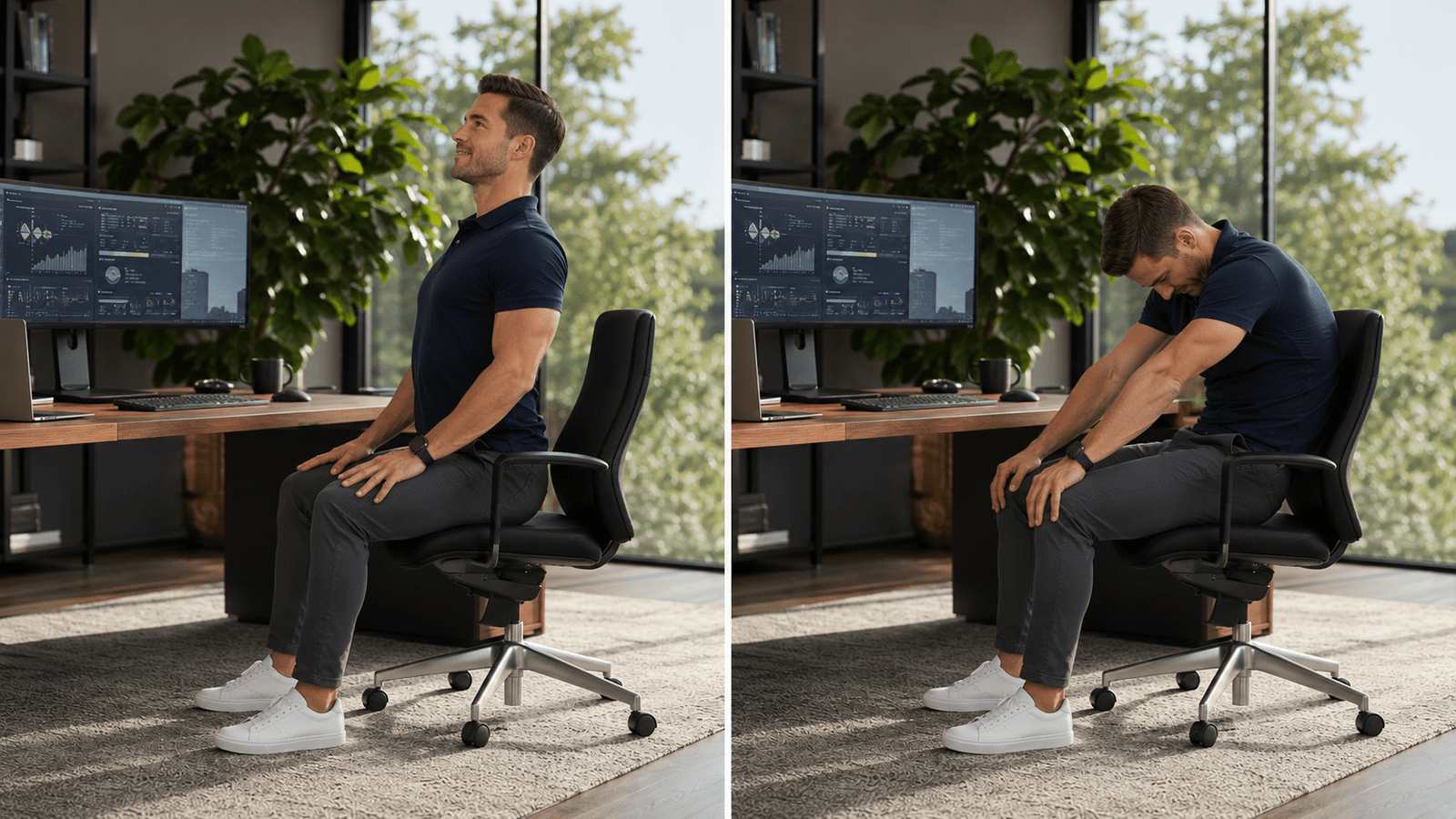
1. Seated Cat Cow Stretch
This movement helps improve spinal mobility and reduce stiffness.
How To Perform It
- Sit upright in your chair.
- Place your hands on your knees.
- Lift your chest and arch your back.
- Slowly round your spine and tuck your chin.
- Continue for one minute.
Benefits
- Improves spinal flexibility
- Relieves tension
- Encourages healthy posture
2. Seated Spinal Twist
This exercise helps improve mobility through the middle and lower back.
How To Perform It
- Sit tall with feet flat on the floor.
- Place one hand on the opposite knee.
- Rotate your upper body gently.
- Hold for 15 seconds.
- Repeat on both sides.
Benefits
- Improves flexibility
- Reduces stiffness
- Supports spinal mobility
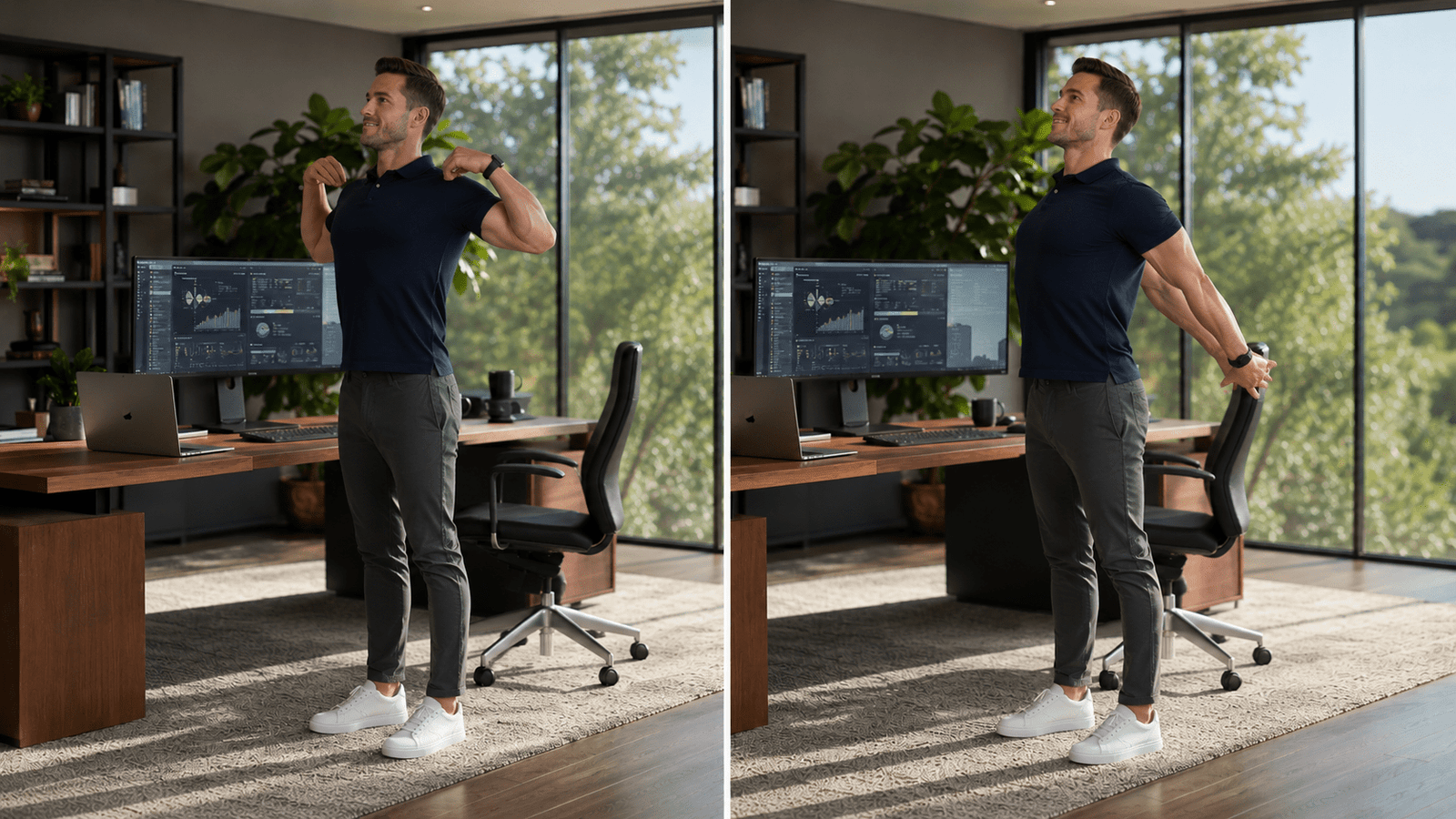
3. Shoulder Rolls and Chest Opener
Remote workers frequently develop rounded shoulders from prolonged laptop use.
This movement helps reverse that position.
How To Perform It
- Roll shoulders backward 10 times.
- Roll shoulders forward 10 times.
- Clasp your hands behind your back.
- Open your chest and hold for 20 seconds.
Benefits
- Improves posture
- Reduces shoulder tension
- Relieves upper back discomfort
4. Seated Knee To Chest Stretch
This stretch targets the lower back and hips.
How To Perform It
- Sit upright.
- Pull one knee toward your chest.
- Hold for 20 seconds.
- Switch sides.
- Repeat.
According to Mayo Clinic Back Pain Resources, gentle stretching can improve flexibility and help reduce back discomfort.
Benefits
- Relieves lower back tension
- Improves mobility
- Supports hip flexibility
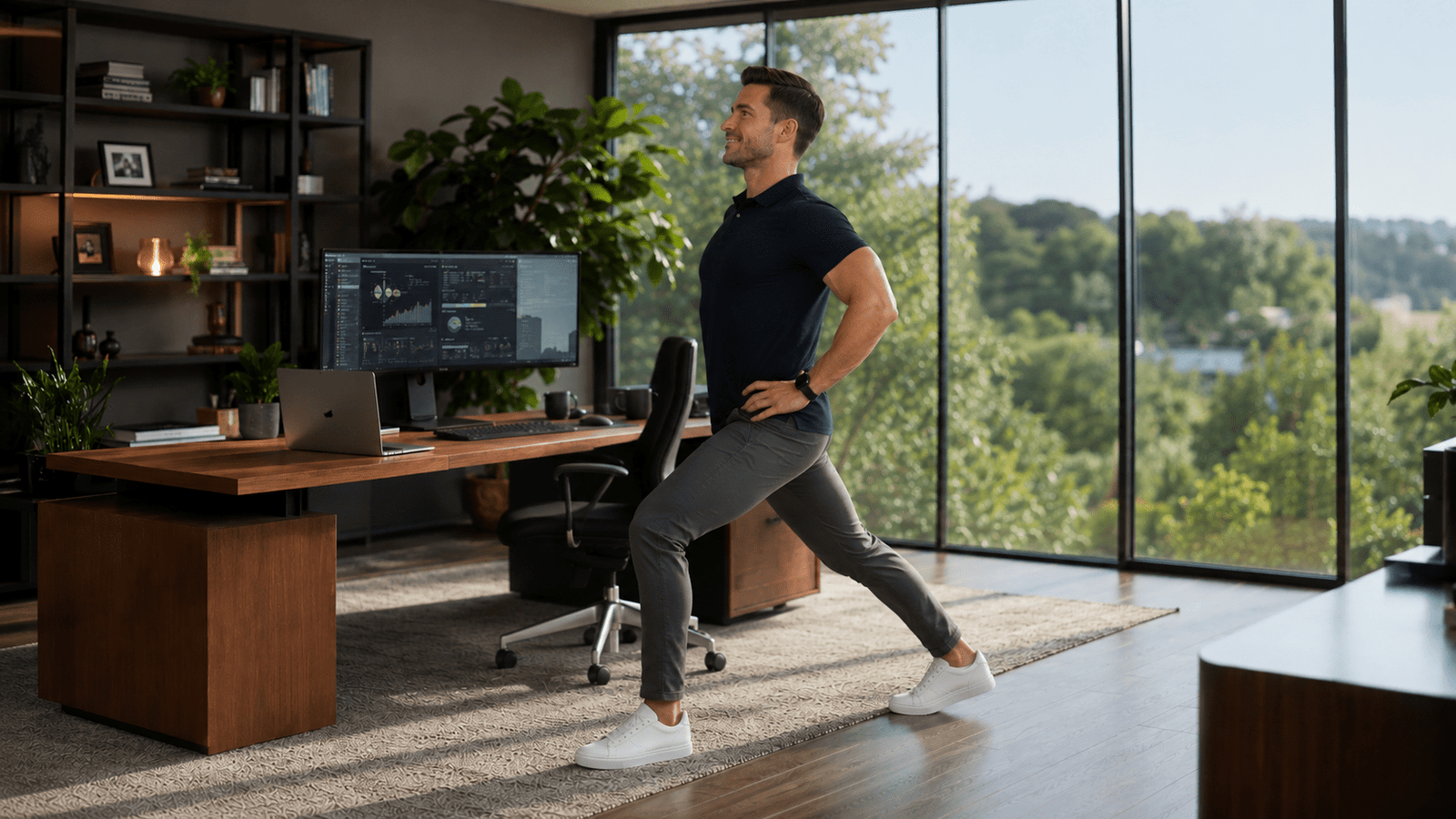
5. Standing Hip Flexor Stretch
Tight hip flexors are one of the most overlooked causes of lower back pain.
How To Perform It
- Stand beside your desk.
- Step one foot backward.
- Bend the front knee.
- Push your hips slightly forward.
- Hold for 30 seconds.
- Switch sides.
Benefits
- Opens tight hips
- Supports posture
- Reduces lower back strain
A Simple Daily Movement Schedule
Many remote workers struggle with consistency.
The following schedule can help:
| Time | Activity |
|---|---|
| 9:00 AM | Start work |
| 10:00 AM | 5 minute desk workout |
| 12:00 PM | Short walk |
| 2:00 PM | 5 minute desk workout |
| 4:00 PM | Stretch break |
| 6:00 PM | Finish work |
The goal is not perfection.
The goal is regular movement throughout the day.
Common Mistakes That Make Back Pain Worse
Ignoring Early Warning Signs
Mild stiffness often becomes chronic discomfort when ignored.
Sitting for Hours Without Moving
Even an ergonomic chair cannot replace movement.
Poor Monitor Placement
Looking down at a screen for long periods places extra stress on the neck and upper back.
Weak Core Strength
Without adequate strength, the lower back often absorbs extra strain.
Skipping Recovery
Sleep and recovery are essential for muscle health.
Additional Tips to Prevent Back Pain While Working From Home
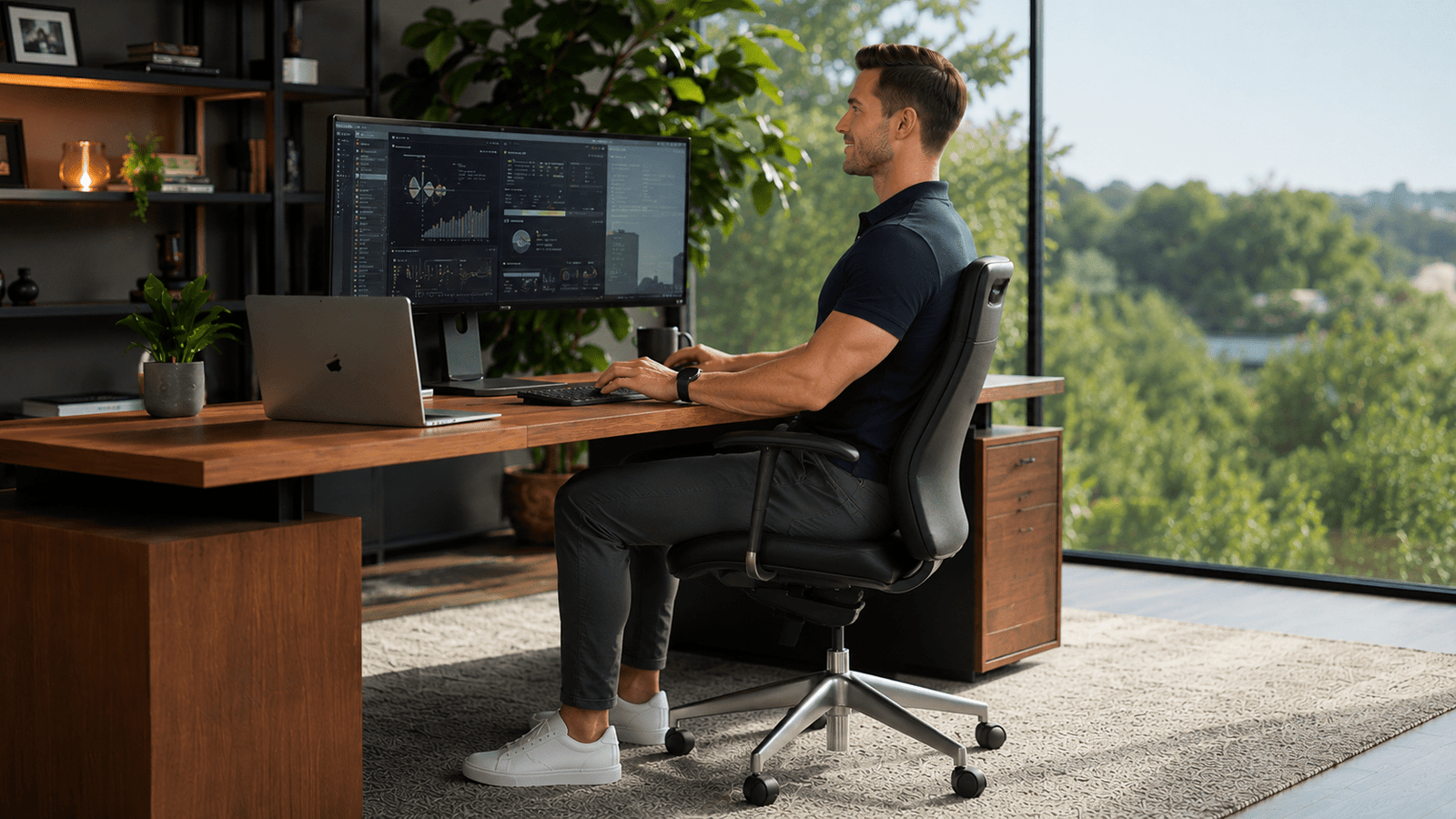
Raise Your Monitor
The top of your screen should be close to eye level.
Use Lumbar Support
A supportive chair can help maintain spinal alignment.
Walk During Phone Calls
Phone calls provide an easy opportunity to increase movement.
Stay Hydrated
Hydration supports muscle function and overall health.
Follow the 30 Minute Rule
Stand up and move every 30 minutes whenever possible.
The experts at OSHA Ergonomics recommend maintaining a properly adjusted workstation to reduce musculoskeletal strain.
Important Points to Remember
- Five minutes of movement can help reduce stiffness.
- Consistency matters more than intensity.
- Stretching works best when combined with good posture.
- Ergonomic workstations support spinal health.
- Daily movement improves both comfort and productivity.
FAQ
How often should remote workers stretch?
Most experts recommend moving every 30 to 60 minutes throughout the day.
Can desk workouts replace regular exercise?
No. Desk workouts help reduce the effects of sitting but should complement a complete fitness routine.
What causes back pain while working from home?
Poor posture, prolonged sitting, limited movement, and weak supporting muscles are common causes.
Are standing desks worth it?
Standing desks can help, but regular movement is more important than simply standing.
How long does it take to see results?
Many people notice reduced stiffness within a few days of consistently following a movement routine.
Disclaimer
This article is for educational purposes only and should not be considered medical advice. Consult a qualified healthcare professional if you have persistent, severe, or worsening back pain.
Conclusion
Back pain does not have to become part of your remote work routine.
These 5 minute desk workouts to relieve back pain are simple, practical, and easy to fit into a busy schedule. When combined with good posture, regular movement, and a properly adjusted workstation, they can help reduce discomfort and improve overall well being.
If you want to build healthier workplace habits beyond stretching alone, including nutrition, fitness, posture, and long-term wellness strategies, read our complete guide on Health and Fitness for Office Workers.