
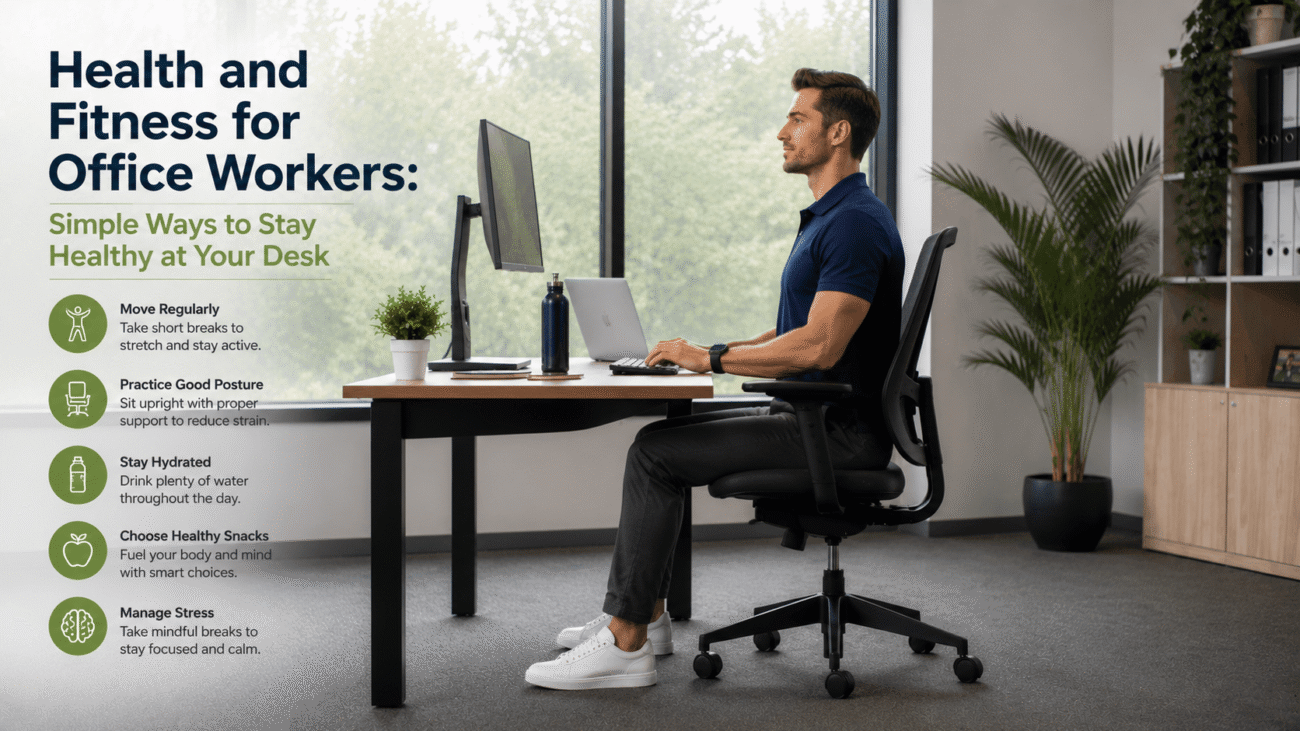
Modern office jobs have made work more convenient, but they have also created new health challenges.
Many office workers spend eight or more hours each day sitting in front of a computer. While this may not seem physically demanding, prolonged sitting can affect posture, energy levels, cardiovascular health, weight management, and overall well-being.
The good news is that staying healthy at work doesn’t require a complete lifestyle overhaul. Small daily habits can make a significant difference in how you feel, perform, and maintain your long-term health.
This guide covers practical health and fitness strategies that office workers can use to stay active, reduce discomfort, and improve productivity.
Table of Contents
- Why Office Workers Face Unique Health Challenges
- Benefits of Prioritizing Health and Fitness
- Essential Fitness Habits for Office Workers
- Nutrition Tips for a Productive Workday
- Best Desk Exercises for Office Workers
- Common Health Mistakes Office Workers Make
- Creating a Healthy Workspace
- FAQs
- Conclusion
Why Office Workers Face Unique Health Challenges
The human body was designed for movement.
Unfortunately, modern office environments often encourage long periods of sitting with very little physical activity.
According to World Health Organization Physical Activity Guidelines</span>, physical inactivity is one of the major risk factors for noncommunicable diseases worldwide.
Common health issues associated with desk jobs include:
- Back pain
- Neck stiffness
- Poor posture
- Weight gain
- Reduced energy levels
- Eye strain
- Increased stress
These problems often develop gradually, making them easy to overlook until they begin affecting daily life.
Benefits of Prioritizing Health and Fitness
Many people focus on fitness only for weight loss.
For office workers, the benefits go far beyond appearance.
Regular physical activity can help:
- Improve concentration
- Increase energy levels
- Reduce stress
- Improve posture
- Support heart health
- Reduce back and neck pain
- Improve sleep quality
Research from Harvard Health Publishing highlights that regular exercise supports both physical and mental health while improving overall quality of life.
Essential Fitness Habits for Office Workers
1. Move Every 30 to 60 Minutes
One of the easiest ways to improve workplace health is to avoid sitting continuously for hours.
Set a reminder to:
- Stand up
- Walk briefly
- Stretch
- Refill your water bottle
Even a two-minute movement break can help improve circulation.
2. Walk More Throughout the Day
Simple opportunities to increase movement include:
- Taking the stairs
- Walking during phone calls
- Parking farther away
- Walking during lunch breaks
Small amounts of movement accumulate throughout the day.
3. Include Strength Training
Muscle strength supports posture and reduces the risk of common workplace aches and pains.
Aim for at least two strength-training sessions per week.
According to Centers for Disease Control and Prevention (CDC), adults should combine aerobic activity with muscle-strengthening exercises for optimal health.

Best Desk Exercises for Office Workers
Even a few minutes of movement can help reduce stiffness.
Neck Stretch
- Sit upright.
- Tilt your head toward one shoulder.
- Hold for 20 seconds.
- Repeat on both sides.
Shoulder Rolls
- Roll shoulders forward 10 times.
- Roll shoulders backward 10 times.
Seated Spinal Twist
- Sit tall.
- Rotate your upper body gently.
- Hold for 15 seconds.
- Repeat on both sides.
Standing Hip Flexor Stretch
This stretch helps counteract the effects of prolonged sitting.

Nutrition Tips for Office Workers
Fitness and nutrition work together.
Without proper nutrition, maintaining energy throughout the workday becomes difficult.
Prioritize Protein
Include:
- Eggs
- Fish
- Chicken
- Greek yogurt
- Beans
- Lentils
Protein helps maintain muscle and keeps you feeling full longer.
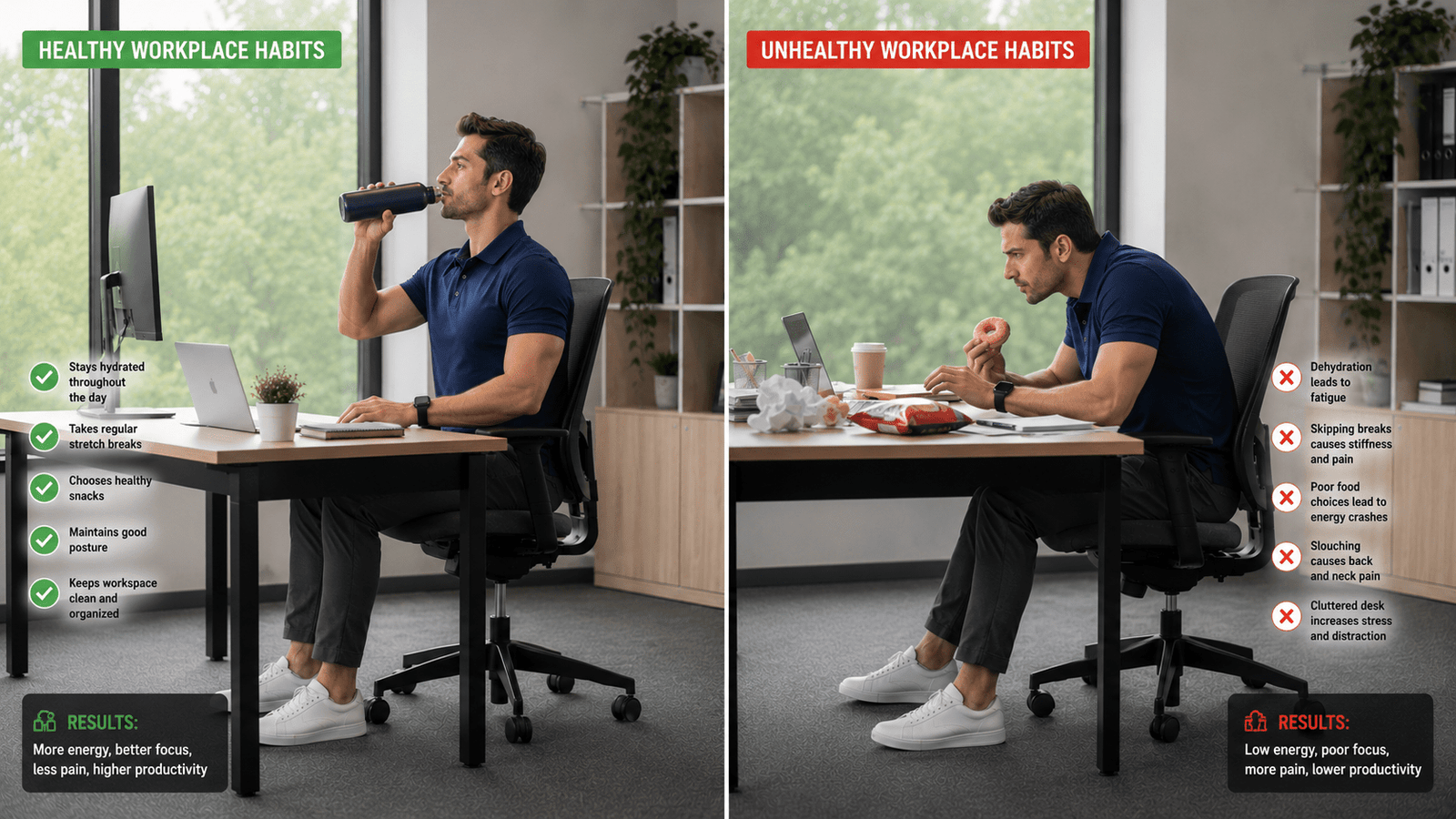
Stay Hydrated
Dehydration can contribute to:
- Fatigue
- Headaches
- Reduced concentration
The experts at Mayo Clinic Hydration Guidelines recommend maintaining adequate fluid intake throughout the day.
Choose Smarter Snacks
Good options include:
- Mixed nuts
- Fruit
- Greek yogurt
- Protein bars
- Vegetables with hummus
Common Health Mistakes Office Workers Make
Sitting for Too Long
Long periods of sitting place stress on muscles and joints.
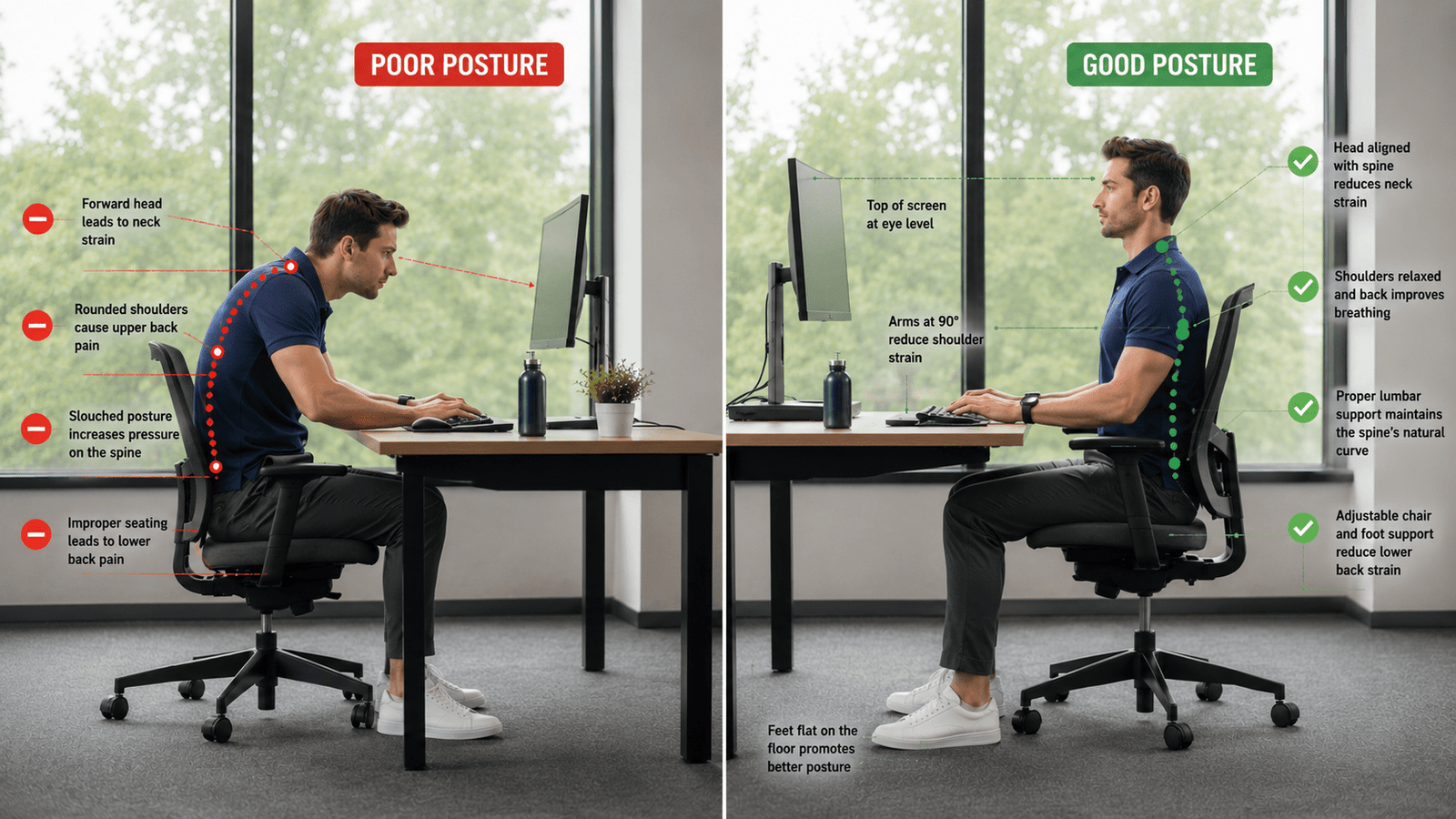
Ignoring Posture
Poor posture often leads to neck and back pain.
Skipping Exercise
Many people assume they don’t have time for exercise, but even short workouts can provide benefits.
Drinking Too Much Coffee
While caffeine can improve focus, excessive consumption may contribute to dehydration and sleep issues.
Neglecting Sleep
Quality sleep is essential for recovery, energy, and productivity.
Creating a Healthy Workspace
Your environment plays a major role in your health.
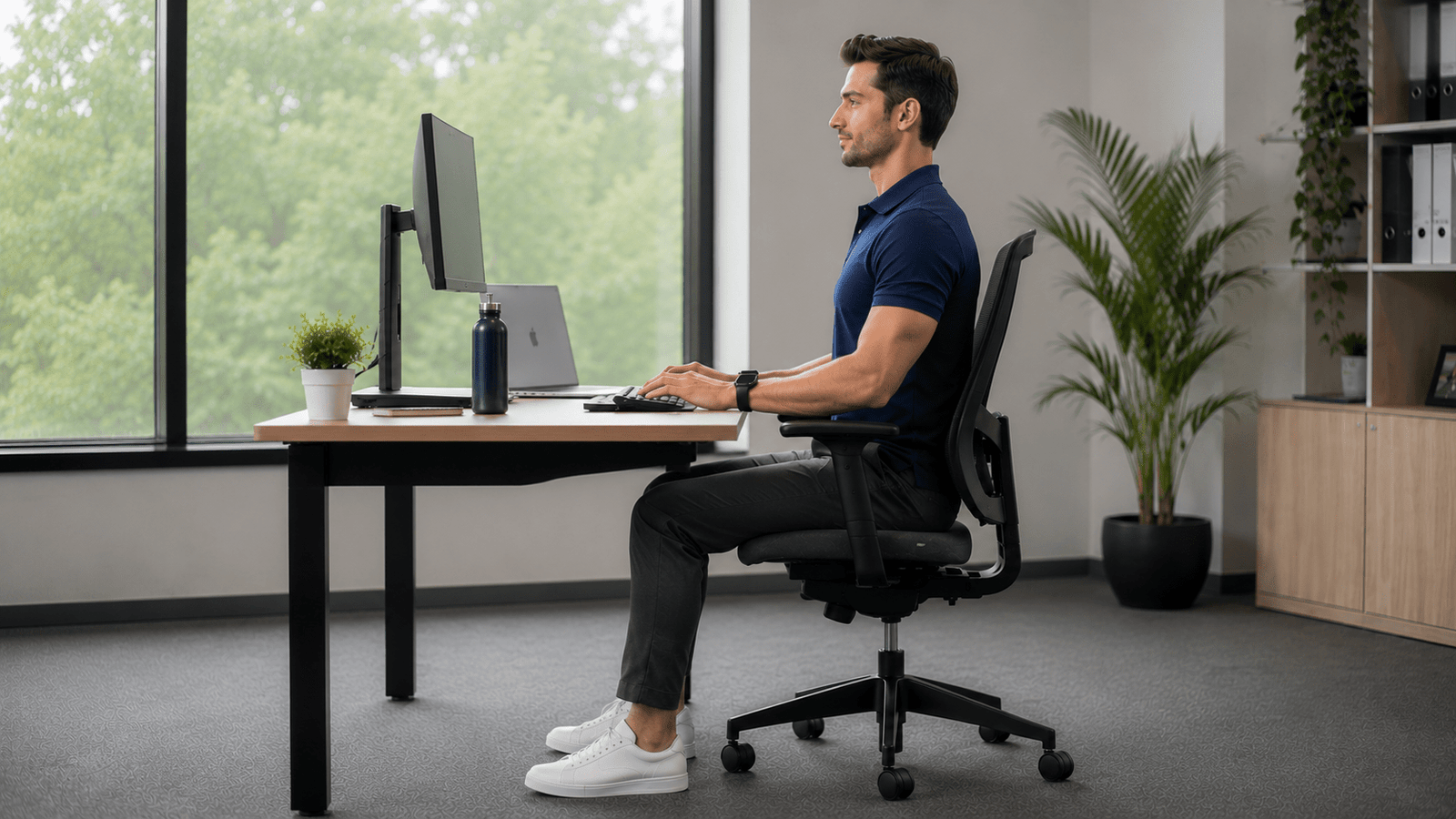
Adjust Your Monitor
The top of your screen should be at eye level.
Use a Supportive Chair
Proper lumbar support helps maintain spinal alignment.
Position Your Keyboard Correctly
Your elbows should remain close to a 90-degree angle.
Improve Lighting
Good lighting helps reduce eye strain and headaches.
The Occupational Safety and Health Administration (OSHA) provides ergonomic recommendations for healthier workstations.
Important Points to Remember
- Move every 30 to 60 minutes.
- Stay hydrated throughout the day.
- Strength train at least twice weekly.
- Maintain good posture.
- Prioritize quality sleep.
- Build consistent healthy habits rather than relying on occasional intense workouts.
FAQ
How much exercise do office workers need?
Most adults should aim for at least 150 minutes of moderate physical activity per week, along with strength training exercises.
Can desk exercises really help?
Yes. Regular stretching and movement breaks can reduce stiffness, improve posture, and increase comfort during long workdays.
What is the biggest health risk for office workers?
Prolonged sitting is one of the most common health risks associated with office-based jobs.
Is a standing desk necessary?
A standing desk can help, but regular movement is more important than the desk itself.
Disclaimer
This article is for educational and informational purposes only. It should not be considered medical advice. Always consult a qualified healthcare professional regarding any medical condition, injury, or health concern.
Conclusion
Maintaining good health and fitness as an office worker doesn’t require drastic changes.
Simple habits such as moving regularly, exercising consistently, improving posture, staying hydrated, and eating nutritious foods can significantly improve your physical health, energy levels, and productivity.
The most effective approach is consistency. Small healthy actions repeated daily often produce better long-term results than short periods of extreme effort.