
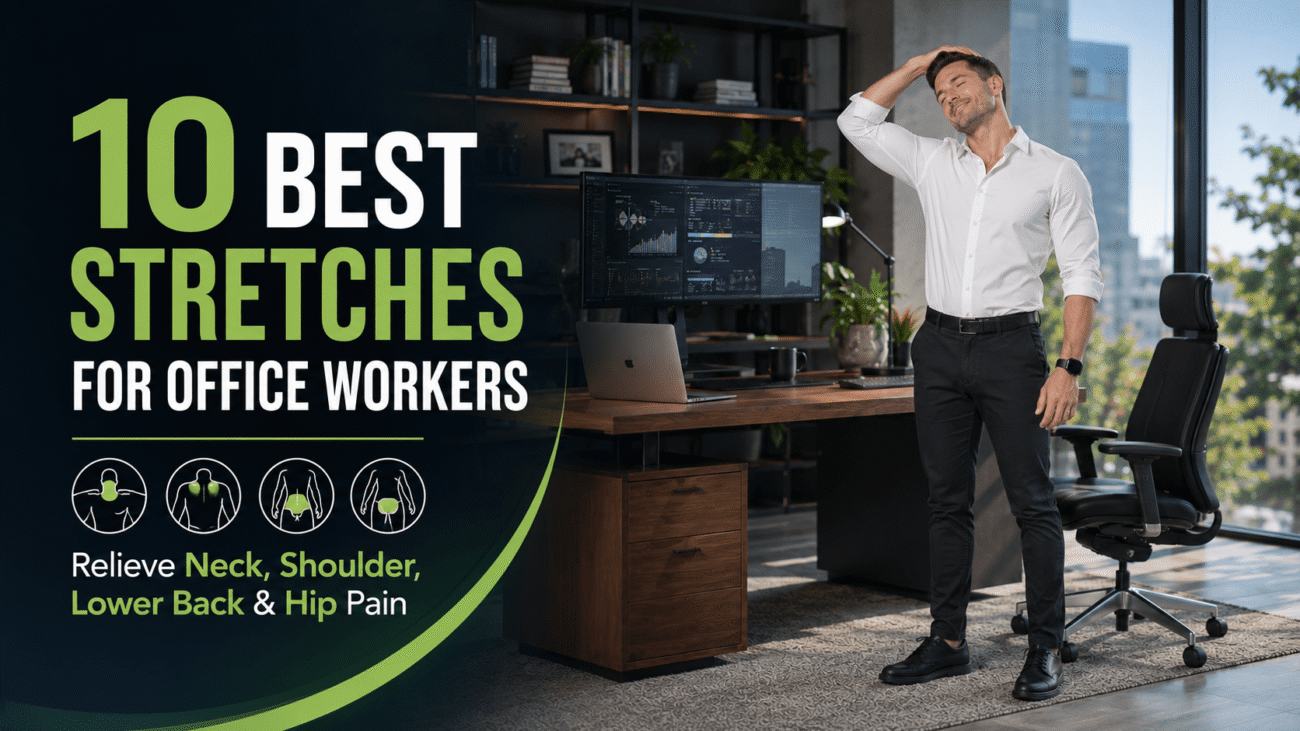
If you spend most of your day sitting at a desk, chances are you’ve experienced neck stiffness, shoulder tension, lower back discomfort, or tight hips at some point.
These aches often start small. A little tightness after work. A stiff neck in the morning. A sore lower back after sitting through meetings all day. Over time, those minor discomforts can become ongoing problems that affect productivity, sleep quality, and overall wellbeing.
The good news is that you don’t need complicated workouts or expensive equipment to feel better. A few simple stretches performed consistently throughout the day can help improve mobility, reduce muscle tension, and support better posture.
If you’re looking for a complete guide to improving workplace wellness, nutrition, fitness habits, and overall health, read our guide on Health and Fitness for Office Workers.
If lower back discomfort is your biggest challenge, you may also find our guide on 5 Minute Desk Workouts to Relieve Back Pain for Remote Workers helpful.
In this guide, we’ll cover the best stretches for office workers and explain exactly how each movement can help reduce neck, shoulder, lower back, and hip pain.
Table of Contents
- Why Office Workers Experience Pain
- Benefits of Daily Stretching
- Best Neck Stretches
- Best Shoulder Stretches
- Best Lower Back Stretches
- Best Hip Stretches
- Common Stretching Mistakes
- Frequently Asked Questions
- Conclusion
Why Office Workers Experience Neck, Shoulder, Lower Back, and Hip Pain
The human body is designed to move regularly.
Unfortunately, modern office jobs encourage the opposite.
Many office workers remain seated for eight or more hours each day, often with limited movement between tasks.
According to Harvard Health Publishing, prolonged sitting can contribute to muscle tightness, reduced mobility, poor posture, and musculoskeletal discomfort.
The most common causes include:
- Prolonged sitting
- Poor posture
- Limited movement breaks
- Weak supporting muscles
- Improper workstation setup
- Stress-related muscle tension
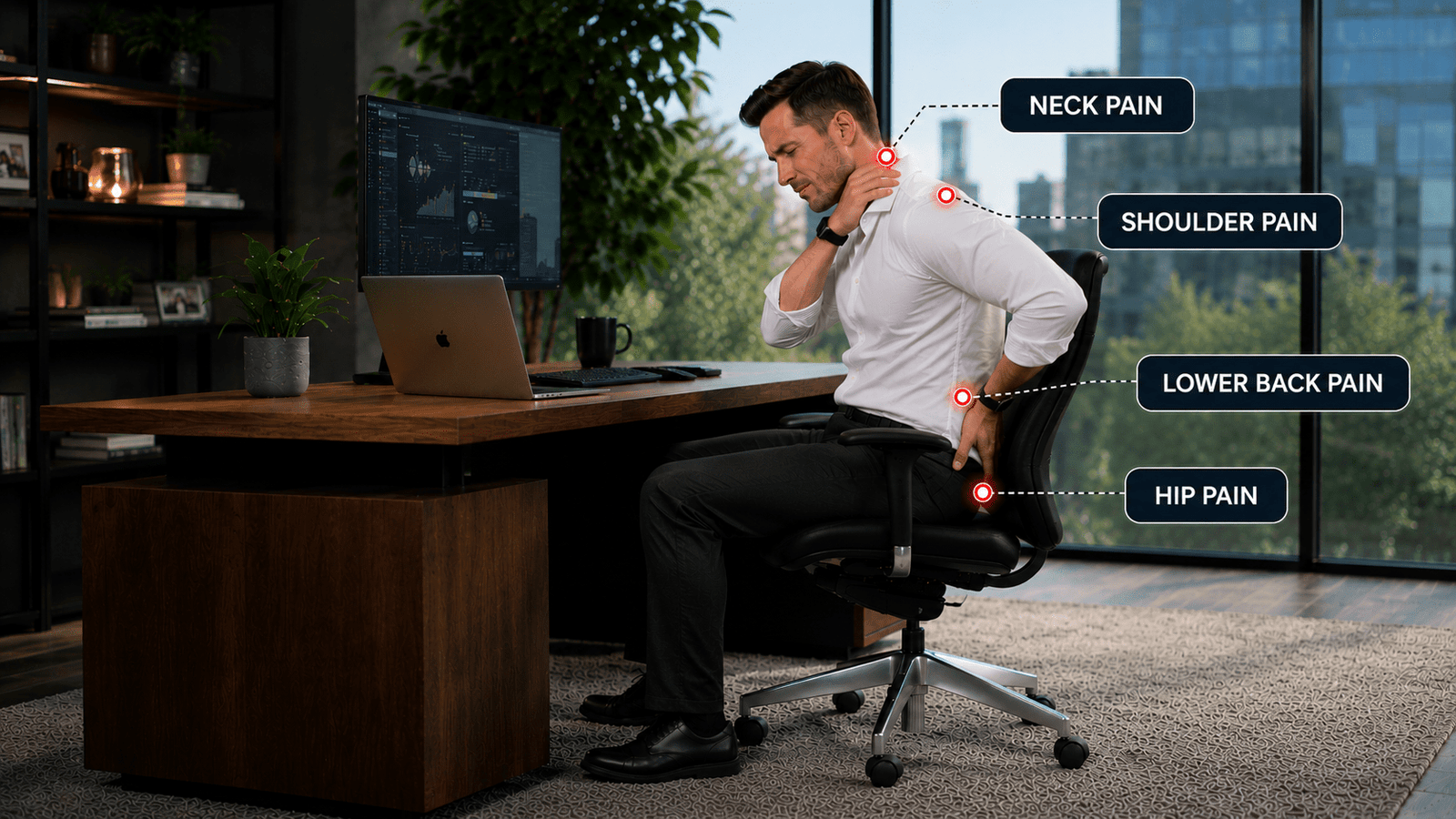
The result is often pain in the exact areas office workers complain about most:
- Neck
- Shoulders
- Lower back
- Hips
Benefits of Daily Stretching for Office Workers
Stretching is one of the simplest habits you can add to your workday.
When performed consistently, stretching can:
- Improve flexibility
- Reduce stiffness
- Improve posture
- Support healthy joint movement
- Reduce muscle tension
- Increase circulation
- Improve comfort during long workdays
According to Mayo Clinic, regular stretching helps maintain flexibility and supports overall musculoskeletal health.
Best Neck Stretches for Office Workers
1. Side Neck Stretch
This stretch targets the muscles that become tight when looking at screens for extended periods.
How To Do It
- Sit upright.
- Gently tilt your head toward your shoulder.
- Hold for 20 seconds.
- Repeat on both sides.
Benefits
- Reduces neck tension
- Improves flexibility
- Relieves stiffness
2. Chin Tuck Exercise
Many office workers develop forward head posture.
The chin tuck helps restore proper neck alignment.
How To Do It
- Sit tall.
- Pull your chin backward.
- Hold for five seconds.
- Repeat ten times.
Benefits
- Improves posture
- Reduces neck strain
- Supports spinal alignment

Best Shoulder Stretches for Office Workers
3. Shoulder Rolls
Shoulder rolls help reduce tension caused by typing and prolonged computer use.
How To Do It
- Roll shoulders forward 10 times.
- Roll shoulders backward 10 times.
Benefits
- Improves circulation
- Relieves tightness
- Increases mobility
4. Chest Opener Stretch
Rounded shoulders are common among office workers.
This stretch helps reverse that position.
How To Do It
- Stand up.
- Clasp hands behind your back.
- Open your chest.
- Hold for 20 seconds.
Benefits
- Improves posture
- Relieves shoulder tension
- Opens tight chest muscles
5. Cross Body Shoulder Stretch
How To Do It
- Bring one arm across your body.
- Use your opposite arm for support.
- Hold for 20 seconds.
- Switch sides.
Benefits
- Relieves shoulder tightness
- Improves flexibility
- Supports shoulder mobility

Best Lower Back Stretches for Office Workers
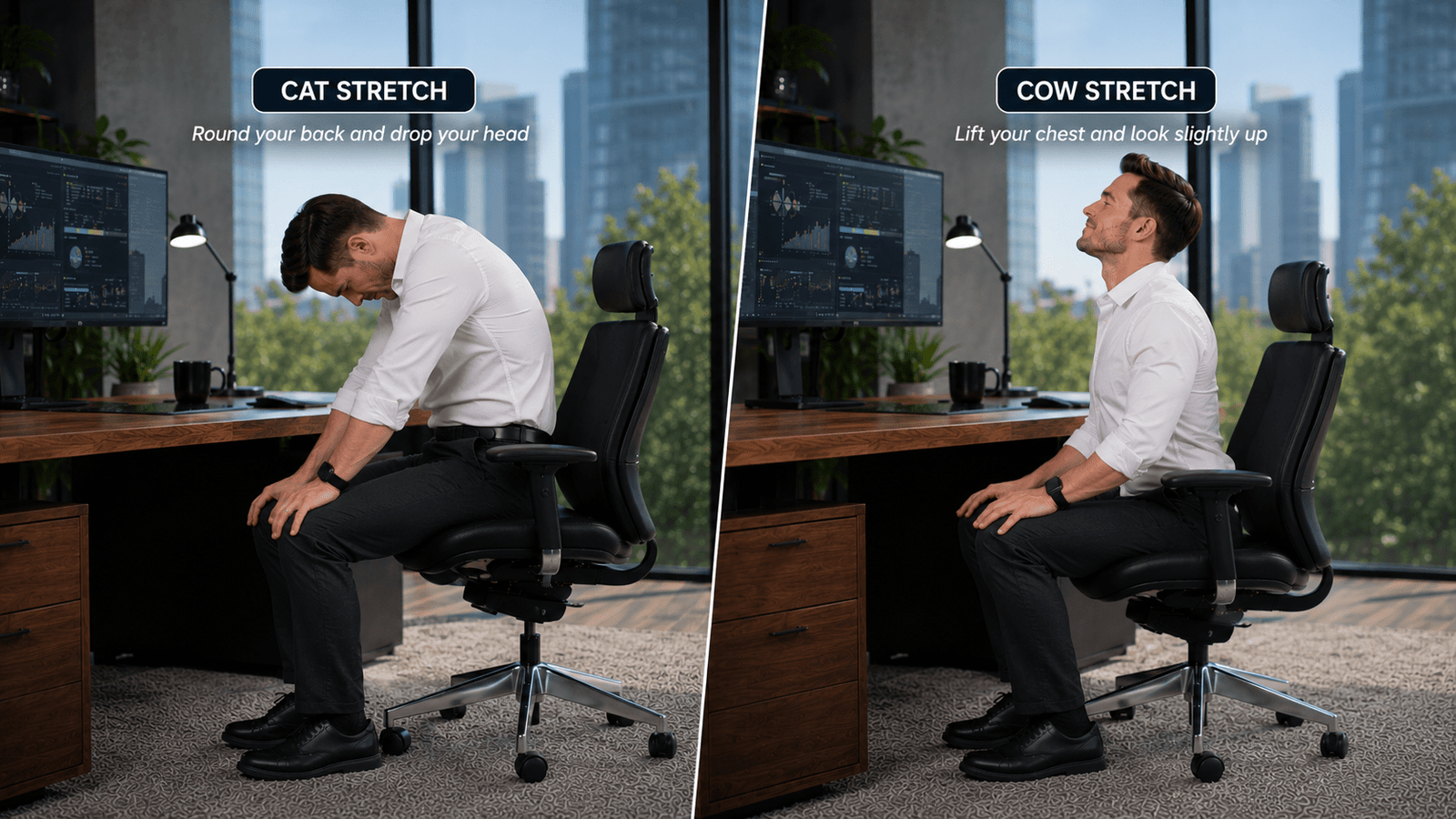
6. Seated Cat Cow Stretch
This movement helps improve spinal mobility and reduce lower back stiffness.
How To Do It
- Sit upright.
- Place hands on knees.
- Arch your back.
- Round your spine.
- Repeat slowly.
Benefits
- Improves spinal mobility
- Relieves tension
- Reduces stiffness
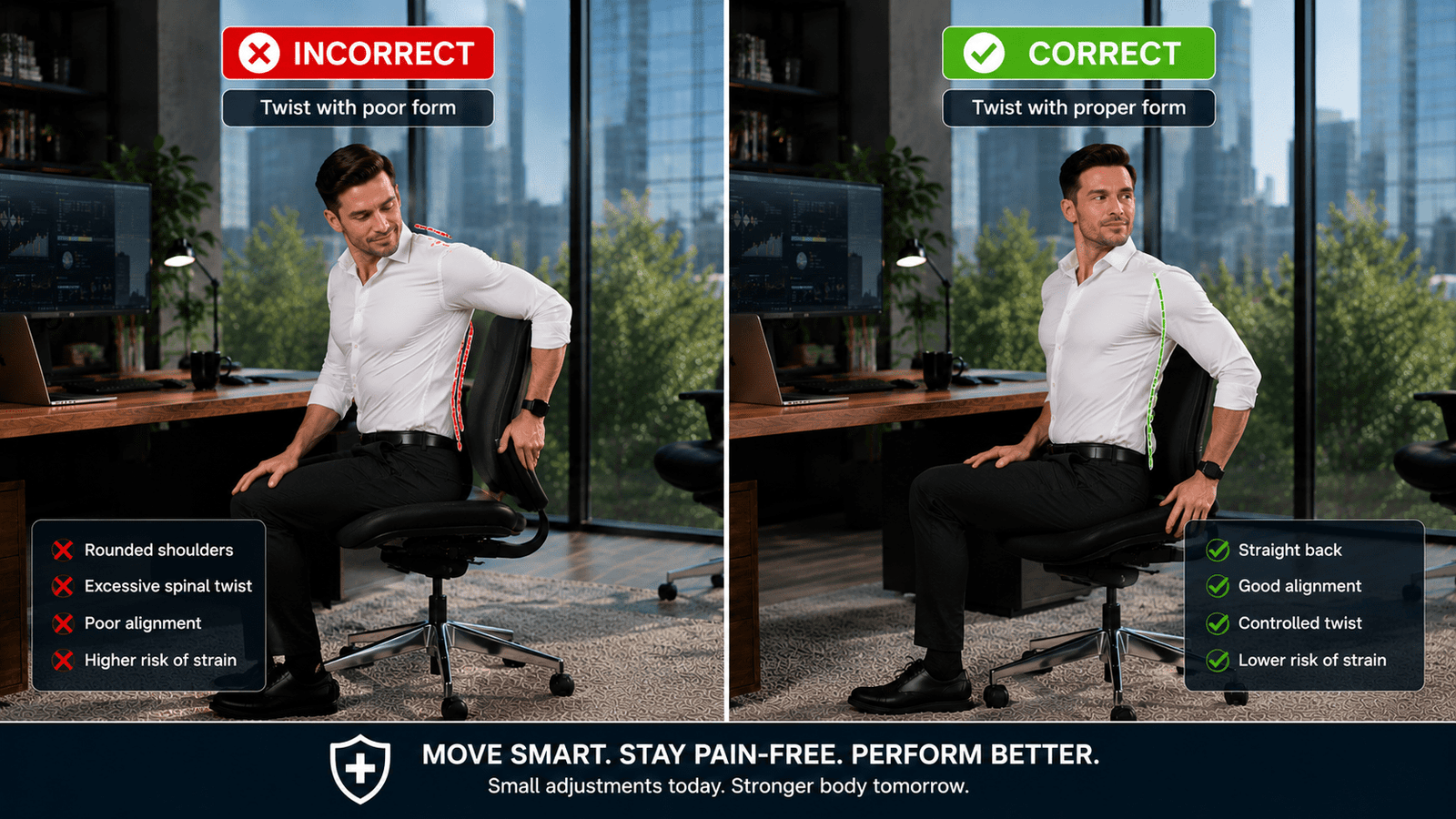
7. Seated Spinal Twist
This stretch targets the lower and middle back.
How To Do It
- Sit tall.
- Rotate your torso gently.
- Hold for 15 seconds.
- Repeat on both sides.
Benefits
- Improves flexibility
- Reduces tightness
- Supports spinal health
8. Knee To Chest Stretch
How To Do It
- Sit upright.
- Pull one knee toward your chest.
- Hold for 20 seconds.
- Switch sides.
Benefits
- Relieves lower back tension
- Improves mobility
- Reduces stiffness
Best Hip Stretches for Office Workers
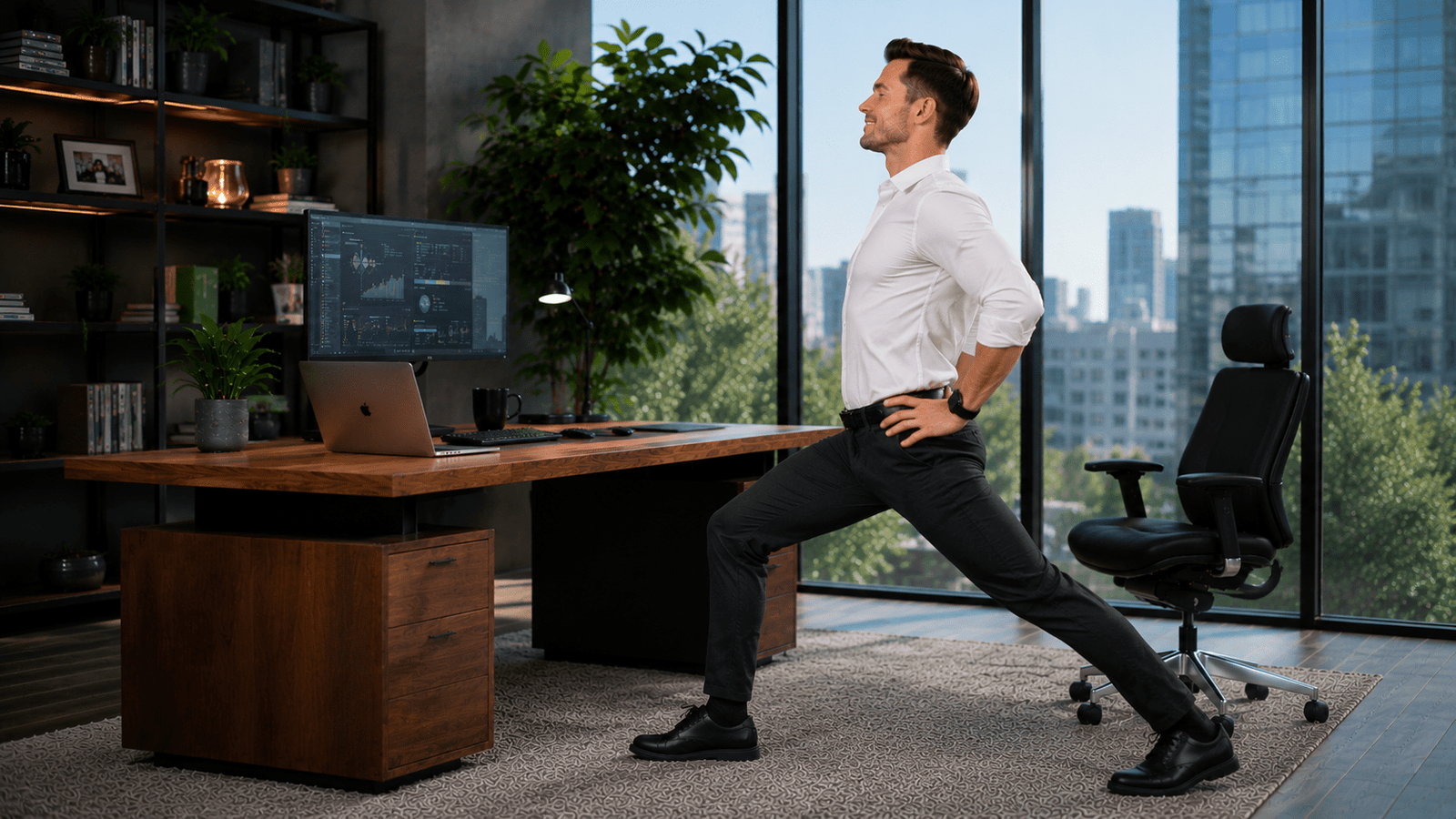
9. Standing Hip Flexor Stretch
Sitting for long periods shortens the hip flexors.
How To Do It
- Stand beside your desk.
- Step one foot behind you.
- Push hips forward.
- Hold for 30 seconds.
- Repeat on both sides.
Benefits
- Improves mobility
- Reduces lower back strain
- Opens tight hips
10. Figure Four Stretch
This stretch targets the glutes and hips.
How To Do It
- Sit upright.
- Place one ankle on the opposite knee.
- Lean forward gently.
- Hold for 20 seconds.
- Repeat on both sides.
Benefits
- Relieves hip tightness
- Improves flexibility
- Supports lower back health
According to NHS Physical Activity Guidance, regular stretching and movement can help improve mobility and reduce discomfort associated with prolonged sitting.
A Simple Daily Stretching Schedule
You don’t need to spend an hour stretching every day.
Try this simple schedule:
| Time | Stretch |
|---|---|
| 9:00 AM | Neck Stretch |
| 11:00 AM | Shoulder Stretch |
| 1:00 PM | Short Walk |
| 3:00 PM | Lower Back Stretch |
| 5:00 PM | Hip Stretch |
Small movement breaks throughout the day are often more effective than one long stretching session.
Common Stretching Mistakes Office Workers Make
Stretching Too Aggressively
Stretching should create mild tension, not pain.
Holding Your Breath
Controlled breathing improves relaxation and effectiveness.
Inconsistent Practice
Doing stretches once a week will not produce meaningful results.
Ignoring Posture
Stretching helps, but poor posture habits can quickly undo progress.
Remaining Sedentary All Day
Stretching should complement movement, not replace it.
Important Points to Remember
- Stretch regularly throughout the day.
- Move every 30 to 60 minutes.
- Focus on consistency rather than intensity.
- Combine stretching with proper workstation ergonomics.
- Listen to your body and avoid painful movements.
Frequently Asked Questions
How often should office workers stretch?
Most experts recommend taking movement breaks every 30 to 60 minutes and stretching several times throughout the workday.
Can stretching fix poor posture?
Stretching can help, but lasting improvements usually require better workstation habits and strengthening exercises.
What is the best stretch for lower back pain?
The seated cat-cow stretch and knee-to-chest stretch are often helpful for reducing lower back stiffness.
Why do my hips hurt after sitting all day?
Prolonged sitting can tighten hip flexors and reduce mobility, which may lead to discomfort.
Are stretching breaks better than sitting continuously?
Yes. Frequent movement breaks can improve circulation, reduce stiffness, and support overall musculoskeletal health.
Disclaimer
This article is for educational purposes only and should not be considered medical advice. Consult a qualified healthcare professional if you have persistent, severe, or worsening pain.
Conclusion
Neck pain, shoulder tension, lower back discomfort, and tight hips are common challenges for office workers. Fortunately, a few simple stretches performed consistently throughout the day can help reduce stiffness, improve mobility, and support healthier movement patterns.
The key is consistency. Small stretching breaks throughout your workday can often have a bigger impact than occasional long workout sessions.
For a complete approach to workplace wellness, fitness, nutrition, and healthy work habits, explore our guide on Health and Fitness for Office Workers.
If lower back pain is your primary concern, don’t miss our guide on 5 Minute Desk Workouts to Relieve Back Pain for Remote Workers.