
How you start your morning often affects how you feel for the rest of the day.
For many office workers, mornings begin with checking emails, drinking coffee, and sitting down at a desk. Unfortunately, jumping straight into work without moving your body can contribute to stiffness, poor posture, low energy levels, and reduced mobility.
The good news is that you don’t need an hour-long workout to feel better.
A simple 10-minute morning exercise routine can help wake up your muscles, improve circulation, increase mobility, and prepare your body for a productive day.
If you’re building a healthier lifestyle around your desk job, start with our complete guide on Health and Fitness for Office Workers.
If stiffness is already affecting your mobility, you may also benefit from our Daily Mobility Routine for Desk Workers.
And if posture is one of your biggest challenges, don’t miss our guide on How to Improve Posture While Working at a Computer.
In this guide, you’ll learn the best morning exercises for office workers and how to build a simple routine that supports energy, posture, mobility, and long-term health.
Table of Contents
- Why Office Workers Need Morning Exercise
- Benefits of Exercising Before Work
- 10 Best Morning Exercises for Office Workers
- A Simple 10-Minute Morning Routine
- Common Morning Exercise Mistakes
- FAQs
- Conclusion
Why Office Workers Need Morning Exercise
During sleep, the body remains relatively inactive for several hours.
Many people wake up feeling:
- Stiff
- Tight
- Sluggish
- Low on energy
When this is followed by several more hours of sitting at a desk, mobility and posture can suffer.
According to Harvard Health Publishing, regular physical activity can help improve energy levels, mobility, and overall health.
Morning movement helps prepare your body for the demands of the day ahead.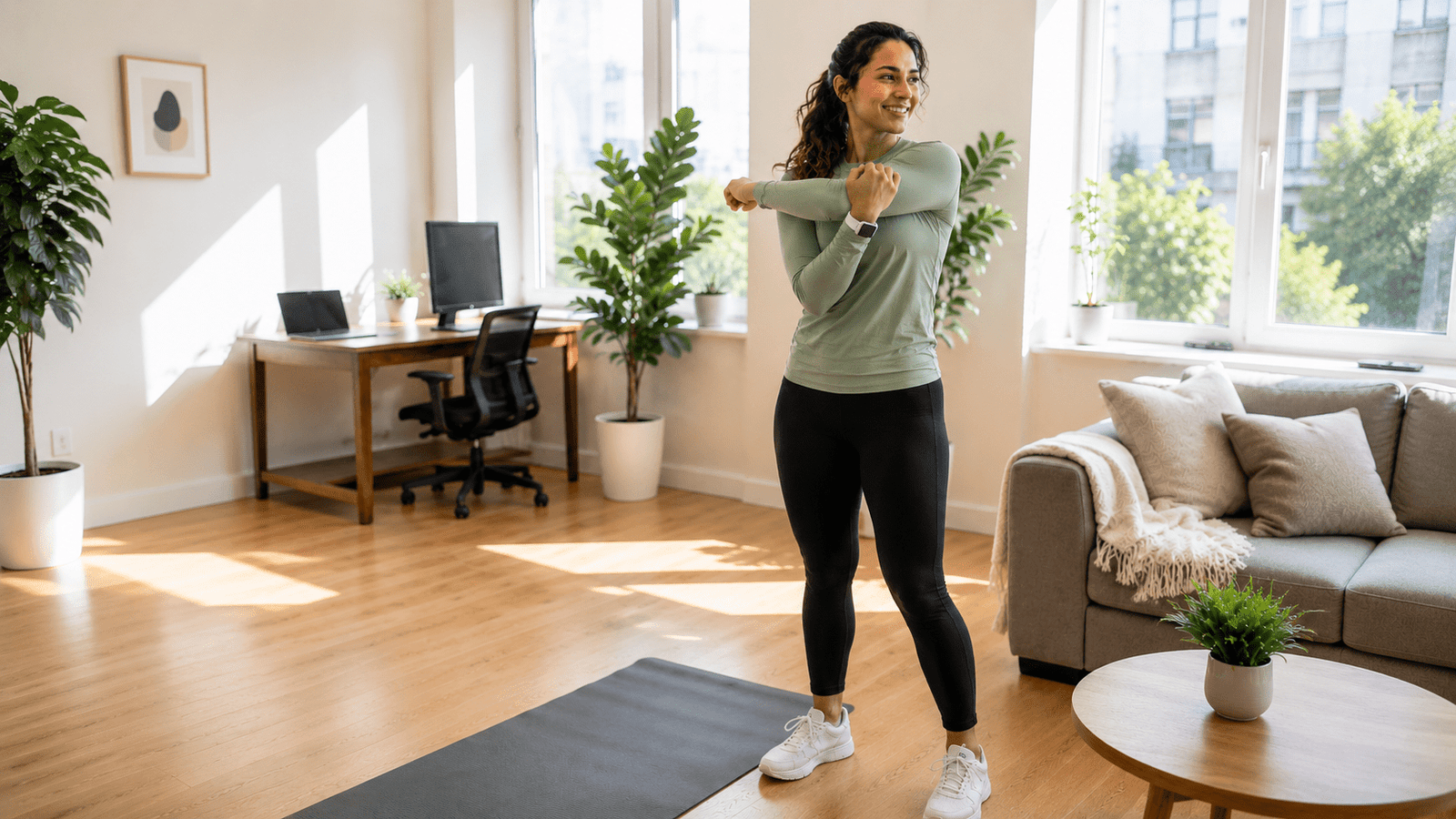
Benefits of Exercising Before Work
A short morning workout offers several benefits for desk workers.
Increased Energy
Movement helps improve circulation and alertness.
Better Mobility
Morning exercises help loosen stiff muscles and joints.
Improved Posture
Activating key muscle groups can support healthier posture throughout the day.
Reduced Stiffness
Many office workers notice less discomfort in the neck, shoulders, hips, and back.
Improved Focus
Exercise can help improve concentration and productivity.
10 Best Morning Exercises for Office Workers
These exercises require little to no equipment and can be performed at home.
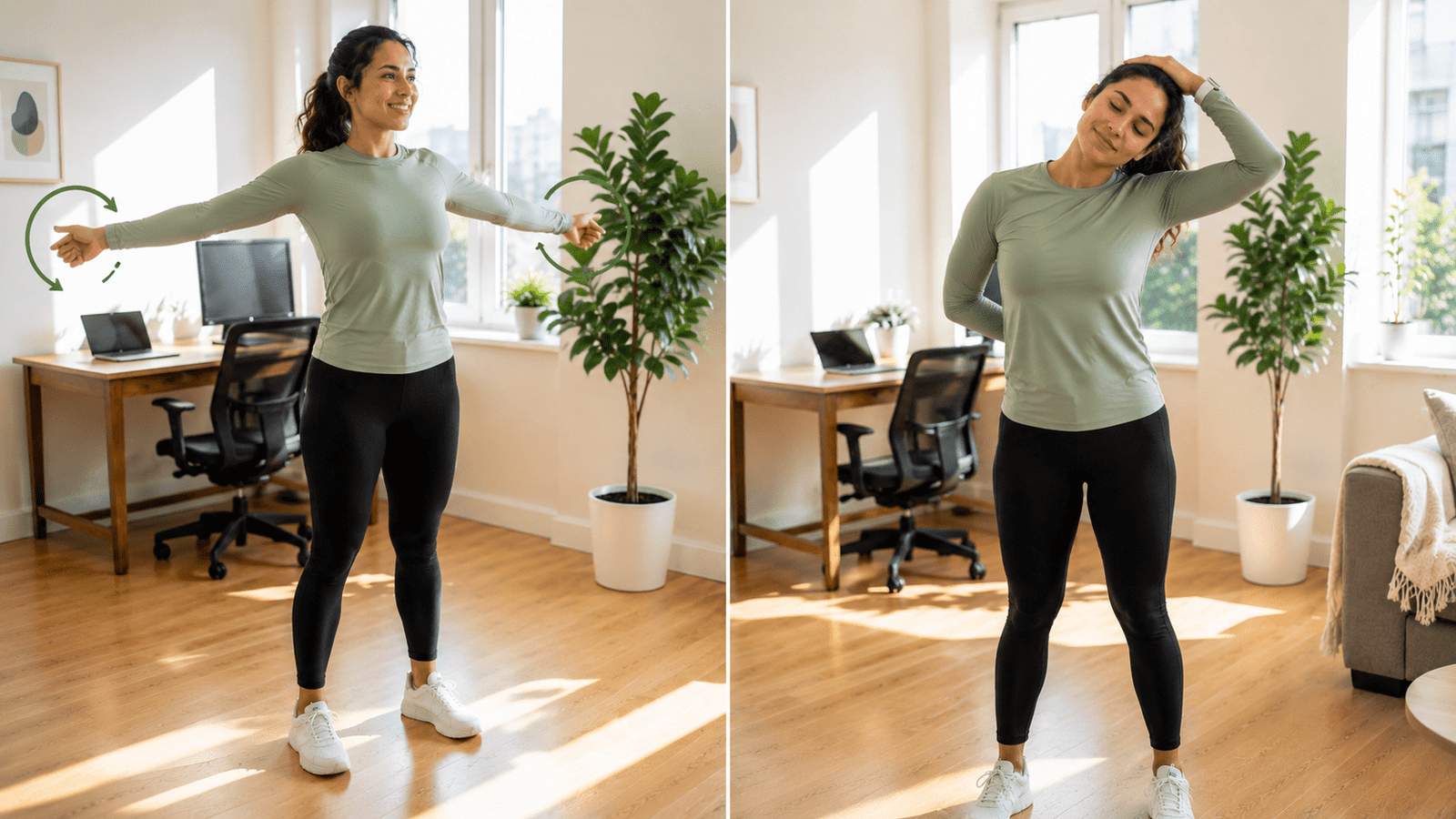
1. Arm Circles
Arm circles help wake up the shoulders and upper body.
How To Perform
- Stand tall.
- Extend arms to the sides.
- Make small circles forward.
- Reverse direction.
- Continue for 30 seconds.
Benefits
- Improves shoulder mobility
- Increases circulation
- Reduces stiffness
2. Neck Mobility Movements
Office workers often develop neck tightness from prolonged screen use.
How To Perform
- Slowly look left and right.
- Tilt ear toward shoulder.
- Move gently through comfortable ranges.
Benefits
- Improves neck mobility
- Reduces tension
- Supports posture
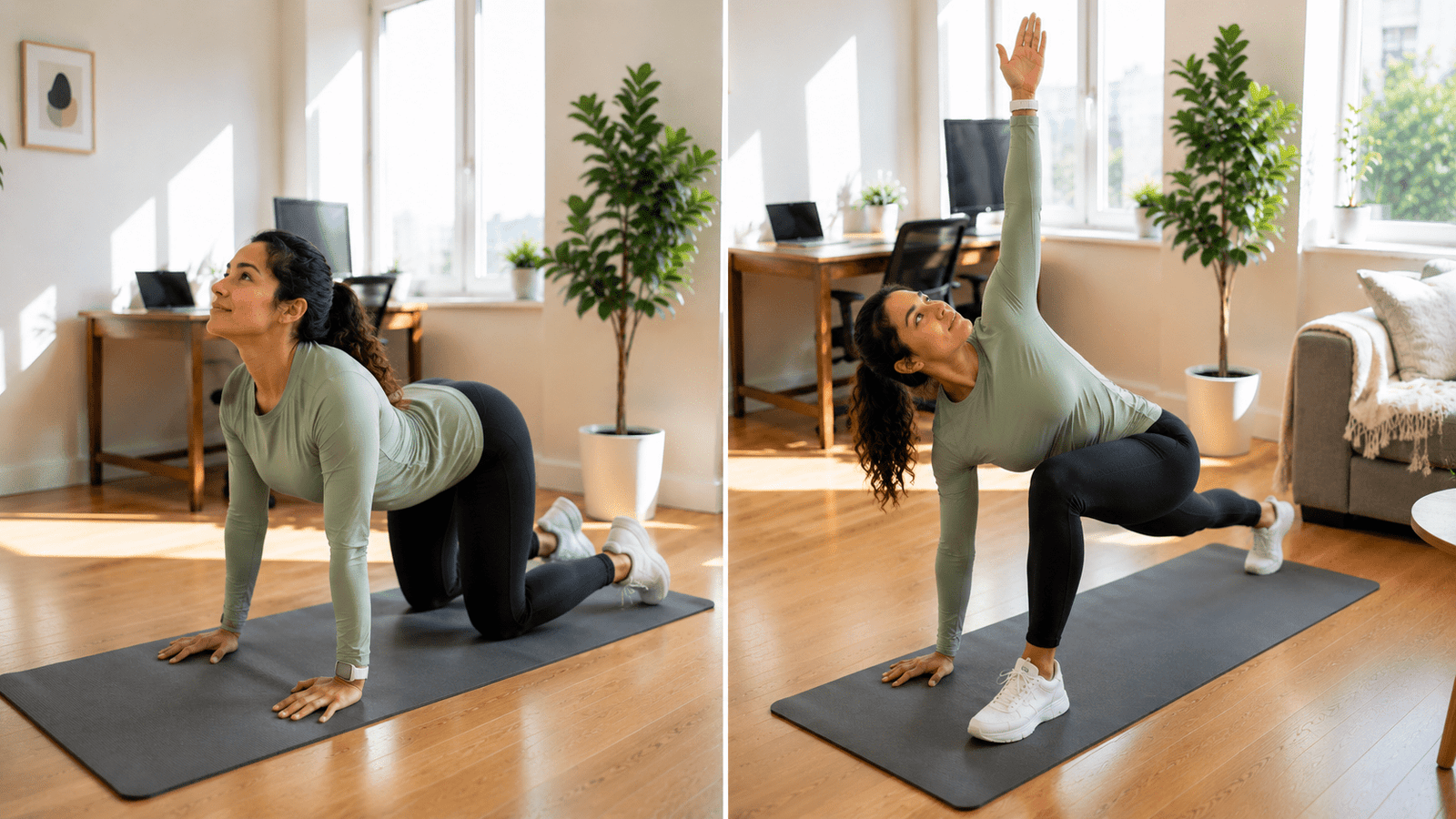
3. Cat-Cow Stretch
This exercise improves spinal mobility and helps reduce stiffness.
How To Perform
- Start on hands and knees.
- Arch your back.
- Round your spine.
- Repeat slowly.
Benefits
- Improves spinal mobility
- Reduces stiffness
- Supports healthy movement
4. World’s Greatest Stretch
This popular movement targets multiple muscle groups.
How To Perform
- Step into a lunge.
- Place one hand on the floor.
- Rotate your upper body.
- Repeat on both sides.
Benefits
- Improves total body mobility
- Opens hips
- Supports flexibility
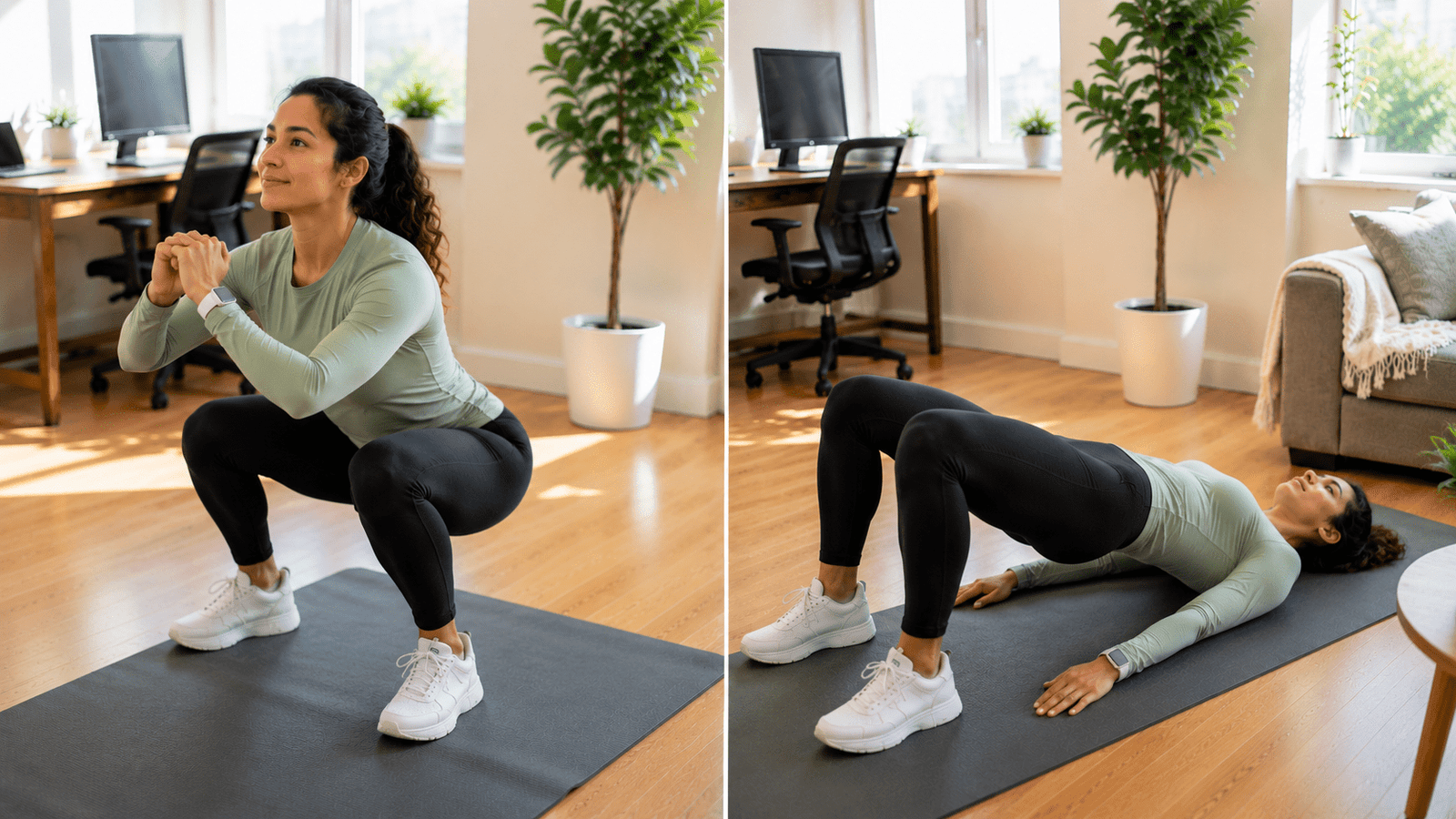
5. Bodyweight Squats
Squats activate major muscle groups and increase circulation.
How To Perform
- Stand with feet shoulder-width apart.
- Lower into a squat.
- Return to standing.
- Perform 10 repetitions.
Benefits
- Activates lower body muscles
- Improves mobility
- Boosts circulation
6. Glute Bridges
Strong glutes help support posture and reduce lower back strain.
How To Perform
- Lie on your back.
- Bend knees.
- Lift hips upward.
- Lower slowly.
- Perform 10 repetitions.
Benefits
- Activates glutes
- Supports posture
- Improves hip function
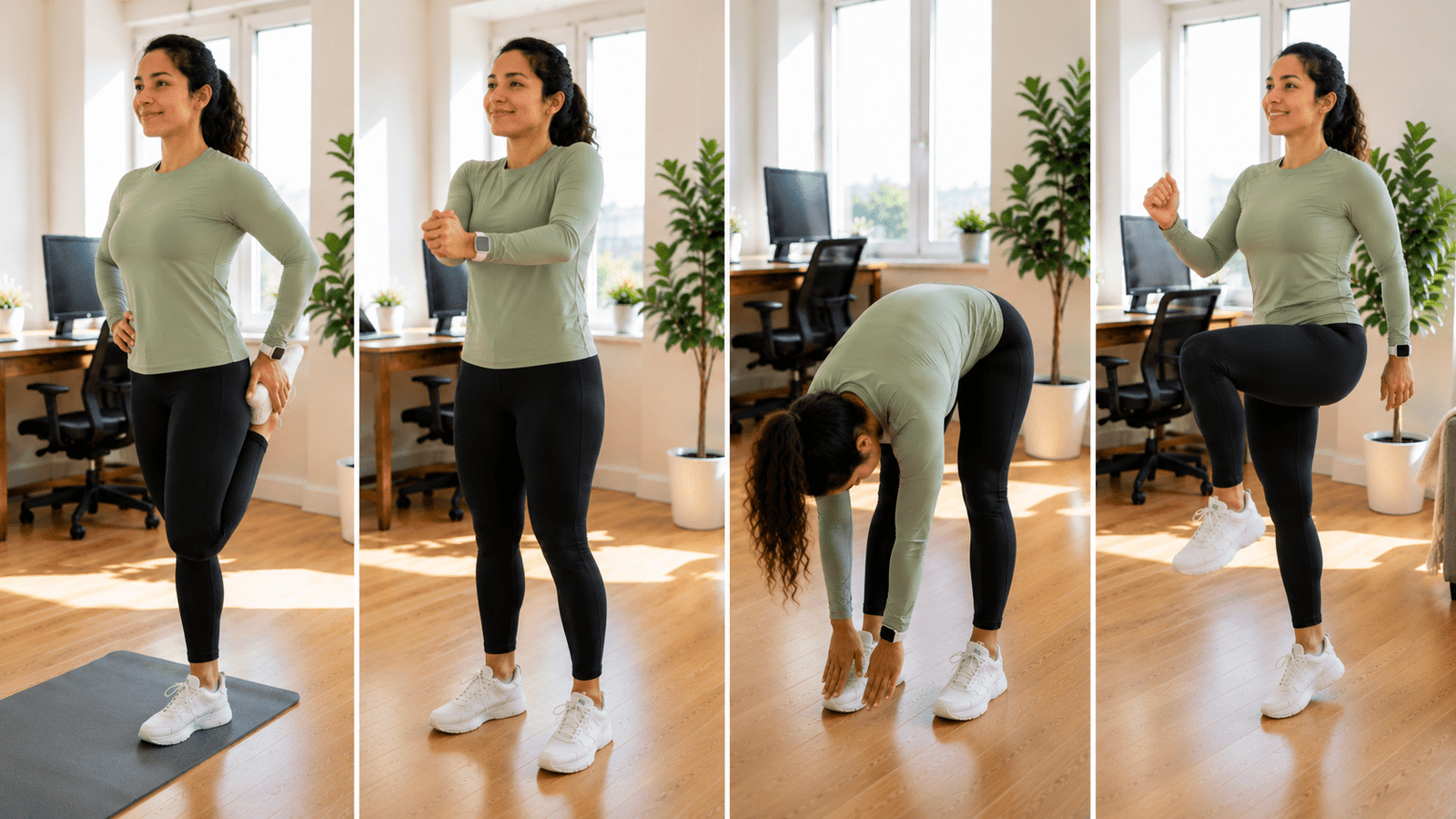
7. Standing Hip Flexor Stretch
Sitting often creates tight hip flexors.
How To Perform
- Step one foot backward.
- Push hips gently forward.
- Hold for 30 seconds.
- Repeat on both sides.
Benefits
- Improves hip mobility
- Reduces stiffness
- Supports lower back comfort
8. Shoulder Blade Squeezes
This exercise activates upper back muscles.
How To Perform
- Sit or stand tall.
- Pull shoulder blades together.
- Hold for 3 seconds.
- Repeat 10 times.
Benefits
- Supports posture
- Activates upper back
- Reduces shoulder tension
9. Standing Toe Touches
A simple movement that promotes flexibility.
How To Perform
- Stand tall.
- Reach toward toes.
- Move within a comfortable range.
Benefits
- Improves flexibility
- Increases mobility
- Reduces stiffness
10. Marching in Place
This movement increases heart rate and prepares the body for activity.
How To Perform
- Stand upright.
- Lift knees alternately.
- Continue for 60 seconds.
Benefits
- Increases circulation
- Boosts energy
- Wakes up the body
A Simple 10-Minute Morning Routine
Try the following sequence:
| Exercise | Time |
|---|---|
| Arm Circles | 1 Minute |
| Neck Mobility | 1 Minute |
| Cat-Cow Stretch | 1 Minute |
| World’s Greatest Stretch | 2 Minutes |
| Squats | 1 Minute |
| Glute Bridges | 1 Minute |
| Hip Flexor Stretch | 1 Minute |
| Shoulder Blade Squeezes | 1 Minute |
| Toe Touches | 30 Seconds |
| Marching in Place | 30 Seconds |
This routine takes approximately 10 minutes and targets the areas most affected by desk work.
Common Morning Exercise Mistakes
Doing Too Much Too Soon
Start with a manageable routine and build gradually.
Skipping Mobility Work
Mobility exercises prepare your body for movement.
Our Daily Mobility Routine for Desk Workers provides a more detailed mobility-focused plan.
Exercising With Poor Form
Quality movement is more important than speed.
Inconsistency
A short routine performed daily is often more effective than a long workout performed occasionally.
Ignoring Recovery
Sleep, hydration, and nutrition remain important parts of overall health.
Important Points to Remember
- Morning exercise doesn’t need to be complicated.
- Consistency matters more than intensity.
- Mobility and posture work together.
- A few minutes of movement can improve energy and comfort.
- Small habits create long-term results.
Frequently Asked Questions
How long should a morning workout be?
For most office workers, 10 to 15 minutes is enough to start experiencing benefits.
Should I exercise before breakfast?
Personal preference varies. Many people feel comfortable performing light exercise before eating.
Can morning exercise improve posture?
Yes. Activating key muscles and improving mobility can support better posture throughout the day.
What if I don’t have much time?
Even five minutes of movement is better than none.
Is stretching enough in the morning?
Stretching helps, but combining mobility and light strength exercises often provides better results.
Disclaimer
This article is for educational purposes only and should not be considered medical advice. Consult a qualified healthcare professional before starting a new exercise program if you have existing health concerns.
Conclusion
A short morning exercise routine can help office workers start the day with more energy, better mobility, and improved posture.
You don’t need expensive equipment or a complicated fitness plan. A few minutes of consistent movement each morning can help reduce stiffness and prepare your body for a productive workday.
For a complete approach to workplace wellness, fitness, and healthy habits, explore our guide on Health and Fitness for Office Workers.