

It’s 7:14 a.m. One child can’t find their left shoe. The other is announcing they need a poster board for a project due today. You haven’t had your coffee yet. And somehow you’re supposed to be at the office by 8:30 a.m.
Sound familiar?
If you work, this morning madness isn’t a bad day. It’s just Tuesday.
Parental burnout is real, and it’s not your fault. You’re running a household, working full-time, raising children, and trying to juggle it all. The exhaustion you’re feeling isn’t a sign of failure. It’s a sign that the system isn’t working.
The solution: You don’t need longer hours in the day. You need smarter systems that take the work off your hands.
This article presents practical, uncomplicated time-saving tricks for working parents that can be easily integrated into everyday life. Perfection isn’t necessary.
Why modern parenting feels like a second full-time job

Let’s be honest: Organizing a family is objectively more difficult these days than it used to be.
Working hours have extended into the evenings and weekends. Children have more activities, more homework, and more screen time that need supervision. And on top of all that, you still have to manage the household.
The mental strain of household management
It’s not just the tasks themselves that drain you. It’s thinking about the tasks.
Did you remember to reschedule the dentist appointment? Is there enough milk? When is the registration deadline for the soccer club? Who’s picking up the kids on Thursday?
This invisible mental strain is constantly swirling around in the back of your mind and is simply exhausting. Studies show that the burden disproportionately affects working mothers, although many working fathers also suffer. It drains concentration, sleep, and patience.
Why Traditional Routines Don’t Work for Busy Modern Families
It’s not enough for most families. You can’t manage the chaos through planning if the underlying systems aren’t working.
Morning routines fail when they rely on everyone working together perfectly. Task plans fail when no one sticks to them. Meal plans fail when daily life becomes stressful and you’re too tired to implement them.
What works instead? Developing systems that are simple enough to get you through a demanding week.
5 Practical Tips for Having More Time

These tricks are very popular with working parents. They aren’t complicated. However, they do require some preparation before the chaos begins.
1. The Perfect Preparation the Night Before
This simple habit has probably saved more working parents from morning stress than anything else.
Take 10 to 15 minutes the night before to prepare everything for the next day. Lay out everyone’s clothes (yes, including your own). Pack the lunchboxes and put them in the refrigerator. Leave the backpacks by the door. Sign all the consent forms lying on the kitchen counter.
The goal is simple: Make all your decisions tonight so you don’t have to make them tomorrow morning.
When you’re tired and half asleep, choosing between the blue and the gray shirt feels like a real dilemma. If you’ve already prepared everything, it’s no longer a decision at all.
Start small. Try preparing your clothes and backpack in advance for just one week. You’ll notice the difference immediately.
2. Automate and Delegate with Smart Home Appliances
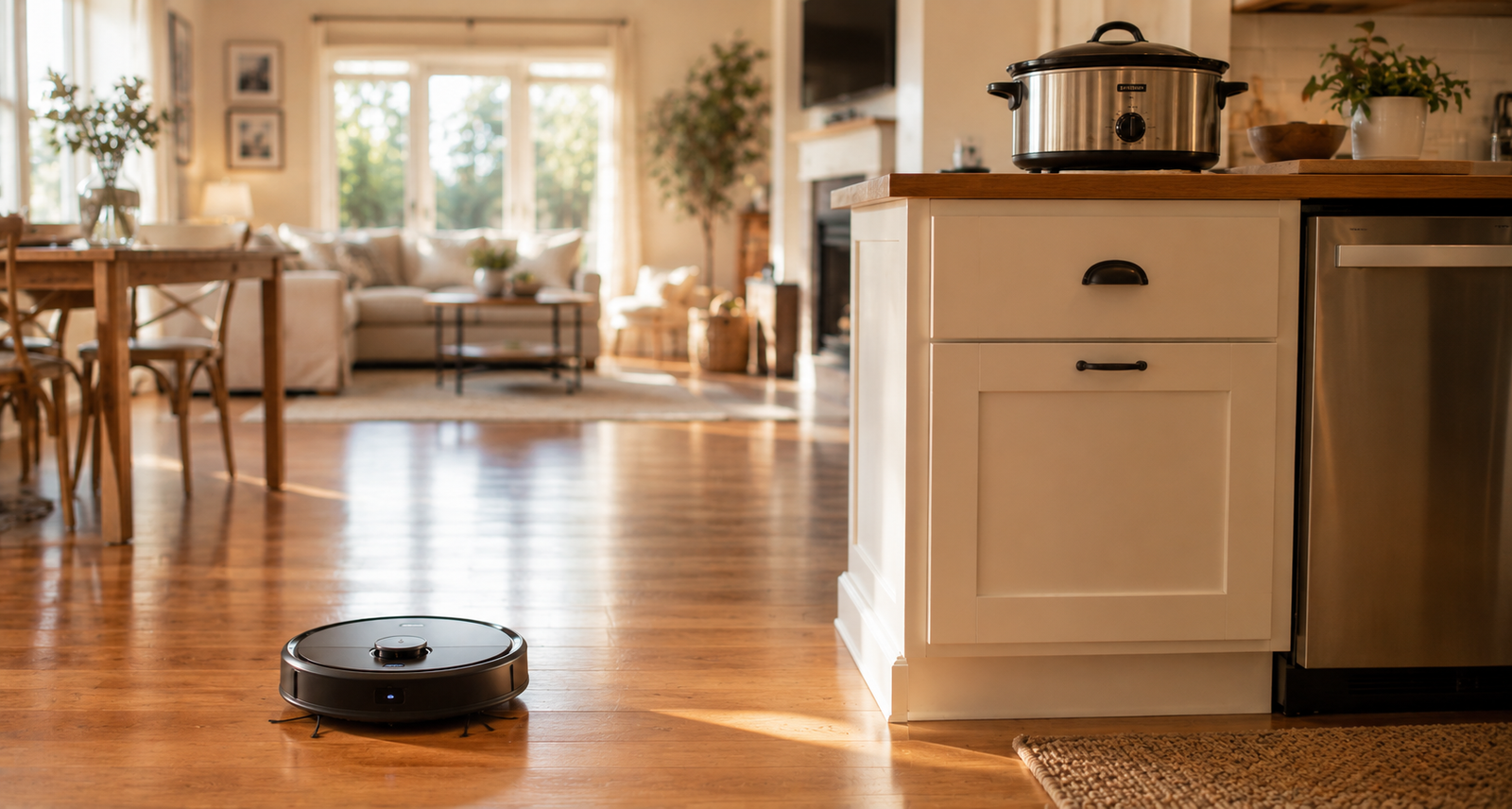
You don’t need a smart home. A few well-placed features are perfectly sufficient.
A robot vacuum set to run every morning on a timer will pick up crumbs and pet hair without you having to lift a finger. With a slow cooker or Instant Pot, dinner will be ready before your workday even begins. If you have a baby, an automatic bottle washer is worth every penny when you only get four hours of sleep.
It’s not about gadgets for gadget’s sake. It’s about identifying time-consuming tasks and asking yourself: Can’t someone else do this?
- Dishwasher with a timer? Yes.
- Ordering groceries instead of shopping on Saturdays? Absolutely.
- Smart thermostat that doesn’t require any maintenance? A small perk, but it adds up.
Every minute you save by avoiding repetitive tasks is a minute you can give to your children or yourself.
3. The 15-Minute Micro-Cleaning Rule

This sounds almost too simple, but it works.
Instead of letting clutter accumulate throughout the week and then spending all of Saturday cleaning, tidy up for 15 minutes every day. Set a timer. Choose one area: the kitchen countertops, the living room floor, the bathroom sink. Get started.
When the timer goes off, stop. That’s the whole rule.
You don’t have to clean the whole house. You simply prevent it from ending in chaos.
Involve the kids. Even a four-year-old can put toys away in a box. A seven-year-old can wipe down a table. Assign each child a small area and be realistic. It’s about participation, not perfection.
4. Meal Batch and Stews

Having to think about what to have for dinner every night is a subtle form of torture.
Meal batter doesn’t mean spending all of Sunday in the kitchen. It simply means cooking more when you’re already cooking. Cook double the amount of rice. Roast two trays of vegetables instead of just one. Make a big pot of pasta sauce and freeze half.
Stews and stir-fries are your best friends for weekdays.
Think sheet pan chicken and vegetables, slow cooker soups, or a big pan of fried rice with whatever you have in your fridge.
A few quick dinner ideas for real families:
- Sausages and vegetables from a sheet pan (15 minutes active preparation time)
- Chicken tacos from the slow cooker (simply put them in before work, chop them up at home)
- Pasta with ready-made marinara sauce and frozen spinach (no guilt required)
- Egg fried rice (10 minutes, using leftover rice)
No one judges your food choices. The main thing is that the kids are full and happy, not gourmet fare.
5. Share the chores (children can help more than you think)

Let’s be honest: Doing everything alone leads to burnout. And you unintentionally teach children that they don’t have to contribute.
Even two- or three-year-olds can help with simple tasks. At six or seven, they can then take on real responsibility. The important thing is that the help is visible and regular.
A simple chore chart on the fridge is much more practical than trying to remember who does what. Consider your child’s age and keep the list short.
Here are a few ideas by age:
- 2-4 years: Putting away toys, taking out the trash, taking dishes to the sink
- 5-7 years: Feeding pets, helping to unload the dishwasher, wiping down surfaces
- 8-12 years: Doing laundry (really!), helping with cooking, vacuuming the room
- Teenagers: Doing entire loads of laundry, cooking together once a week, going grocery shopping
Yes, it takes patience to learn all of this. The first few weeks will be a bit slower and more chaotic. But after six months, you’ll have real support at home.
2-4 years: Putting away toys, taking out trash, taking out the trash, taking out the dishes
5-7 years: Feeding pets, helping to unload the dishwasher, wiping down surfaces
8-12 years: Doing laundry (really!), helping to cook, vacuuming the room
Teenagers: Doing full loads of laundry, cooking together once a week, going grocery shopping
Yes, it takes patience to learn all of this. The first few weeks will be a bit slower and more chaotic. But after six months, you’ll have real support at home.
When You Should Let Go of Perfectionism

Here’s something no one tells you often enough: A spotless house isn’t the goal. A happy family is…
If the floor hasn’t been swept in a week, there’s a pile of laundry on the chair, or you only had cereal for dinner on Tuesday: That’s perfectly fine. Everything is okay.
The stress of having a perfect home is often greater than the mess itself. If you snap at your kids because the dishes are stressing you out, the dishes aren’t the real problem.
Allow yourself to let go of some things. Think about what’s truly important to you and invest your energy in those things. For most parents, that’s spending time with their children and finding a little inner peace at the end of the day. The baseboards can wait.
Step by Step

You don’t have to turn your whole life upside down this week.
Pick one thing from this list. Just one. Maybe lay out tomorrow’s clothes tonight. Maybe add a slow cooker recipe to your shopping list. Start doing that.
The best system for busy, working parents isn’t the most elaborate. It’s the one you can actually stick to.
You’re already doing amazing things by managing everything. A few smart habits can lighten the load a little, and it’s worth the effort.
Did you enjoy these tips? Save this post for the next time the morning chaos erupts. And if you know a time-saving trick that works for your family, share it with us below.