Introduction
You wake up, grab your phone, and check Slack before your feet even hit the floor. Ten minutes later, you’re answering emails in bed. Before you know it, the day is gone, your eyes are burning, and you’re still staring at your laptop at 8 PM.
Sound familiar?
For many remote employees and freelancers, working from home hasn’t created the freedom they imagined. Instead, the line between work and personal life has almost disappeared. Your office is your kitchen. Your living room is your meeting room. And your workday seems to follow you everywhere.
If you’ve been searching for how to separate work and home life remote, you’re not alone. Many people experience remote work burnout symptoms, constant stress, and screen exhaustion because work never truly ends.
The good news is that you don’t need to quit your remote job. You don’t need a major life overhaul either. In most cases, you simply need stronger boundaries that help your brain recognize when work starts and when it ends.

The Hidden Cost of Working from Home: Why We Burn Out
Working remotely offers flexibility, but it also removes many of the natural boundaries that once protected our personal time.
When your workplace and your home occupy the same space, your brain has a harder time switching off. That constant mental overlap can lead to exhaustion, frustration, and eventually burnout.
The Total Disappearance of the Daily Commute
Most people used to complain about commuting.
Now many remote workers secretly miss it.
The drive, train ride, or walk home acted as a mental transition period. It gave your brain time to leave work behind before entering your personal life.
Without that buffer, work ends and home begins in the exact same chair. Your mind never gets a clear signal that the workday is over.
The “Just One More Email” Syndrome
One of the most common remote work burnout symptoms starts with a simple thought:
“I’ll just check one thing.”
That quick glance turns into answering an email. Then a Slack message arrives. Then another task appears.
Because your laptop is always nearby, work remains constantly accessible. Over time, those extra minutes add up to hours of unpaid mental labor and chronic stress.

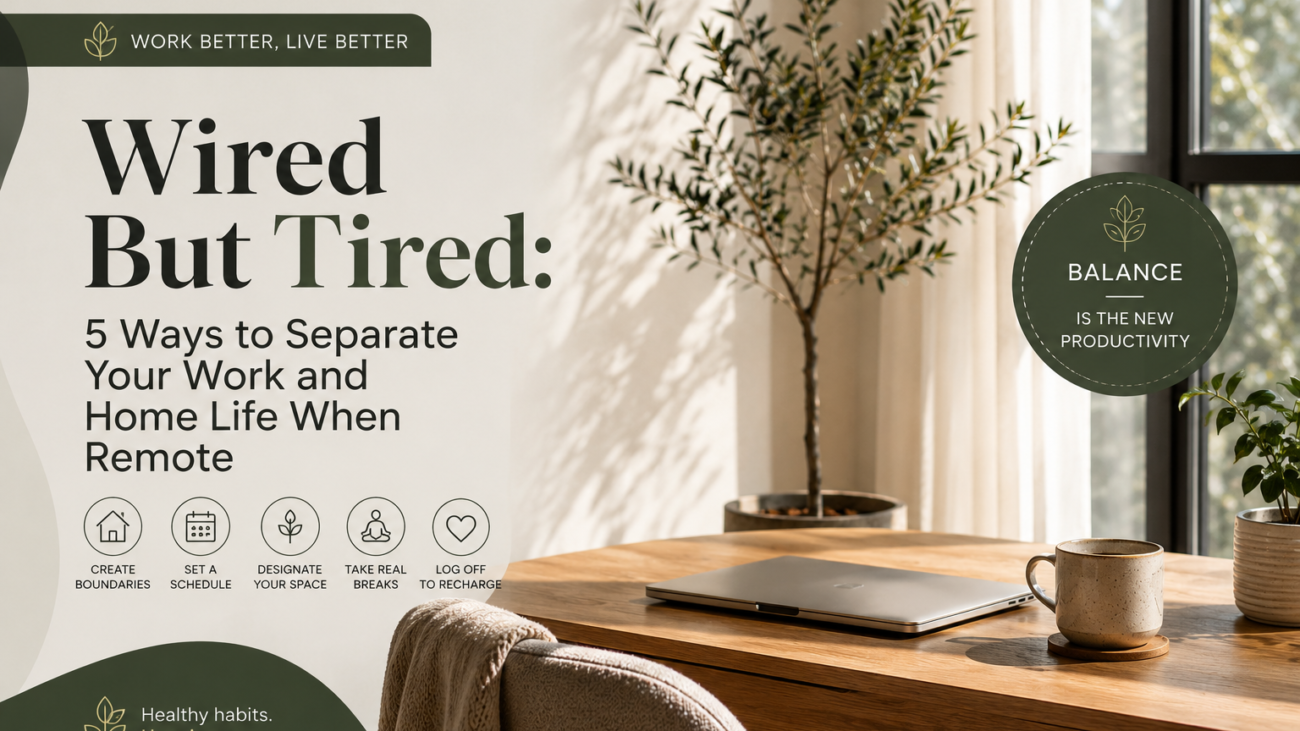
5 Ways to Separate Your Work and Home Life When Remote
Creating boundaries doesn’t require expensive equipment or a dedicated home office. Small habits often create the biggest changes.
1. Create a “Fake Commute” to Start and End Your Day
One of the simplest zoom fatigue fixes is rebuilding the transition time your commute once provided.
Before opening your laptop:
- Take a 10 minute walk around the block.
- Sit outside with your coffee.
- Listen to a podcast while stretching.
- Spend a few quiet minutes planning your day.
At the end of work, repeat a similar routine.
The goal is to tell your brain: Work is starting now. Work is ending now.
That mental separation matters more than most people realize.

2. Establish a Physical Work Zone
Your brain forms strong associations with physical spaces.
When you work from bed, your brain begins linking your sleeping area with deadlines, meetings, and stress. That’s one reason many remote workers struggle with sleep quality.
Try to keep work limited to one specific location:
- A desk
- A table
- A dedicated chair
- A small corner of a room
Even if space is limited, consistency helps.
One chair for work is often better than working everywhere.
3. Use the “Digital Lock-Up” Routine
Think of your workday like a retail store.
Stores don’t stay open forever. They lock the doors.
You should too.
At the end of your workday:
- Close every work-related tab.
- Log out of communication apps.
- Shut down your laptop completely.
- Place it in a drawer, cabinet, or bag.
- Silence work notifications on your phone.
This simple habit is one of the most effective strategies for setting boundaries working from home.
Out of sight often means out of mind.

4. Schedule Non-Negotiable Self-Care Breaks
Many remote workers spend hours moving from one video meeting to another without taking a real break.
That’s a fast track to screen burnout.
Schedule breaks directly on your calendar and treat them like meetings.
Some examples include:
- A 30 minute screen-free lunch
- A short walk outside
- Stretching sessions
- Reading a physical book
- Eating away from your workspace
Your lunch break should not happen in front of another screen.
Giving your eyes and brain a chance to reset can dramatically reduce fatigue.
5. Set Clear Expectations with Your Team
Many people stay available after hours because they worry about appearing uncommitted.
The result is constant accessibility and growing resentment.
Instead, communicate your working hours clearly.
You can say things like:
- “I’m offline after 5:30 PM.”
- “I’ll respond first thing tomorrow morning.”
- “I don’t check messages after business hours.”
Most managers and clients appreciate clear communication.
A big part of setting boundaries working from home is teaching people when you’re available and when you’re not.

Signs You Need a Tech Detox Immediately
Sometimes your body starts sending warning signs before you recognize burnout.
Pay attention if you’re experiencing:
- Dry, irritated, or blurry eyes
- Frequent headaches
- Constant irritability
- Trouble sleeping
- Feeling mentally exhausted after video calls
- Difficulty concentrating
- Anxiety when notifications appear
- The urge to check work messages during personal time
- An inability to mentally disconnect from work
These are common indicators that screen time and work stress may be overwhelming your recovery time.
If several of these symptoms sound familiar, it’s time to take action before burnout becomes harder to reverse.

Final Thoughts
Remote work doesn’t have to feel like living at the office.
The problem usually isn’t the remote job itself. It’s the lack of clear boundaries between your professional and personal life.
If you’re struggling with remote work burnout symptoms, feeling overwhelmed by endless meetings, or searching for practical zoom fatigue fixes, start small.
Take a walk before work. Close the laptop at the same time every day. Eat lunch away from your desk.
You don’t have to change everything at once.
One boundary today can create a completely different workday tomorrow. And sometimes, that’s all it takes to start feeling like yourself again.