If your job requires sitting at a desk for most of the day, you’re not alone. Millions of office workers spend long hours sitting in front of a computer, often leading to stiffness, low energy, poor posture, and reduced physical activity. Over time, these habits can affect both your health and productivity.
Fortunately, staying active during the workday doesn’t require a gym membership or lengthy workouts. Small changes such as taking movement breaks, walking more often, stretching regularly, and improving your workstation setup can make a significant difference.
In addition to regular movement, combining healthy eating, mobility exercises, and proper ergonomics helps reduce the negative effects of prolonged sitting and supports long term wellbeing.
For a complete workplace wellness strategy, explore our Health and Fitness for Office Workers guide. You may also find our articles on Daily Mobility Routine for Desk Workers, Best Stretches for Office Workers, and Improve Posture While Working at a Computer useful.
In this guide, you’ll learn practical ways to stay active when you sit all day at work, reduce stiffness, improve posture, and build healthier daily habits.
Quick Answer
The best way to stay active when you sit all day at work is to take movement breaks every 30 to 60 minutes, walk regularly, stretch throughout the day, use an ergonomic workstation, and include short exercises in your daily routine. Even small amounts of movement can improve circulation, posture, and energy levels.
Table of Contents
- Why Sitting All Day Can Be a Problem
- Benefits of Staying Active at Work
- 12 Practical Ways to Stay Active During the Workday
- Common Mistakes Office Workers Make
- A Simple Daily Activity Schedule
- FAQs
- Conclusion
Why Sitting All Day Can Be a Problem
The human body is built for movement.
Unfortunately, many office workers spend most of their waking hours sitting at a desk, commuting, and relaxing in front of screens.
According to World Health Organization Physical Activity Guidelines, insufficient physical activity is one of the leading risk factors for poor health worldwide.
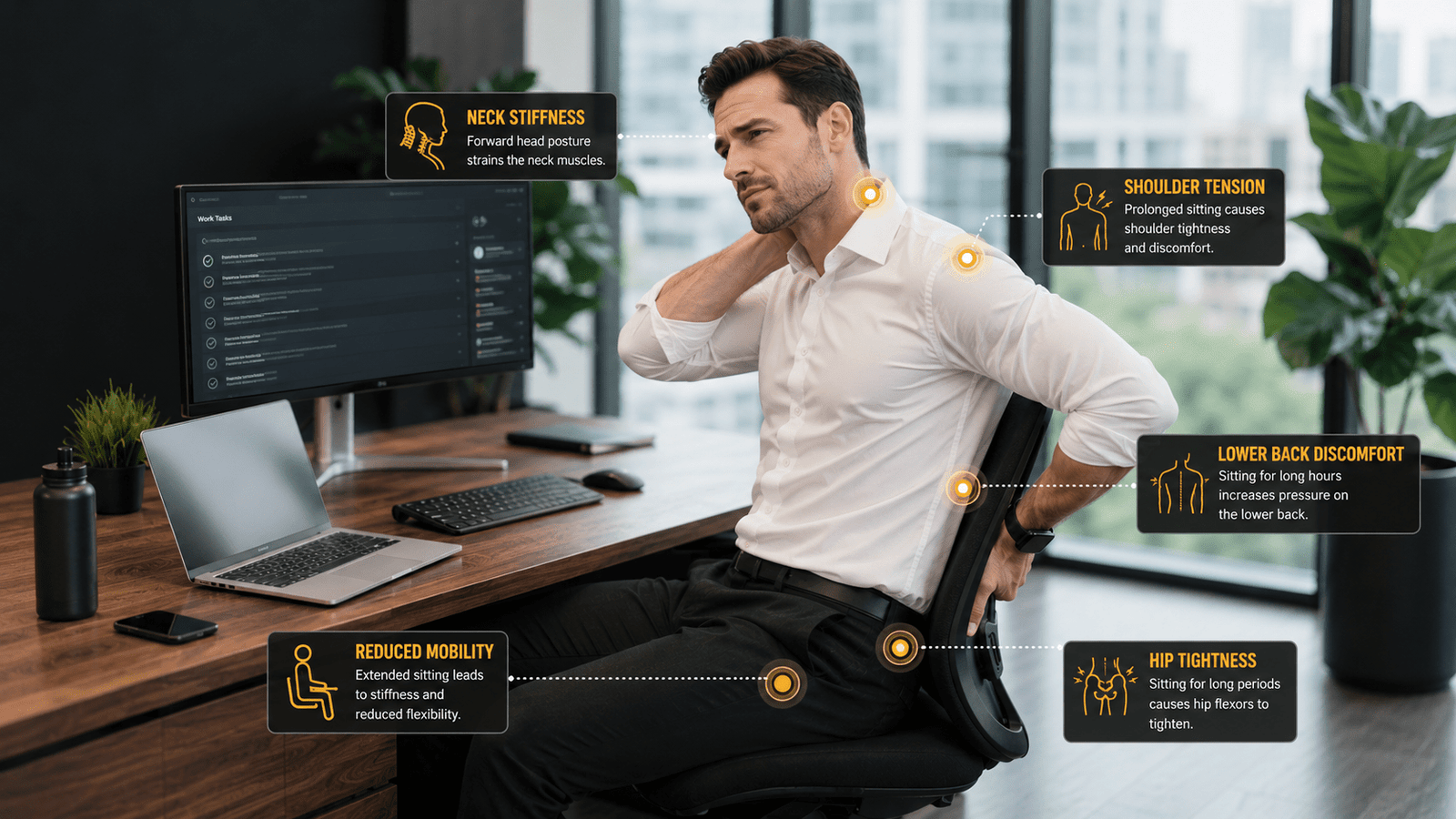
Long periods of sitting can contribute to:
- Reduced circulation
- Muscle tightness
- Poor posture
- Lower energy levels
- Reduced mobility
- Increased back and neck discomfort
- Weight management challenges
The good news is that small movement habits throughout the day can make a meaningful difference.
Benefits of Staying Active During the Workday
Many people think exercise only happens in the gym.
In reality, daily movement plays an important role in overall health.
Regular movement breaks can help:
- Improve circulation
- Reduce stiffness
- Support better posture
- Increase energy
- Improve concentration
- Reduce stress
- Support long-term health
According to Harvard Health Publishing, frequent movement throughout the day can help reduce the negative effects associated with prolonged sitting.
12 Practical Ways to Stay Active When You Sit All Day at Work
1. Follow the 30 Minute Rule
One of the easiest habits you can build is standing up every 30 minutes.
Set a reminder on your phone, smartwatch, or computer.
Even a one to two minute movement break can help.
Simple Ideas
- Walk around the room
- Stretch briefly
- Refill your water bottle
- Stand while checking emails
2. Take Walking Meetings
Not every meeting requires sitting.
If possible, conduct phone calls while walking.
Walking meetings can increase daily step count without requiring extra time.
3. Use the Stairs More Often
Stair climbing is one of the simplest ways to increase physical activity.
Instead of taking elevators whenever possible:
- Use stairs
- Walk between floors
- Add extra movement naturally

4. Walk During Phone Calls
Many office workers spend hours on calls.
Turn that time into movement.
Walk around your office, home office, or hallway while talking.
This small habit can significantly increase daily activity.
5. Stretch Between Tasks
Stretching helps reduce muscle tightness that develops from sitting.
Simple stretches can target:
- Neck
- Shoulders
- Back
- Hips
For a complete stretching routine, read our guide on Best Stretches for Office Workers.
6. Increase Your Daily Step Count
Many office workers struggle to reach even 5,000 steps per day.
Try:
- Parking farther away
- Taking short walks during lunch
- Walking after work
- Using stairs whenever possible
Small changes add up quickly.
7. Stand While Performing Simple Tasks
Certain tasks do not require sitting.
Examples include:
- Reading documents
- Attending virtual meetings
- Reviewing reports
- Responding to emails
Standing periodically helps reduce prolonged sitting time.

8. Stay Hydrated
Hydration supports overall health and provides an additional benefit.
People who drink water regularly naturally stand up more often to refill bottles and use the restroom.
According to Mayo Clinic Healthy Lifestyle Guidance, proper hydration plays an important role in overall health and physical performance.
9. Add Short Exercise Sessions
You do not need a full workout during work hours.
Simple options include:
- Squats
- Lunges
- Calf raises
- Push-ups
- Resistance band exercises
Even five minutes can help.
If back pain is limiting your movement, try these 5 Minute Desk Workouts to Relieve Back Pain for Remote Workers.
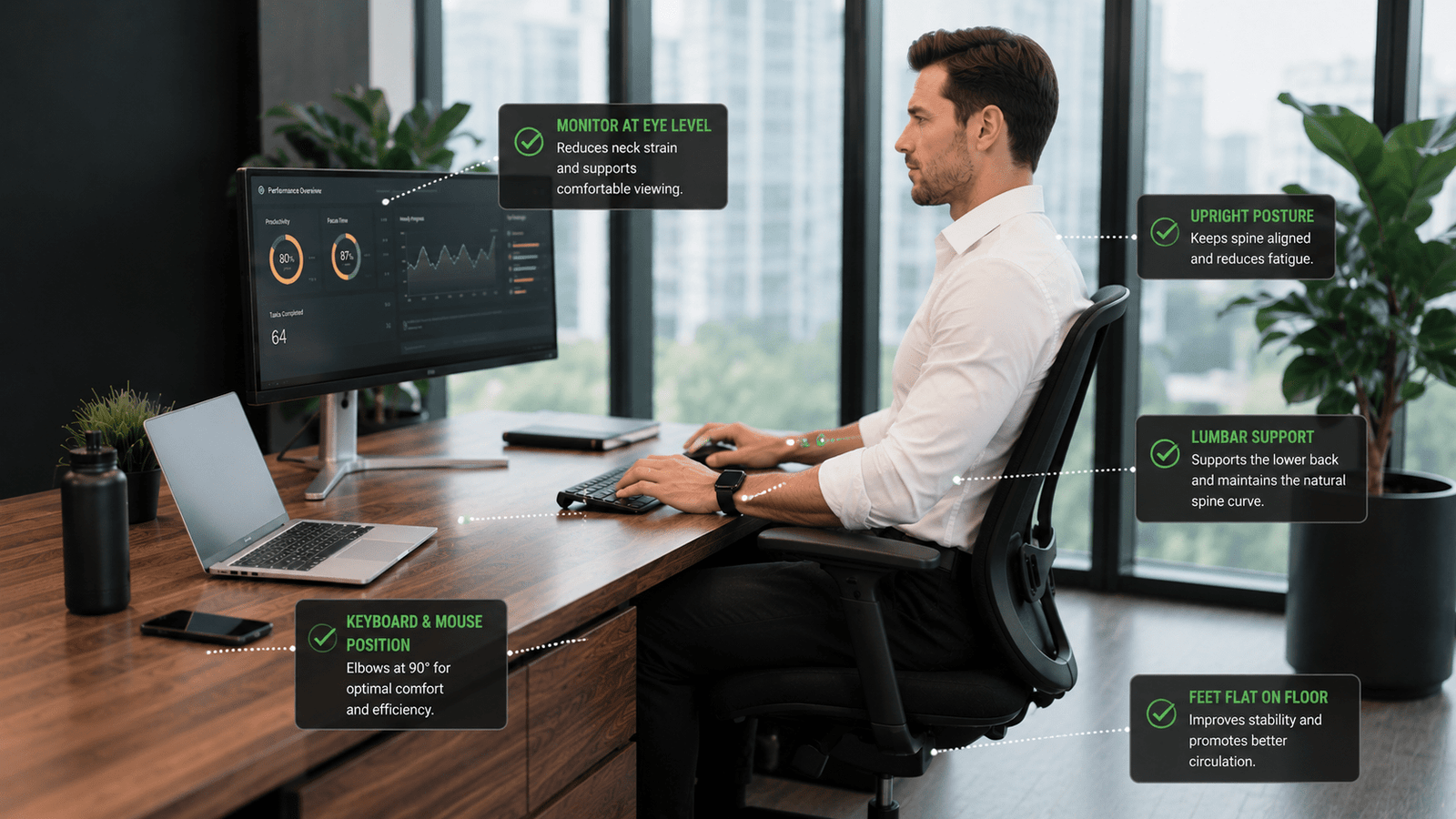
10. Improve Your Workspace Setup
A better workstation encourages healthier movement patterns.
Important factors include:
- Proper monitor height
- Ergonomic chair
- Comfortable keyboard placement
- Adequate lighting
Poor workstation design often contributes to discomfort that discourages movement.
11. Schedule Movement Like an Appointment
Most people schedule meetings but forget to schedule movement.
Treat physical activity as part of your daily routine.
Add movement breaks directly to your calendar.
12. Build a Consistent Routine
Consistency matters more than perfection.
You do not need to perform every strategy every day.
Instead:
- Choose a few habits.
- Practice them consistently.
- Build momentum over time.
Small actions repeated daily create meaningful results.
A Simple Daily Activity Schedule for Office Workers
| Time | Activity |
|---|---|
| 9:00 AM | Start work |
| 9:30 AM | Movement break |
| 10:30 AM | Walk during call |
| 12:00 PM | Lunch walk |
| 2:00 PM | Stretch break |
| 3:30 PM | Short exercise session |
| 5:00 PM | End of work walk |
This schedule requires very little additional time while significantly increasing daily movement.

Common Mistakes That Keep Office Workers Inactive
Waiting for Motivation
Most healthy habits happen because of systems, not motivation.
Thinking Exercise Only Happens in the Gym
Movement throughout the day matters.
Sitting Through Every Meeting
Many meetings allow opportunities to stand or walk.
Ignoring Early Signs of Stiffness
Discomfort often signals the need for more movement.
Trying to Change Everything at Once
Small sustainable habits are usually more effective.
Key Takeaways
- Stand up every 30 to 60 minutes.
- Walk whenever possible during the workday.
- Stretch regularly to reduce stiffness.
- Improve your workstation ergonomics.
- Stay hydrated to encourage movement.
- Build consistent daily movement habits.
Frequently Asked Questions
How often should I move during the workday?
Most experts recommend standing or moving every 30 to 60 minutes.
Can I stay healthy even if I have a desk job?
Yes. Regular movement, exercise, stretching, and healthy habits can help offset many of the challenges associated with desk work.
How many steps should office workers aim for?
Individual needs vary, but increasing daily movement gradually is generally more effective than focusing on a specific number immediately.
Can you stay healthy if you sit all day at work?
Yes. While prolonged sitting has health risks, regular movement breaks, daily exercise, stretching, good posture, and an ergonomic workstation can significantly reduce those risks. The key is to avoid remaining seated for long periods without moving.
Are standing desks necessary?
Standing desks can be helpful, but regular movement remains more important.
What is the easiest way to become more active at work?
Start with movement breaks every 30 minutes and build additional habits over time.
Disclaimer
This article is for educational purposes only and should not be considered medical advice. Consult a qualified healthcare professional if you have concerns about your health, mobility, or physical activity levels.
Conclusion
Staying active while working a desk job is not about finding extra hours in the day. It is about making better use of the opportunities you already have.
Simple habits such as walking during calls, stretching between tasks, standing more often, and taking regular movement breaks can significantly improve energy, comfort, and long-term health.
If you’re building a healthier work lifestyle, start with one or two strategies and remain consistent. Small actions repeated daily often produce the biggest results over time.
For a complete workplace wellness strategy, explore our guide on Health and Fitness for Office Workers.