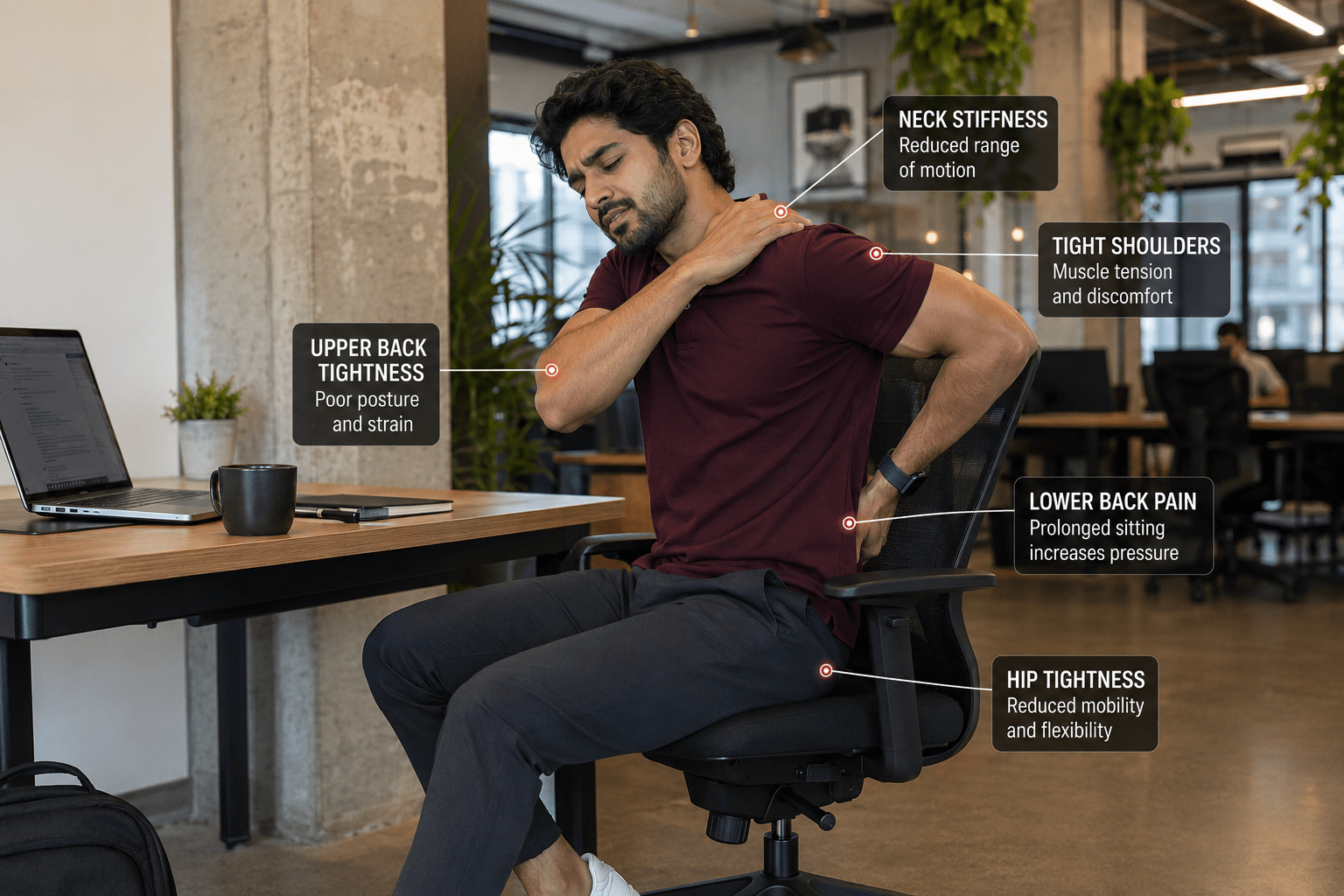
If you spend several hours sitting at a desk, it’s normal to experience stiffness in your neck, shoulders, hips, or lower back by the end of the day. Long periods of sitting can gradually reduce joint mobility, tighten muscles, and affect your posture, making everyday movements feel less comfortable.
Fortunately, you don’t need an intense workout or expensive equipment to improve how your body feels. A simple daily mobility routine can help increase flexibility, reduce muscle tension, improve posture, and keep your joints moving comfortably throughout the workday.
In addition to mobility exercises, regular movement breaks, stretching, and an ergonomic workstation all play an important role in supporting long term musculoskeletal health. When combined, these healthy habits can reduce stiffness and make desk work much more comfortable.
For a complete workplace wellness strategy, explore our Health and Fitness for Office Workers guide. You may also benefit from our articles on 5 Minute Desk Workouts to Relieve Back Pain for Remote Workers, Best Stretches for Office Workers, and How to Stay Active When You Sit All Day at Work.
In this guide, you’ll learn what mobility is, why desk workers need it, and how to follow a simple daily routine that supports better movement, posture, and overall comfort.
Quick Answer
A daily mobility routine for desk workers helps reduce stiffness, improve flexibility, support better posture, and relieve muscle tension caused by prolonged sitting. Spending just 10 to 15 minutes each day on simple mobility exercises can improve movement quality, increase comfort, and make long hours at a desk less physically demanding.
Table of Contents
- What Is Mobility?
- Why Desk Workers Need Mobility Training
- Benefits of a Daily Mobility Routine
- The 10 Minute Mobility Routine
- Common Mobility Mistakes
- Frequently Asked Questions
- Conclusion
What Is Mobility?
Many people confuse mobility with flexibility.
While flexibility refers to how far a muscle can stretch, mobility refers to your ability to move a joint through its full range of motion with control.
Good mobility helps you:
- Move more comfortably
- Improve posture
- Reduce stiffness
- Improve exercise performance
- Support long-term joint health
According to Cleveland Clinic, maintaining mobility is an important part of healthy movement and overall physical function.
Why Desk Workers Need Mobility Training
The human body adapts to the positions it spends the most time in.
When you sit for several hours every day:
- Hip flexors become tight
- Glutes become less active
- Upper back mobility decreases
- Shoulders round forward
- Neck muscles become tense
Over time, this can affect movement quality and contribute to discomfort.
Mobility training helps reverse many of these effects by encouraging healthy movement patterns.
Benefits of a Daily Mobility Routine
Adding just 10 minutes of mobility work to your day can provide several benefits.
Better Posture
Improved mobility allows your body to move and position itself more naturally.
Reduced Stiffness
Regular movement helps reduce the feeling of tightness that develops after sitting.
Improved Comfort
Many people notice less discomfort in the neck, shoulders, hips, and lower back.
Better Exercise Performance
Good mobility supports strength training, walking, running, and other physical activities.
Improved Daily Movement
Simple activities often feel easier when your joints move more freely.
According to Harvard Health Publishing, maintaining regular movement can help support musculoskeletal health and overall mobility.
The 10 Minute Daily Mobility Routine
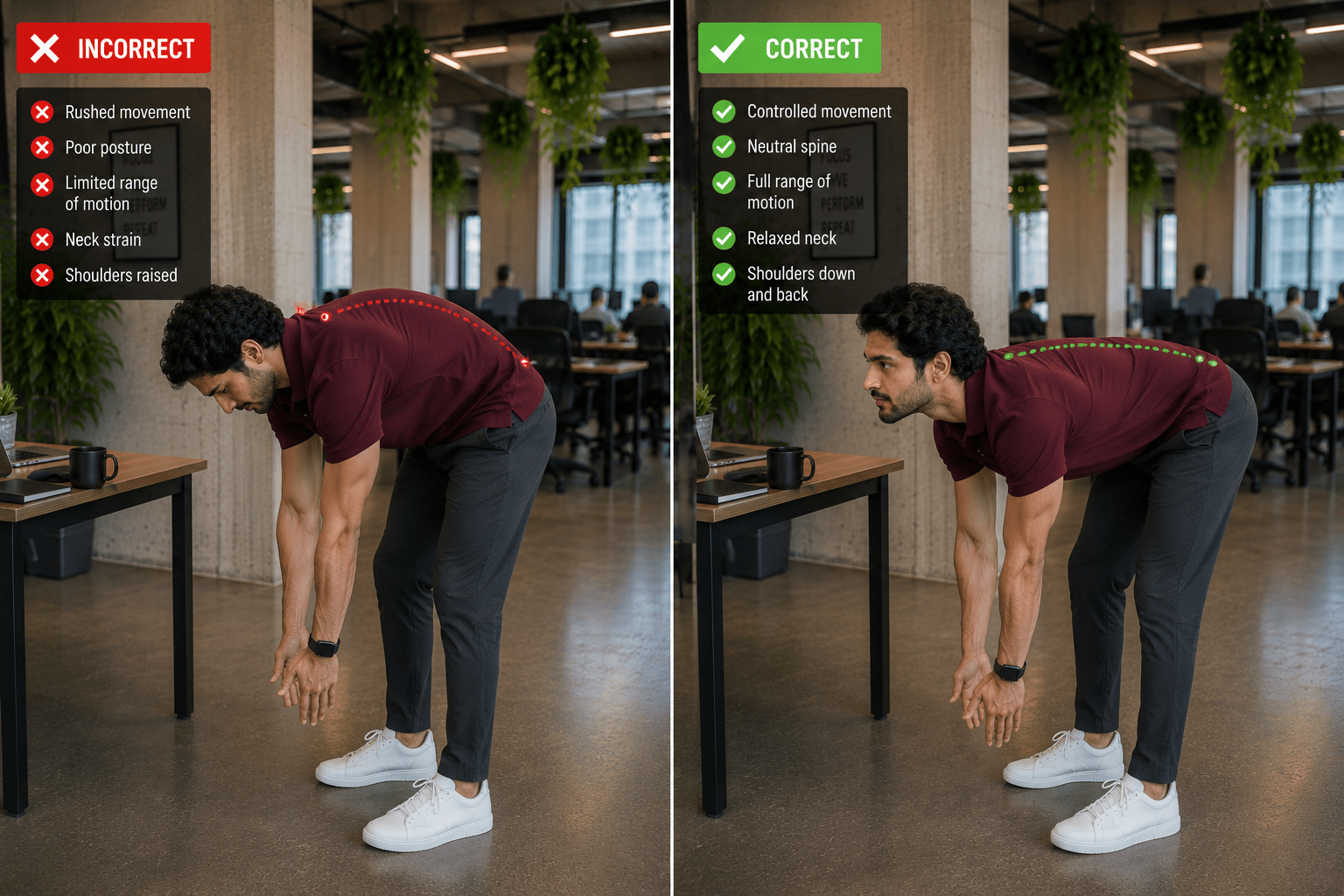
Perform the following exercises slowly and with control.
The goal is quality movement, not speed.
1. Neck Mobility Circles
How To Perform
- Sit or stand tall.
- Slowly move your head through comfortable ranges of motion.
- Avoid forcing movement.
- Continue for 60 seconds.
Benefits
- Improves neck mobility
- Reduces stiffness
- Encourages better posture
2. Shoulder Rolls
How To Perform
- Roll shoulders forward 10 times.
- Roll shoulders backward 10 times.
Benefits
- Improves shoulder mobility
- Reduces tension
- Increases circulation

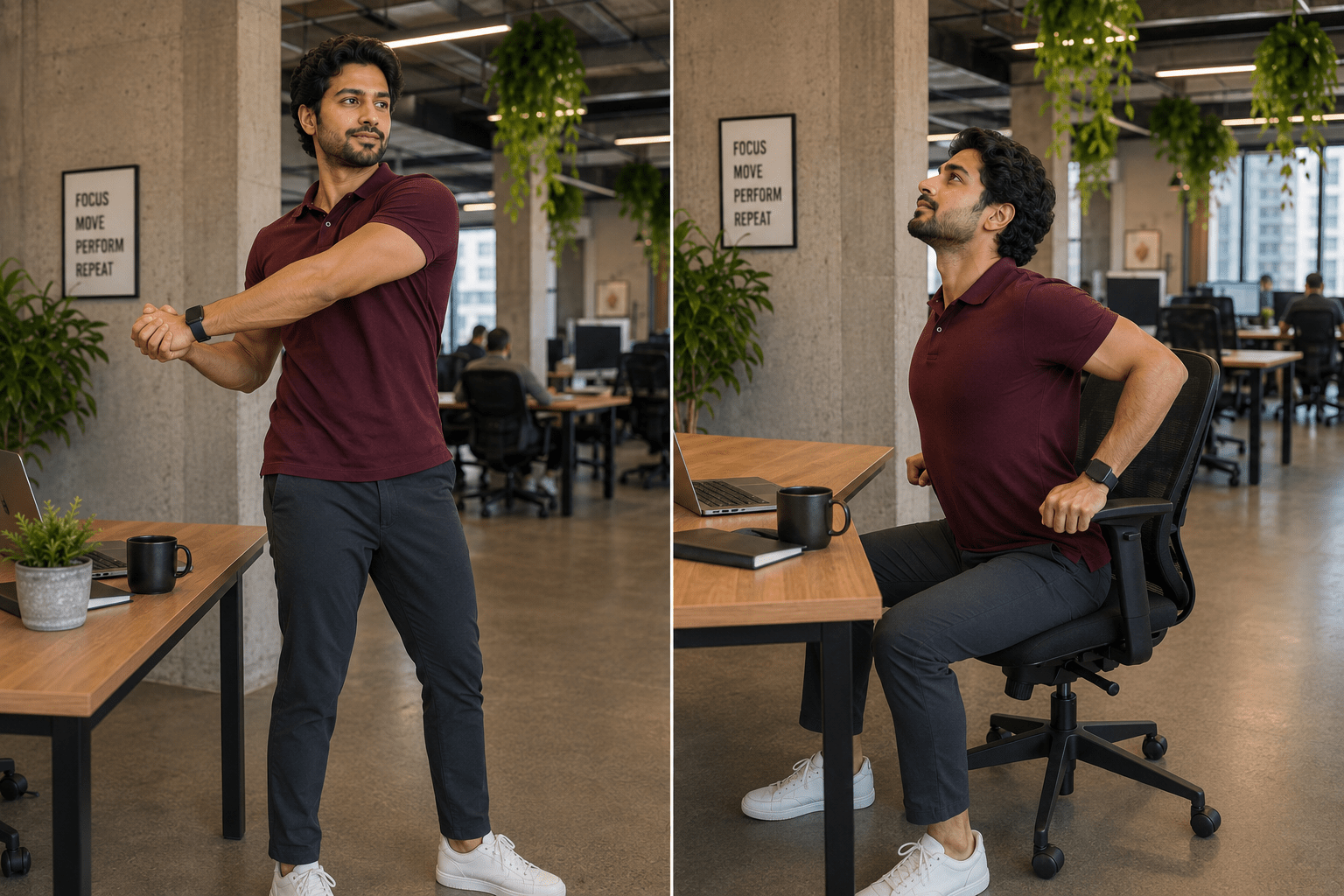
3. Thoracic Spine Rotations
Many desk workers lose mobility in the upper back.
How To Perform
- Sit upright.
- Place hands across your chest.
- Slowly rotate left and right.
- Continue for one minute.
Benefits
- Improves upper back mobility
- Supports posture
- Reduces stiffness
4. Cat-Cow Stretch
How To Perform
- Sit on a chair or kneel on the floor.
- Alternate between arching and rounding your spine.
- Move slowly.
- Continue for 60 seconds.
Benefits
- Improves spinal mobility
- Reduces stiffness
- Supports healthy movement
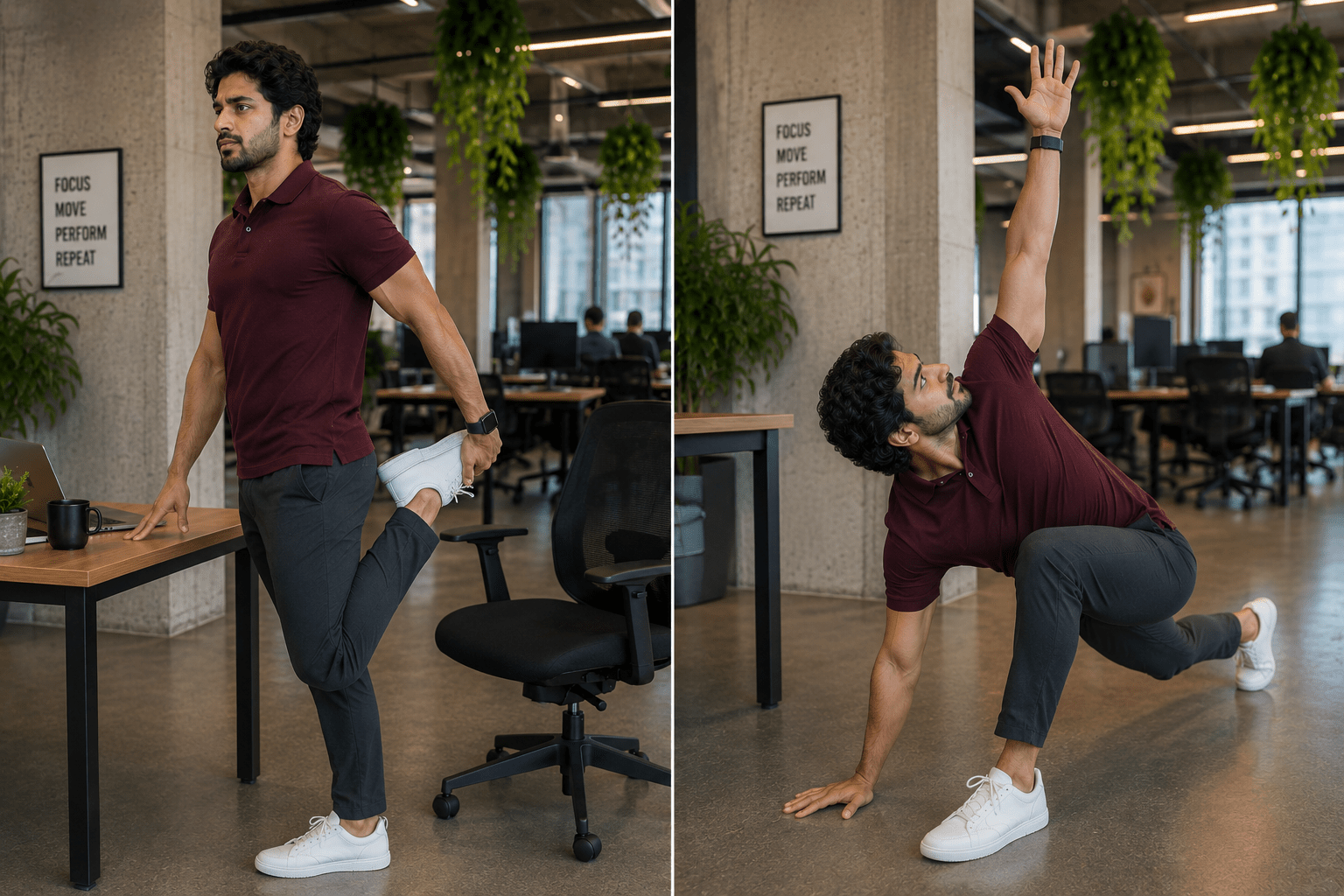
5. Hip Flexor Stretch
Long periods of sitting often create tight hips.
How To Perform
- Step one foot behind you.
- Push hips gently forward.
- Hold for 30 seconds.
- Switch sides.
Benefits
- Improves hip mobility
- Reduces lower back strain
- Opens tight hip flexors
6. World’s Greatest Stretch
This popular mobility exercise targets multiple areas simultaneously.
How To Perform
- Step into a lunge position.
- Place one hand on the floor.
- Rotate your upper body toward the front leg.
- Repeat on both sides.
Benefits
- Improves total body mobility
- Increases flexibility
- Enhances movement quality
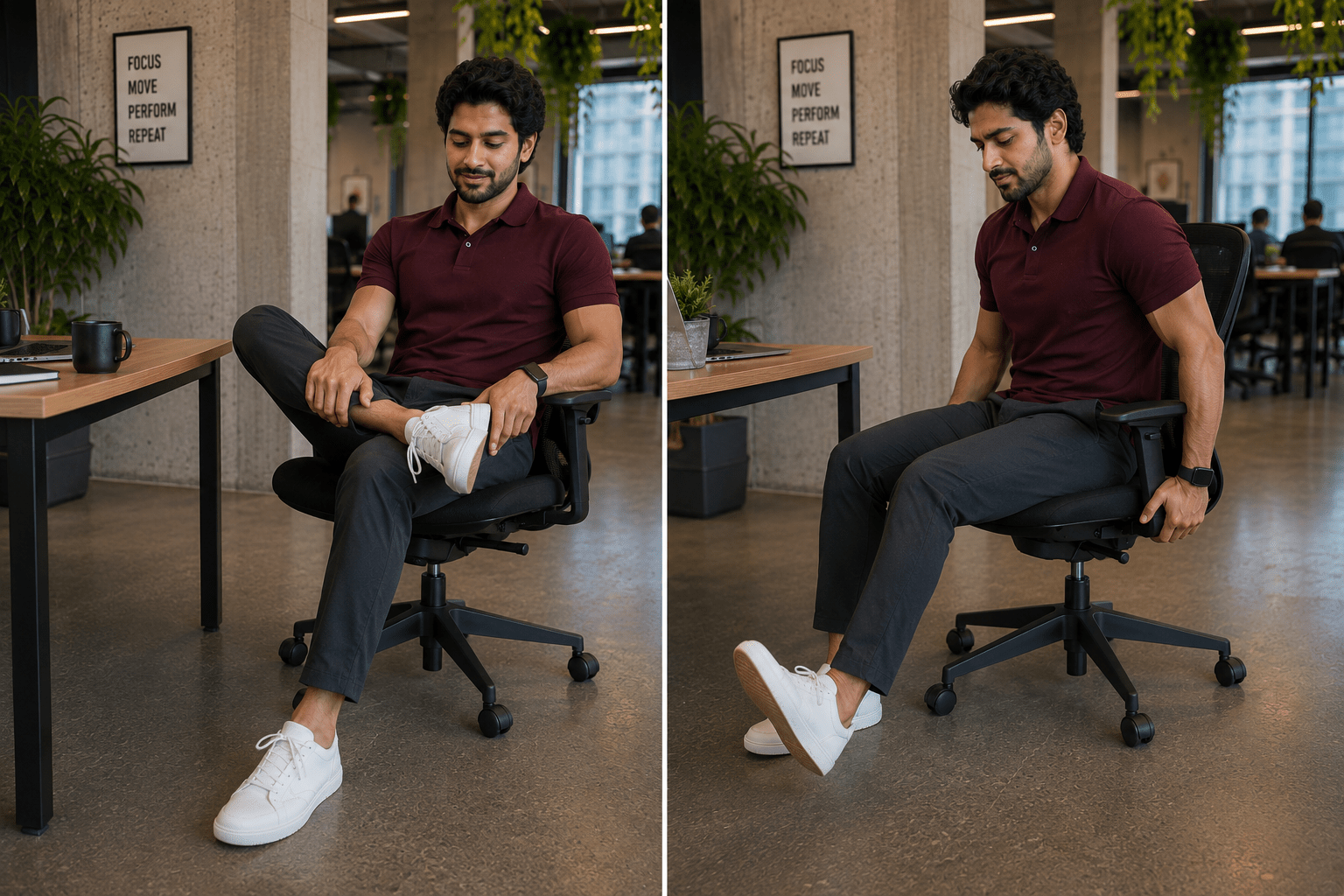
7. Figure Four Stretch
How To Perform
- Sit upright.
- Place one ankle over the opposite knee.
- Lean forward gently.
- Hold for 30 seconds.
- Repeat on both sides.
Benefits
- Improves hip mobility
- Relieves glute tightness
- Supports lower back comfort
8. Ankle Mobility Drill
Many people overlook ankle mobility.
How To Perform
- Stand facing a wall.
- Drive your knee forward toward the wall.
- Keep your heel on the ground.
- Repeat for 60 seconds.
Benefits
- Improves ankle movement
- Supports walking mechanics
- Enhances overall mobility
A Simple Weekly Mobility Plan
| Day | Routine |
|---|---|
| Monday | Full 10 Minute Routine |
| Tuesday | Full 10 Minute Routine |
| Wednesday | Full 10 Minute Routine |
| Thursday | Full 10 Minute Routine |
| Friday | Full 10 Minute Routine |
| Saturday | Light Mobility Session |
| Sunday | Recovery and Walking |
Consistency is more important than perfection.
A few minutes every day is often more effective than one long session once per week.
How Long Should a Daily Mobility Routine Take?
Most desk workers can benefit from a daily mobility routine lasting just 10 to 15 minutes. Short, consistent sessions are generally more effective than occasional longer workouts because they help maintain joint mobility and reduce stiffness throughout the week.
If you’re new to mobility training, start with five minutes per day and gradually increase the duration as the exercises become more comfortable. Consistency is far more important than intensity.
Common Mobility Mistakes
Moving Too Fast
Mobility exercises should be controlled.
Skipping Consistency
One session won’t create lasting improvements.
Forcing Range of Motion
Movement should never be painful.
Ignoring Daily Habits
Mobility training works best when combined with regular movement.
Sitting for Hours Without Breaks
Mobility exercises cannot fully compensate for excessive inactivity.
Key Takeaways
- Daily mobility exercises help reduce stiffness caused by prolonged sitting.
- Consistency is more effective than occasional long workouts.
- Controlled movements improve joint mobility and flexibility.
- Regular movement breaks complement your mobility routine.
- Combining mobility work with good posture and an ergonomic workstation supports long term musculoskeletal health.
Frequently Asked Questions
How long should a mobility routine take?
For most office workers, 10 minutes per day is enough to start seeing benefits.
Should I do mobility exercises every day?
Yes. Daily practice generally produces better results than occasional sessions.
Can mobility exercises reduce stiffness?
Many people experience less stiffness when they consistently perform mobility exercises.
What’s the difference between stretching and mobility?
Stretching focuses on muscles, while mobility focuses on controlled joint movement.
Is mobility training suitable for beginners?
Yes. Most mobility exercises can be modified for different fitness levels.
Can mobility exercises improve posture?
Yes. Mobility exercises improve the way your joints move and can help reduce muscle tightness that contributes to poor posture. When combined with an ergonomic workstation, regular movement breaks, and strengthening exercises, mobility training can support better posture over time.
Disclaimer
This article is for educational purposes only and should not be considered medical advice. Consult a qualified healthcare professional if you have persistent pain, injuries, or health concerns.
Conclusion
If you spend most of your day sitting, adding a daily mobility routine can be one of the simplest ways to improve how your body feels.
Just ten minutes of mobility work can help reduce stiffness, improve movement quality, support posture, and make daily activities more comfortable.
Start small, stay consistent, and focus on quality movement. Over time, those small efforts can lead to noticeable improvements in comfort and mobility.
For a complete workplace wellness strategy, explore our guide on Health and Fitness for Office Workers.