Office workers face a challenge that previous generations rarely experienced at the same scale.
Most modern jobs require people to spend long hours sitting at desks, working on computers, attending virtual meetings, and managing digital tasks. While technology has made work more efficient, it has also reduced daily physical activity.
Many employees spend eight or more hours sitting each day.
Over time, this lifestyle can contribute to:
- Poor posture
- Back pain
- Neck tension
- Reduced mobility
- Weight gain
- Low energy levels
- Increased stress
This is one reason why group workout classes have become increasingly popular in workplaces across the United States.
Companies are recognizing that healthy employees tend to be more productive, engaged, and satisfied with their jobs. Employees are also looking for practical ways to stay active without spending additional hours at the gym.
Group workout classes provide a solution that is both effective and enjoyable.
Whether conducted in person or virtually, workplace fitness classes help employees move more, improve their health, and build stronger relationships with coworkers.
If your goal is to improve physical wellbeing while maintaining a busy work schedule, group fitness sessions may be one of the most effective tools available.
Why Office Workers Need More Physical Activity
Most office workers understand that exercise is important.
The challenge is finding time and consistency.
Long workdays often leave little energy for traditional gym workouts.
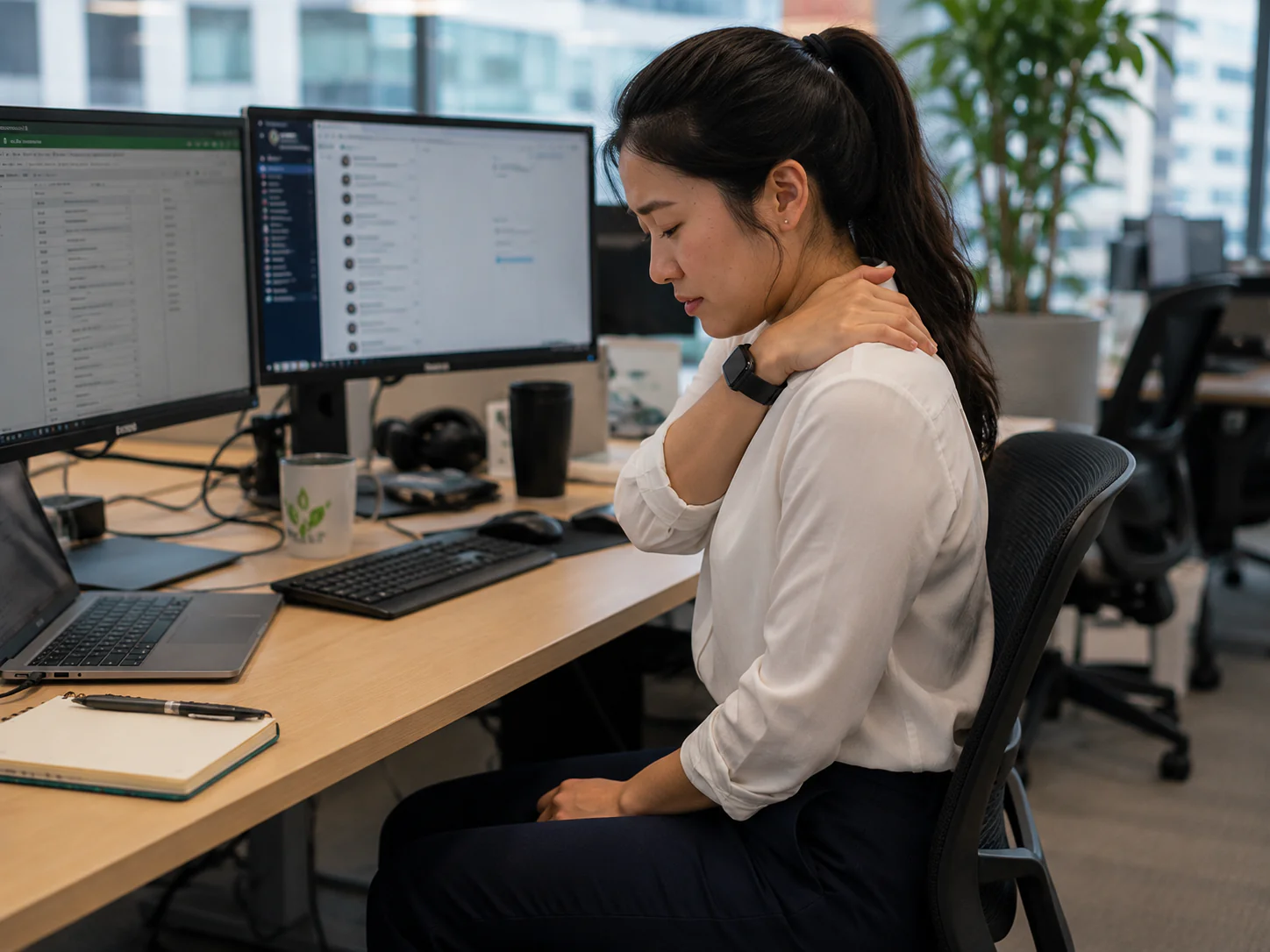
Unfortunately, sitting for extended periods can affect multiple areas of health.
Common issues include:
- Tight hips
- Weak core muscles
- Rounded shoulders
- Reduced flexibility
- Lower back discomfort
- Poor circulation
Many employees notice these symptoms gradually.
What begins as mild stiffness can eventually become a recurring problem.
Regular movement throughout the day helps counteract many of these effects.
This is why workplace fitness programs continue to gain popularity.
In fact, businesses that invest in employee wellness often report improvements in engagement, morale, and workplace satisfaction.
For a broader look at employee wellness initiatives, read Workplace Fitness Programs for Office Workers.
What Are Group Workout Classes?
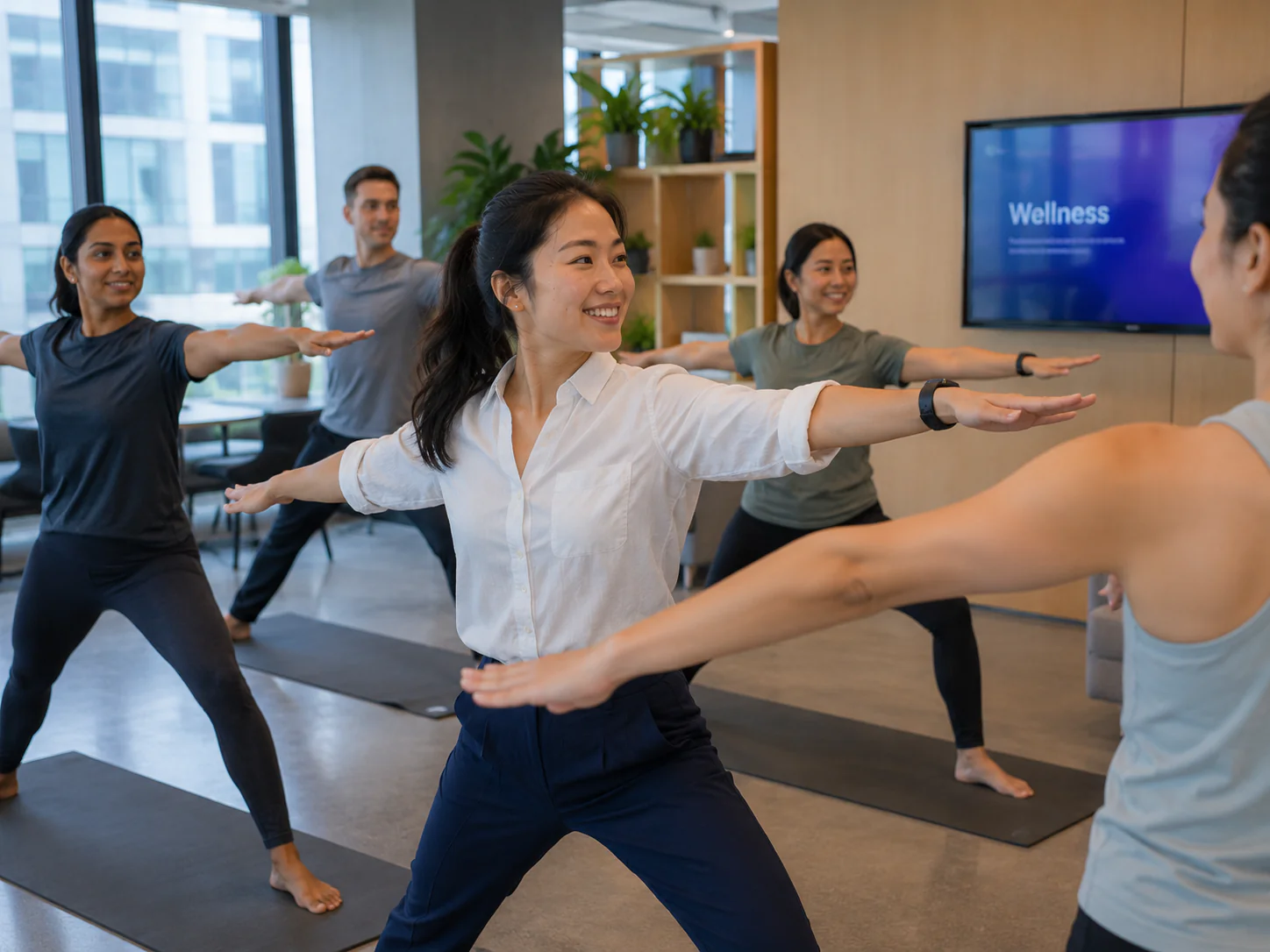
Group workout classes are structured exercise sessions led by an instructor and completed alongside other participants.
Unlike exercising alone, group fitness creates accountability and motivation.
Participants work toward similar goals while benefiting from professional guidance and social support.
Workplace group workout classes can include:
- Yoga
- Mobility training
- Stretching sessions
- Functional fitness
- Strength training
- Walking groups
- Low impact cardio
- Wellness challenges
Many organizations now offer both in person and virtual options.
This flexibility allows employees to participate regardless of location.
Benefits of Group Workout Classes for Office Workers
Improved Consistency
One of the biggest obstacles to fitness is consistency.
Many people begin exercise programs with enthusiasm but struggle to maintain momentum.
Group workout classes help solve this problem.
When coworkers participate together, employees are more likely to attend sessions regularly.
The social element creates accountability that is often missing from individual exercise programs.
Better Motivation
Working out with others can be highly motivating.
Employees often push themselves further when they are surrounded by supportive teammates.
This positive environment encourages participation and long term adherence.
Improved Physical Health
Regular participation in group fitness sessions can help improve:
- Cardiovascular fitness
- Muscular strength
- Flexibility
- Balance
- Mobility
- Joint health
These improvements support both workplace performance and overall quality of life.
Reduced Stress
Physical activity helps the body release endorphins.
These natural chemicals contribute to improved mood and reduced stress levels.
Many office workers find that exercise helps them manage workplace pressure more effectively.
Increased Energy Levels
Contrary to popular belief, exercise often increases energy rather than depleting it.
Employees who exercise regularly frequently report:
- Better focus
- Improved concentration
- Higher productivity
- Increased alertness
Why Group Fitness Sessions Work Better Than Solo Workouts for Many Employees
Individual exercise programs can be effective.
However, many office workers struggle to stay motivated without support.
Group fitness sessions offer several advantages.
Accountability
People are more likely to attend workouts when others expect them to show up.
Structure
Professional instructors guide participants through organized routines.
This eliminates uncertainty and helps employees exercise safely.
Community
Humans are social by nature.
Group exercise creates opportunities to connect with coworkers in a positive environment.
Enjoyment
Many employees simply enjoy exercising with others more than working out alone.
Enjoyment increases consistency, which ultimately produces better results.
1. Stretching Classes
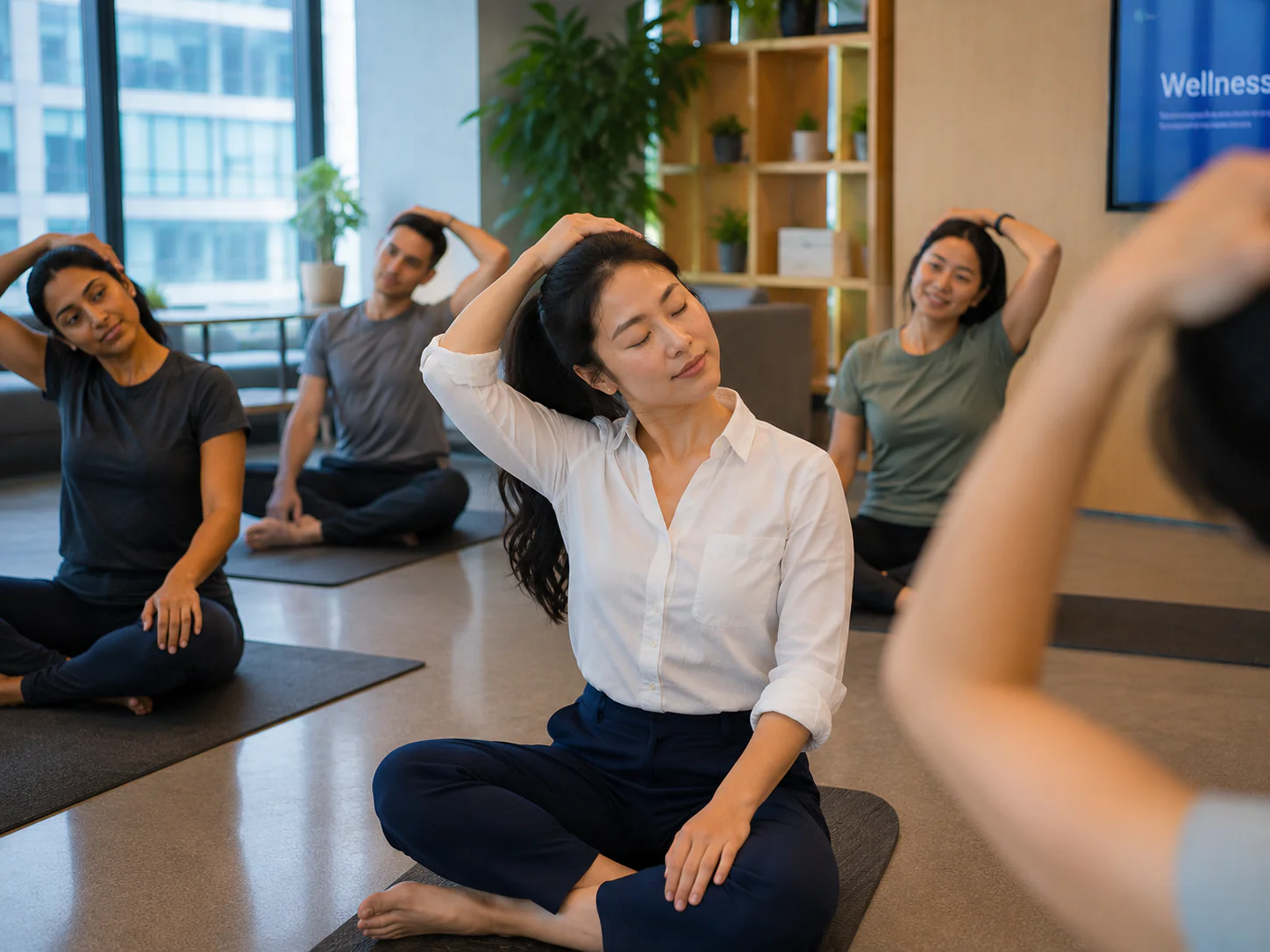
Stretching classes are among the most accessible workplace fitness activities.
They require little equipment and can accommodate employees of all fitness levels.
Benefits include:
- Improved flexibility
- Better posture
- Reduced muscle tension
- Increased mobility
Stretching classes are particularly useful for employees who spend long hours sitting.
Common focus areas include:
- Neck
- Shoulders
- Upper back
- Hips
- Hamstrings
Employees interested in improving flexibility should also explore Best Stretches for Office Workers.
2. Mobility Classes
Mobility training has become increasingly popular in workplace wellness programs.
Unlike traditional stretching, mobility exercises focus on improving movement quality and joint function.
Mobility sessions often target:
- Hip mobility
- Shoulder mobility
- Thoracic spine mobility
- Ankle mobility
These exercises can help reduce the physical effects of prolonged sitting.
Employees who regularly participate in mobility classes often report improved comfort during the workday.
For practical mobility exercises, read Daily Mobility Routine for Desk Workers.
3. Workplace Yoga Classes
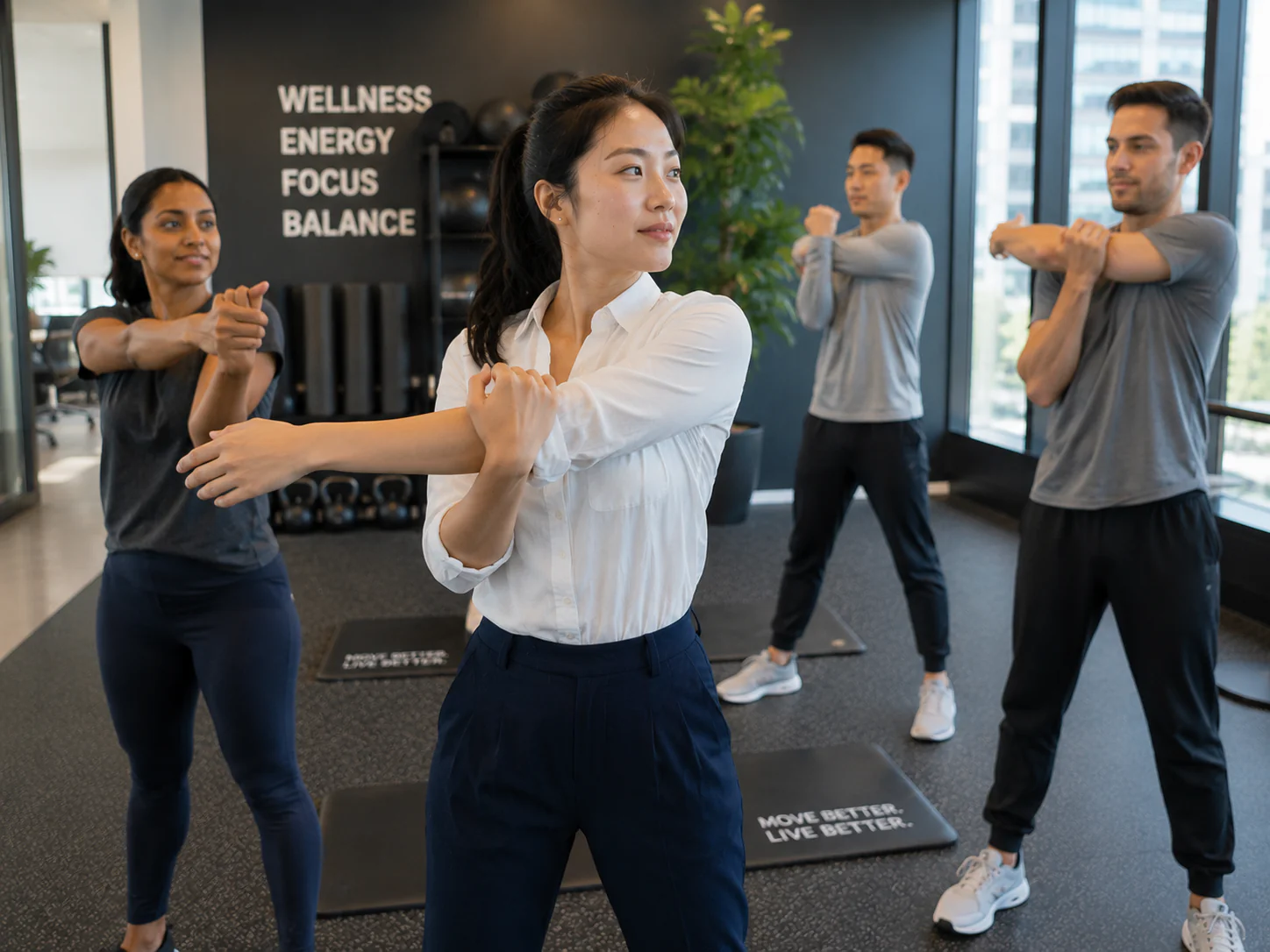
Yoga remains one of the most popular group workout classes for office workers.
The reason is simple.
Yoga addresses several common workplace challenges simultaneously.
Benefits include:
- Improved flexibility
- Better posture
- Reduced stress
- Increased mobility
- Enhanced balance
- Better body awareness
Many workplace yoga sessions focus specifically on desk worker needs.
Popular poses often target:
- Tight hips
- Rounded shoulders
- Neck tension
- Lower back discomfort
Yoga is also highly scalable.
Beginners and experienced participants can often attend the same class with modifications as needed.
4. Walking Groups
Walking is one of the most underrated forms of exercise.
It requires no special equipment and is accessible to nearly everyone.
Many companies organize:
- Walking meetings
- Lunch break walks
- Team step challenges
- Outdoor wellness breaks
Walking groups provide both physical and social benefits.
Employees can move more while building stronger workplace relationships.
Walking also serves as an excellent introduction to workplace fitness for individuals who are new to exercise.
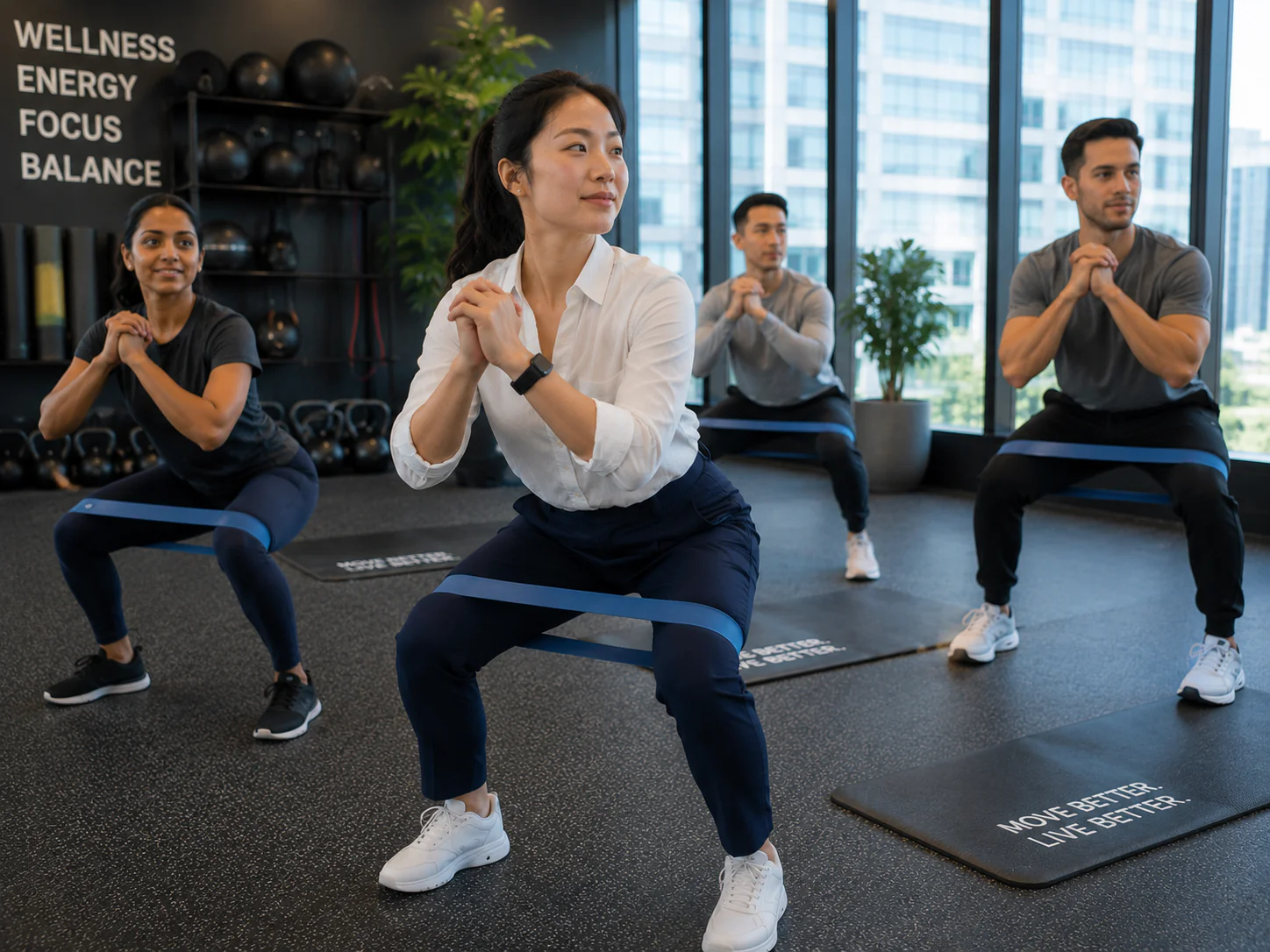
5. Functional Fitness Classes
Functional fitness has become one of the fastest growing workplace exercise classes in recent years.
Unlike traditional gym workouts that focus on individual muscles, functional fitness emphasizes movements people use in everyday life.
These include:
- Squatting
- Reaching
- Pushing
- Pulling
- Rotating
- Carrying
For office workers, functional fitness can be especially valuable because it helps reverse many of the movement limitations caused by prolonged sitting.
Benefits include:
- Better movement quality
- Improved balance
- Increased strength
- Reduced injury risk
- Enhanced mobility
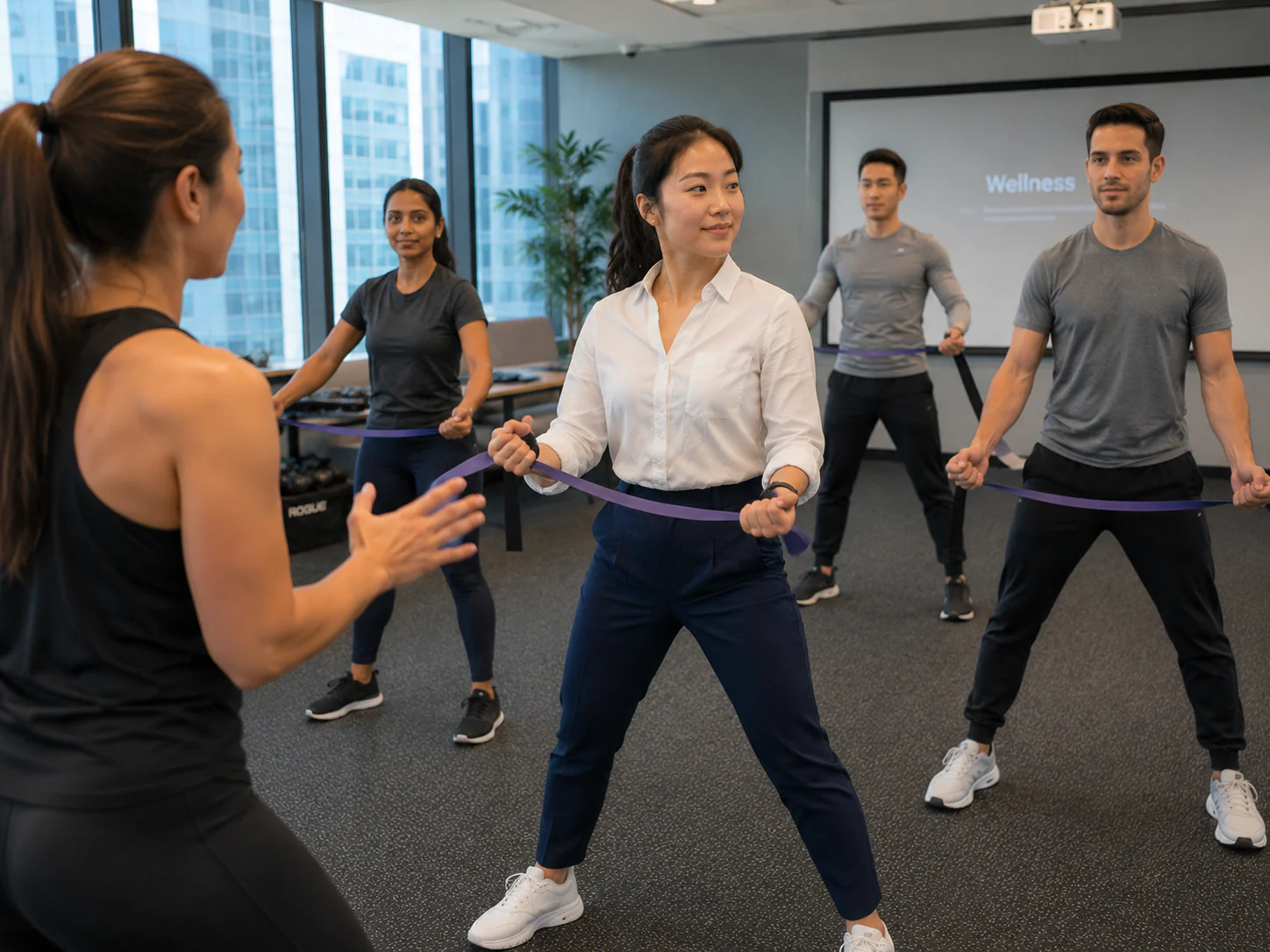
Many functional fitness classes use simple equipment such as resistance bands, medicine balls, or bodyweight exercises.
This makes them easy to implement in workplace settings.
6. Strength Training Classes
Many office workers overlook strength training.
However, building and maintaining muscle strength becomes increasingly important with age.
Strength training classes can help employees:
- Improve posture
- Support joint health
- Increase energy levels
- Reduce physical discomfort
- Improve overall fitness
Workplace strength sessions do not need to be intense.
Many successful programs focus on beginner friendly exercises such as:
- Bodyweight squats
- Wall pushups
- Resistance band exercises
- Glute bridges
- Modified planks
These movements can be performed safely by most employees.
Strength training is particularly useful for individuals who spend most of the day sitting.
7. Low Impact Cardio Classes
Not every employee enjoys high intensity workouts.
Low impact cardio classes provide an excellent alternative.
These sessions focus on improving cardiovascular health while minimizing stress on the joints.
Examples include:
- Walking workouts
- Low impact aerobics
- Dance fitness
- Cardio circuits
- Indoor walking programs
Benefits include:
- Improved heart health
- Increased stamina
- Better circulation
- Higher energy levels
Low impact classes are particularly effective for beginners and employees returning to exercise after a long break.
8. Virtual Group Workout Classes
Remote and hybrid work arrangements have changed workplace wellness.
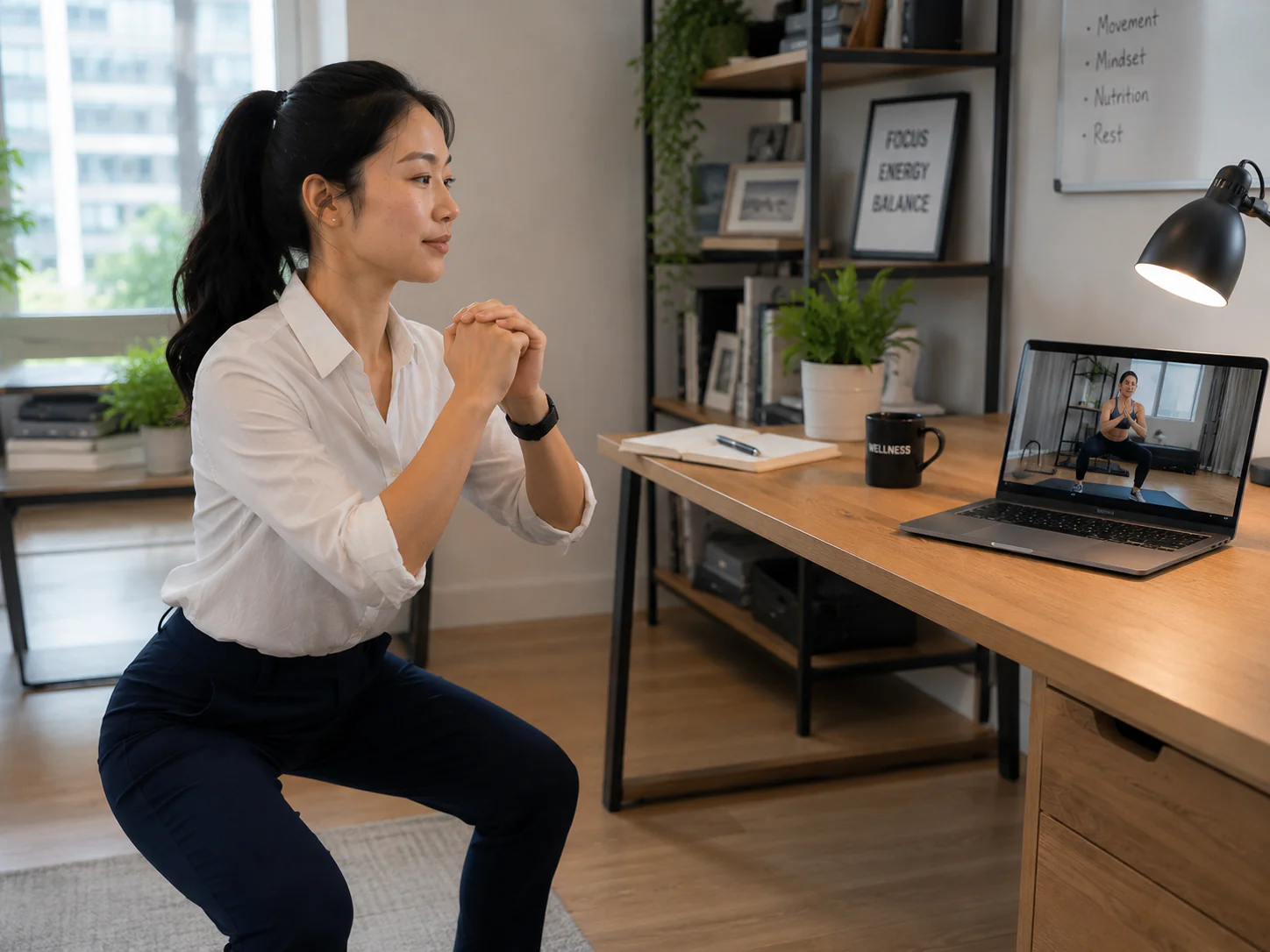
Many organizations now offer virtual group workout sessions that employees can join from home.
Virtual classes may include:
- Yoga
- Mobility training
- Stretching
- Strength workouts
- Wellness challenges
The biggest advantage is accessibility.
Employees can participate regardless of location.
This helps organizations maintain consistent wellness initiatives across distributed teams.
Virtual group workout classes often integrate with:
- Fitness apps
- Online workout communities
- Wellness platforms
- Activity tracking systems
These tools help employees remain engaged and accountable.
How to Choose the Right Group Workout Class
Not every fitness class is suitable for every employee.
The best option depends on individual goals, fitness levels, and preferences.
If Your Goal Is Better Flexibility
Consider:
- Yoga
- Stretching classes
- Mobility training
If Your Goal Is Improved Strength
Consider:
- Strength training
- Functional fitness
- Resistance band classes
If Your Goal Is More Daily Movement
Consider:
- Walking groups
- Step challenges
- Low impact cardio
If Your Goal Is Stress Management
Consider:
- Yoga
- Mindful movement classes
- Stretching sessions
The most successful employees often combine multiple forms of exercise throughout the week.
Common Mistakes Office Workers Make When Starting Fitness Classes
Trying To Do Too Much Too Soon
Many people begin with excessive enthusiasm and quickly become overwhelmed.
Consistency matters more than intensity.
Starting slowly often produces better long term results.
Ignoring Mobility Work
Many employees focus only on strength or cardio.
Mobility exercises are equally important, especially for people who spend long hours sitting.
Skipping Recovery
Exercise creates positive stress on the body.
Recovery allows the body to adapt.
Healthy habits should also include:
- Adequate sleep
- Proper hydration
- Good nutrition
Choosing Classes They Do Not Enjoy
Enjoyment is a major predictor of consistency.
The best workout program is often the one people actually continue doing.
Building a Weekly Fitness Routine Around Group Workout Classes
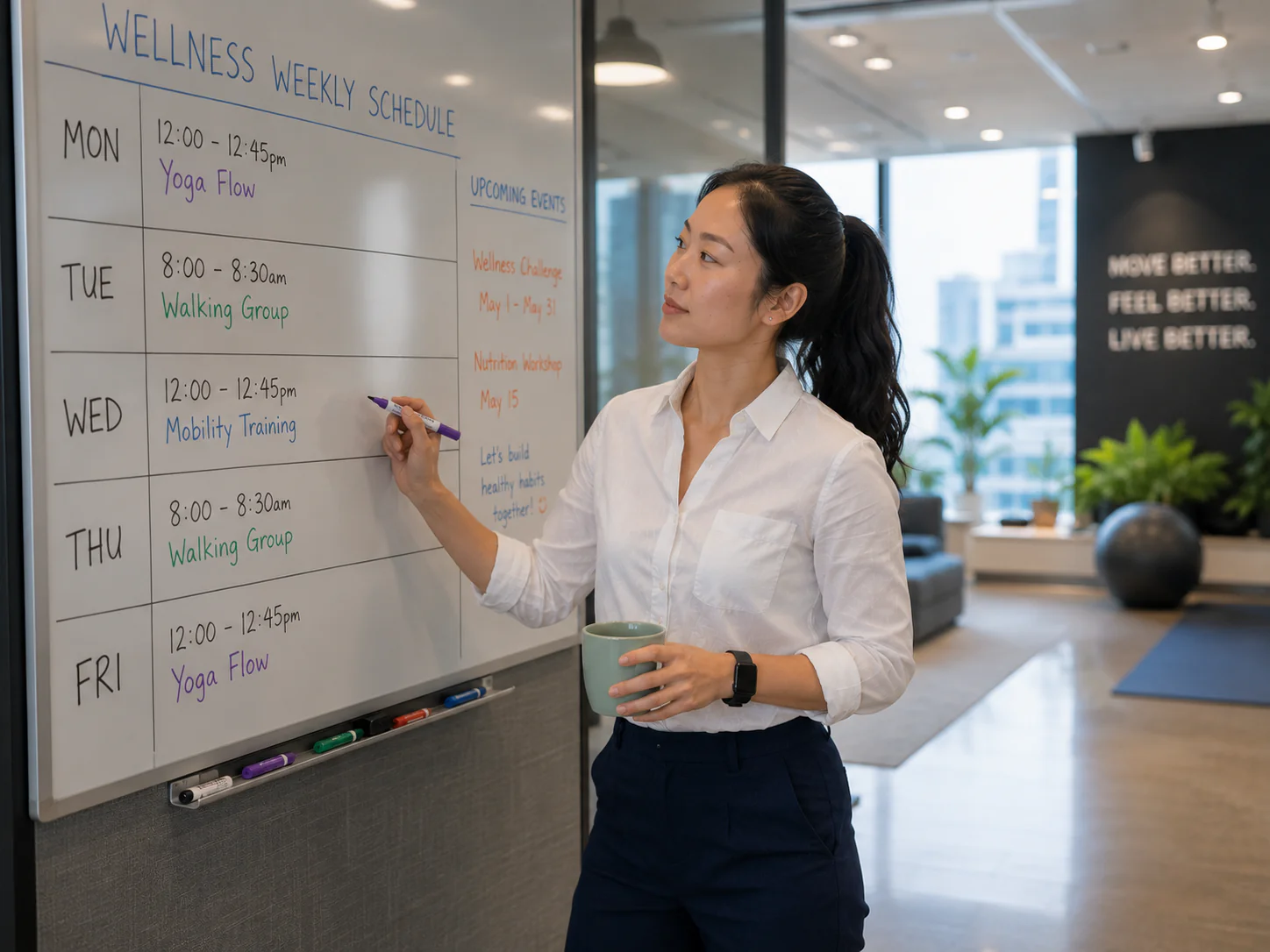
A balanced weekly schedule might look like this:
| Day | Activity |
|---|---|
| Monday | Mobility Class |
| Tuesday | Strength Training |
| Wednesday | Walking Group |
| Thursday | Yoga Class |
| Friday | Functional Fitness |
| Saturday | Outdoor Activity |
| Sunday | Recovery and Stretching |
This approach provides variety while supporting overall fitness.
Employees who follow balanced programs are often more likely to maintain their routines long term.
For a complete daily wellness strategy, readers should explore Healthy Workday Routine for Office Workers.
Group Workout Classes and Employee Productivity
One reason employers continue investing in workplace wellness programs is the connection between physical activity and productivity.
Employees who participate in workplace exercise classes often report:
- Better concentration
- Improved focus
- Increased energy
- Reduced stress
- Better mood
Physical activity improves circulation and helps reduce the mental fatigue associated with long periods of desk work.
Many employees find that even a short group workout session can improve their performance for the rest of the day.
The Social Benefits of Group Fitness Sessions
Workplace wellness is not only about physical health.
Group workout classes can also improve workplace relationships.
Employees who exercise together often develop:
- Stronger communication
- Better teamwork
- Increased trust
- Greater workplace engagement
This is particularly valuable in large organizations where employees may not interact frequently during normal work activities.
Group fitness creates opportunities for meaningful connections outside traditional work responsibilities.
Frequently Asked Questions
Are group workout classes effective for beginners?
Yes. Many workplace fitness classes are specifically designed for beginners and can be modified based on individual fitness levels.
How often should office workers attend group fitness classes?
Most employees benefit from participating two to four times per week alongside regular daily movement.
Are virtual fitness classes as effective as in person classes?
Virtual classes can be highly effective when employees remain consistent and actively participate.
What is the best group workout class for office workers?
There is no single best option. Yoga, mobility training, walking groups, strength training, and functional fitness classes all provide unique benefits.
Can group fitness sessions improve workplace morale?
Yes. Group exercise often improves employee engagement, teamwork, and workplace culture.
Recommended External Resources
For additional evidence based fitness guidance, readers can explore:
Physical Activity Guidelines for Americans
World Health Organization Physical Activity Recommendations
Final Thoughts
Finding time to stay active can be difficult for busy professionals.
However, group workout classes make exercise more accessible, enjoyable, and sustainable.
Whether employees choose yoga, mobility training, walking groups, strength classes, functional fitness, or virtual group workouts, the key is consistency.
Regular movement helps combat many of the challenges associated with office work, including poor posture, reduced mobility, low energy levels, and stress.
For organizations, workplace fitness initiatives can contribute to healthier, happier, and more productive employees.
For individuals, group fitness sessions provide structure, motivation, and accountability that make long term success more achievable.
To continue building a healthier lifestyle, readers should also explore:
Workplace Fitness Programs for Office Workers
Best Morning Exercises for Office Workers
Best Fitness Trackers for Office Workers
By making fitness a regular part of the workweek, office workers can improve their health, boost productivity, and create habits that support long term wellbeing.