
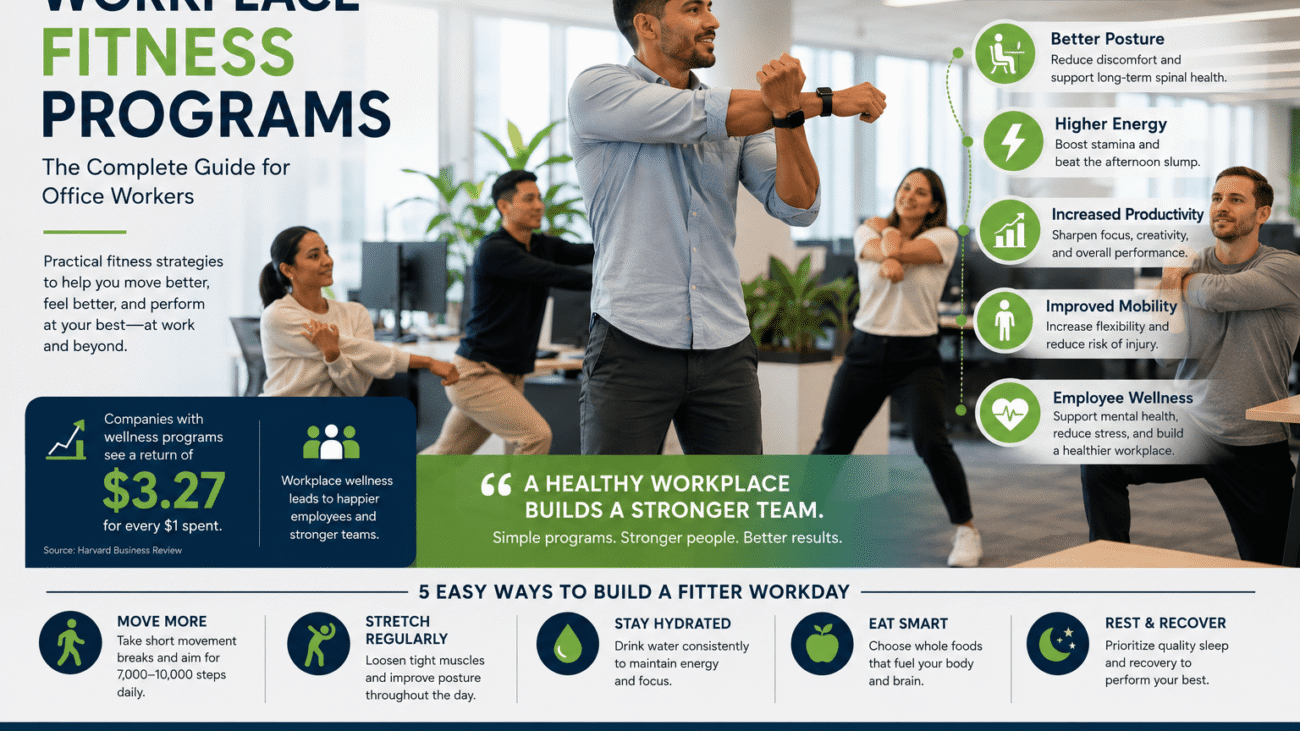
Office work has changed dramatically over the last decade.
Most employees now spend hours sitting at desks, attending virtual meetings, answering emails, and working on computers. While technology has improved efficiency, it has also reduced the amount of movement people get throughout the day.
Many office workers experience back pain, poor posture, neck tension, reduced mobility, low energy levels, and increased stress. These issues often develop gradually and can affect both health and job performance.
As a result, organizations are paying more attention to employee wellbeing. One of the most effective solutions is implementing workplace fitness programs.
From group workout classes and mobility sessions to fitness technology and wellness challenges, modern workplace fitness programs help employees stay active without disrupting their work schedules.
Search trends show growing interest in group fitness programs, group workout classes, group exercise programs, mobile fitness apps, and fitness technology. Employees are actively looking for practical ways to improve their health while managing busy workdays.
This guide explains everything office workers need to know about workplace fitness programs, including their benefits, popular formats, implementation strategies, and the latest fitness trends shaping the future of workplace wellness.

What Are Workplace Fitness Programs?
Workplace fitness programs are structured health initiatives designed to encourage physical activity among employees.
These programs help workers stay active before, during, or after the workday.
A workplace fitness program may include:
- Group fitness programs
- Group workout classes
- Stretching sessions
- Walking challenges
- Mobility exercises
- Strength training
- Virtual fitness classes
- Wellness workshops
- Online workout communities
- Fitness tracking initiatives
Unlike traditional gym memberships, workplace fitness programs are specifically designed around employee schedules and workplace environments.
Some organizations offer on site fitness activities, while others use virtual platforms and mobile fitness apps to support remote and hybrid employees.
The goal is not to turn every employee into an athlete.
The goal is to make movement a consistent part of everyday work life.
Why Workplace Fitness Programs Matter More Than Ever
Many office workers spend eight to ten hours sitting each day.
Research has linked prolonged sitting to several health concerns, including:
- Poor posture
- Lower back pain
- Tight hips
- Reduced flexibility
- Weight gain
- Decreased circulation
- Increased fatigue
- Higher stress levels
The problem is not simply a lack of exercise.
The bigger issue is a lack of regular movement throughout the day.
Even employees who exercise after work can experience negative effects from sitting for extended periods.
That’s why workplace fitness programs focus on integrating movement into daily routines rather than relying solely on gym sessions.
Employees who move regularly throughout the day often report:
- Better focus
- Increased productivity
- Improved energy
- Reduced discomfort
- Better mood
- Improved overall wellbeing
For anyone spending most of the day behind a desk, movement is no longer optional. It has become an important part of maintaining long term health.
The Growing Popularity of Group Fitness Programs
One of the strongest trends in workplace wellness is the rise of group fitness programs.
Search demand for group workout classes and group exercise programs continues to grow because employees often find it easier to stay motivated when exercising with others.
Working out alone requires discipline.
Working out with a group creates accountability.
When coworkers participate together, fitness becomes part of the workplace culture rather than an individual responsibility.
Group fitness programs can include:
- Yoga classes
- Stretching sessions
- Walking groups
- Strength training
- Mobility workshops
- Functional fitness sessions
- Virtual group workouts
These activities help employees stay engaged while creating stronger workplace relationships.
Many organizations also find that group fitness sessions improve employee morale and encourage collaboration outside normal work responsibilities.
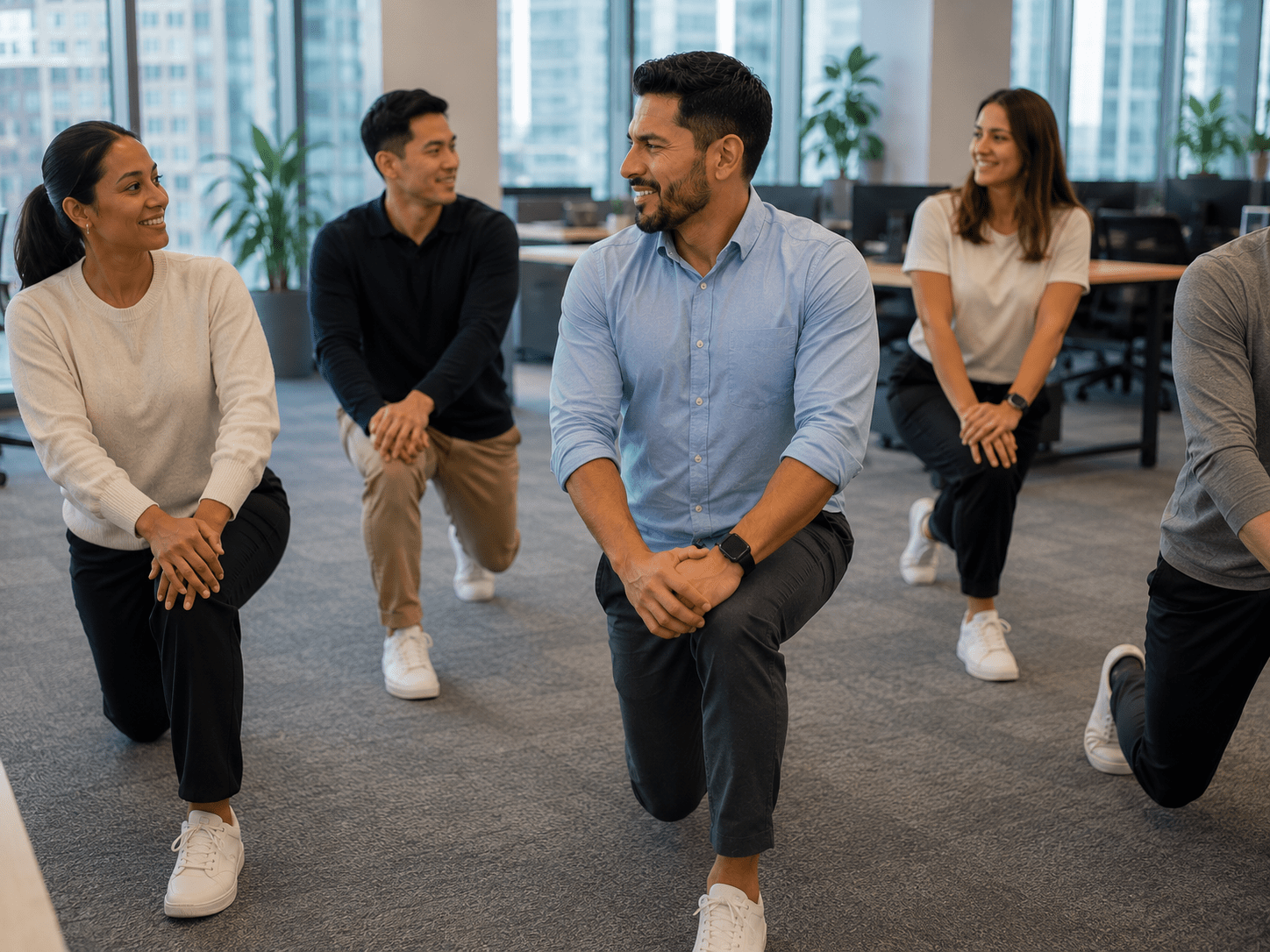
Benefits of Group Fitness Programs for Office Workers
Increased Motivation
One of the biggest barriers to exercise is consistency.
Many people start fitness routines but struggle to maintain them.
Group fitness programs solve this problem by creating social accountability.
Employees are more likely to attend sessions when they know coworkers are participating.
This simple factor often leads to better long term adherence.
Better Physical Health
Regular exercise supports:
- Cardiovascular health
- Muscle strength
- Flexibility
- Mobility
- Balance
- Joint health
These improvements help employees feel better both inside and outside the workplace.
Improved Mental Wellbeing
Exercise is strongly connected to mental health.
Physical activity can help reduce:
- Stress
- Anxiety
- Mental fatigue
- Workplace burnout
Employees frequently report feeling more focused and productive after participating in workplace fitness activities.
Stronger Workplace Culture
Group fitness activities bring people together.
Employees from different departments often interact during wellness programs, creating stronger professional relationships.
This contributes to a healthier and more positive work environment.
Reduced Absenteeism
Healthier employees are generally less likely to miss work due to preventable health issues.
Many organizations view workplace wellness as a long term investment in employee performance and retention.
Types of Workplace Fitness Programs
Not every workplace requires the same approach.
The most effective programs are tailored to employee needs and company culture.
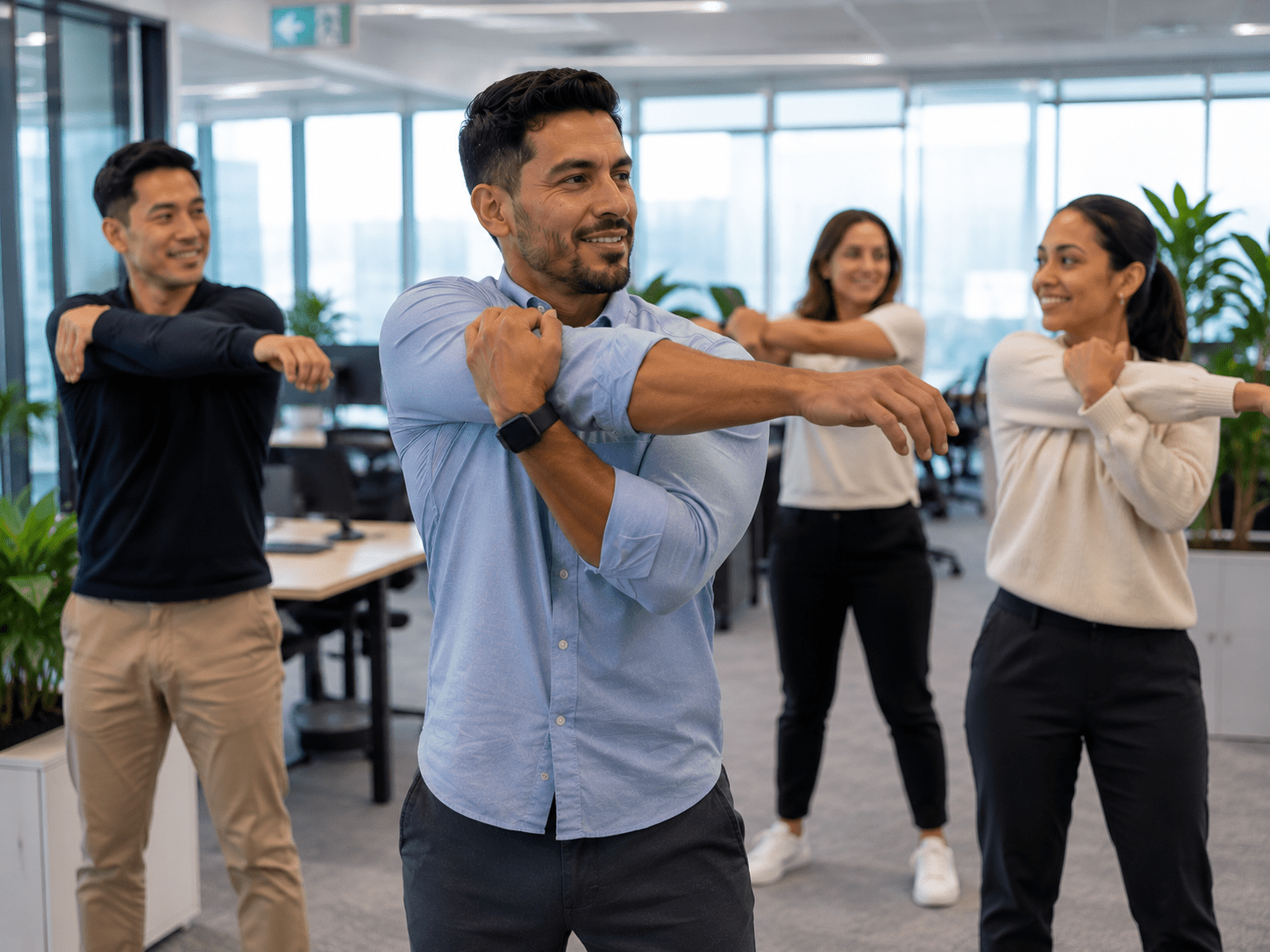
Stretching Programs
Stretching remains one of the easiest workplace wellness initiatives to implement.
Benefits include:
- Improved flexibility
- Better posture
- Reduced muscle tension
- Increased mobility
Stretching sessions can be completed in as little as five to ten minutes.
Employees working at desks for extended periods often benefit significantly from regular stretching routines.
For practical stretching techniques, employees can also read Best Stretches for Office Workers.
Mobility Programs
Mobility training focuses on improving movement quality and joint function.
Many office workers experience restricted mobility due to prolonged sitting.
Common problem areas include:
- Hips
- Shoulders
- Thoracic spine
- Ankles
Mobility exercises help restore natural movement patterns and reduce discomfort.
For a complete daily routine, employees can explore Daily Mobility Routine for Desk Workers.
Walking Programs
Walking is one of the most accessible forms of exercise.
Popular workplace walking initiatives include:
- Step challenges
- Walking meetings
- Lunch break walks
- Team walking competitions
Walking programs require little equipment and can accommodate employees of all fitness levels.
Group Workout Classes
Group workout classes continue to be among the most popular workplace fitness solutions.
Common options include:
- Yoga
- Pilates
- Strength training
- Functional fitness
- Low impact cardio
- Mobility classes
These sessions can be delivered both in person and virtually.
How Poor Posture Impacts Workplace Performance
Posture is often overlooked in workplace wellness discussions.
However, poor posture can affect:
- Energy levels
- Comfort
- Productivity
- Confidence
- Physical health
Common posture problems include:
- Forward head position
- Rounded shoulders
- Slouched sitting
- Tight hip flexors
Over time, these issues may contribute to chronic pain and reduced movement quality.
Employees looking to improve their workstation habits should review Improve Posture While Working at a Computer.
Many workplace fitness programs now include posture education alongside exercise sessions.
Teaching employees how to sit, stand, and move correctly can significantly improve long term outcomes.
Why Short Workouts Can Produce Big Results
Many employees believe they need an hour long workout to see benefits.
This is not always true.
Short exercise sessions performed consistently throughout the day can be highly effective.
Even five minutes of movement can help:
- Increase blood flow
- Improve concentration
- Reduce stiffness
- Boost energy levels
For practical examples, employees can follow 5 Minute Desk Workouts to Relieve Back Pain for Remote Workers.
Small movement breaks often produce meaningful improvements when practiced consistently over time.
Creating a Sustainable Workplace Fitness Culture
The most successful workplace fitness programs focus on long term habits rather than short term challenges.
Employees are more likely to participate when fitness becomes a natural part of workplace culture.
Successful organizations often:
- Encourage movement breaks
- Promote active meetings
- Support flexible schedules
- Provide wellness education
- Celebrate participation
- Use fitness technology to track progress
The goal is not perfection.
The goal is consistency.
A culture that supports movement helps employees build healthier habits that last for years.
How Mobile Fitness Apps Are Changing Workplace Wellness
Technology has become one of the biggest drivers of workplace fitness.
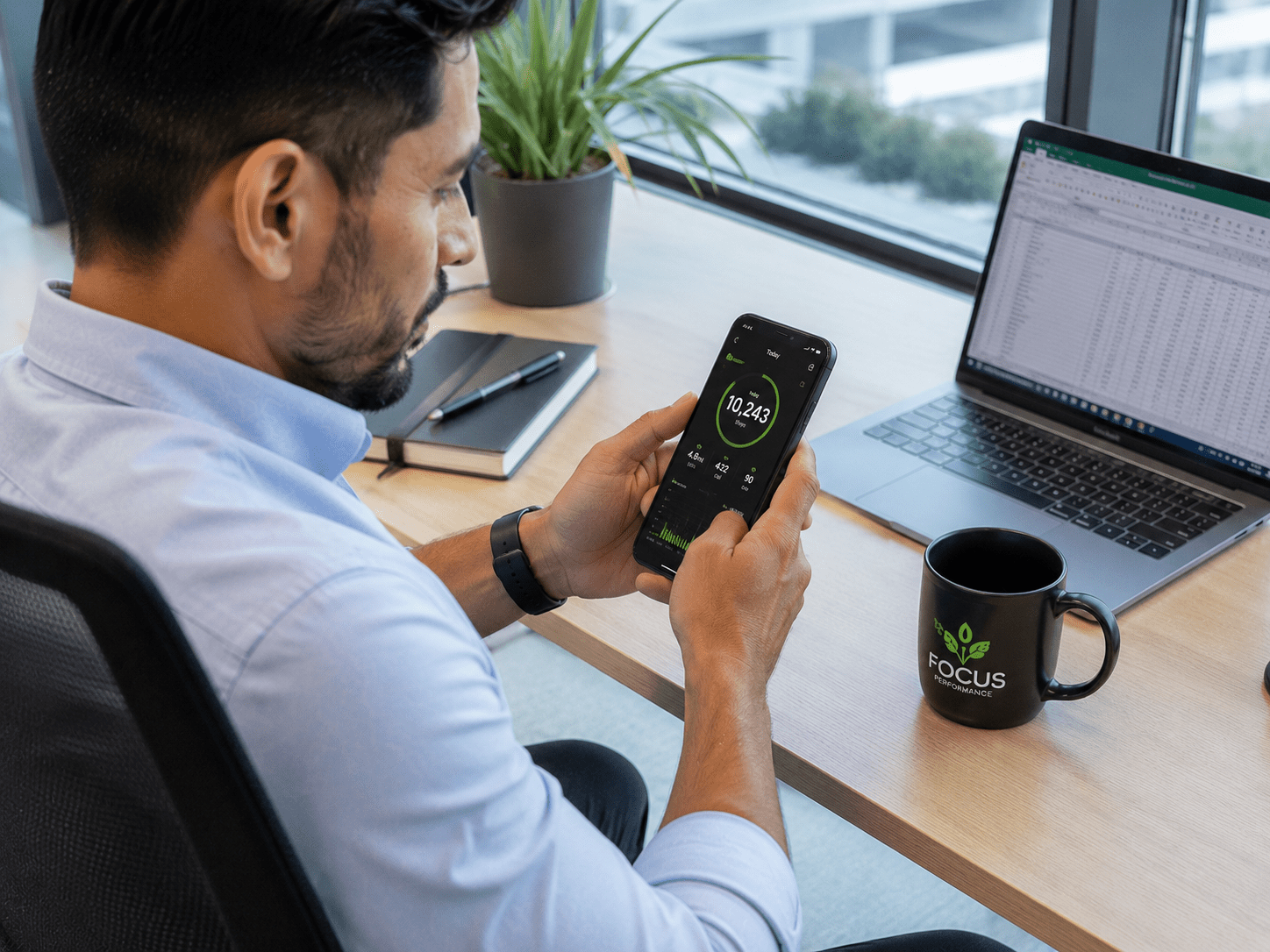
Modern employees want flexibility. They do not always have time to attend scheduled fitness classes or visit a gym after work. This is where mobile fitness apps provide a practical solution.
Search demand for the keyword “mobile fitness app” continues to grow because people want fitness support that fits into their daily routines.
Today’s fitness apps can help employees:
- Track daily activity
- Monitor step counts
- Schedule workouts
- Join fitness challenges
- Record exercise sessions
- Monitor progress
- Stay accountable
Many organizations now include mobile fitness apps as part of their workplace wellness strategy.
Employees can exercise at home, in the office, while traveling, or during lunch breaks.
This flexibility often leads to higher participation rates compared to traditional fitness programs.
Fitness Technology Is Transforming Employee Health
Fitness technology continues to evolve rapidly.
Modern workplace wellness programs now use a combination of wearable devices, health apps, and digital wellness platforms.
Popular fitness technology includes:
- Smartwatches
- Fitness trackers
- Heart rate monitors
- Sleep tracking devices
- Activity monitoring apps
- Wellness dashboards
These tools help employees understand their habits and identify areas for improvement.
Instead of guessing how active they are, employees can measure:
- Daily movement
- Exercise frequency
- Sleep quality
- Calories burned
- Heart rate trends
This data often encourages healthier decision making.
Employees who use wearable fitness devices may become more aware of how much time they spend sitting and how often they move throughout the day.
For readers interested in wearable technology, Best Fitness Trackers for Office Workers provides detailed recommendations.
The Role of Online Workout Communities
One trend that has grown significantly in recent years is the rise of online workout communities.
Many employees work remotely or in hybrid environments.
As a result, traditional workplace fitness activities are no longer enough.
Online workout communities allow employees to connect, exercise, and stay motivated regardless of location.
Benefits include:
- Increased accountability
- Social support
- Friendly competition
- Consistent motivation
- Improved engagement
These communities often use:
- Private groups
- Mobile apps
- Workplace communication platforms
- Virtual fitness events
Employees can share progress, celebrate achievements, and encourage each other.
This social element helps create long term participation.
Online Workout Challenges Keep Employees Engaged
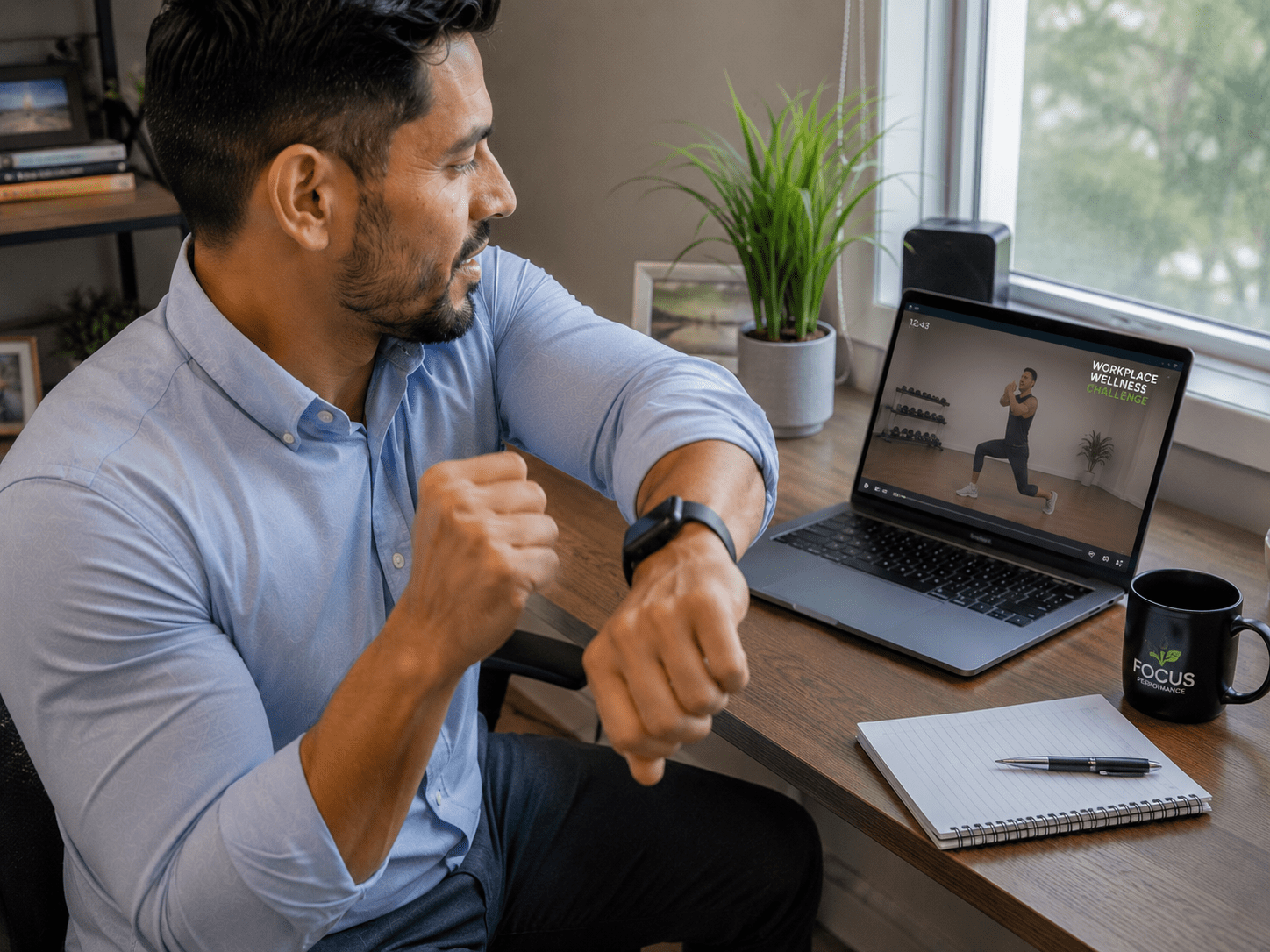
Many successful workplace fitness programs use online workout challenges.
Challenges provide structure and help employees remain committed to healthy habits.
Examples include:
Step Challenges
Employees compete individually or in teams to achieve daily step goals.
Movement Challenges
Participants complete a specific number of movement breaks throughout the workday.
Hydration Challenges
Employees track daily water intake.
Mobility Challenges
Workers complete mobility exercises every day for a set period.
Wellness Challenges
Participants focus on multiple habits such as:
- Exercise
- Sleep
- Nutrition
- Stress management
These challenges are effective because they create clear goals and measurable progress.
Best Group Fitness Workouts for Office Workers
Not every workout is suitable for workplace wellness programs.
The best group fitness workouts are accessible, safe, and easy to scale.
Walking Workouts
Walking remains one of the most underrated forms of exercise.
Benefits include:
- Improved cardiovascular health
- Increased energy
- Better mood
- Reduced stress
Walking sessions are ideal for employees of all ages and fitness levels.
Bodyweight Strength Training
Bodyweight exercises require minimal equipment.
Examples include:
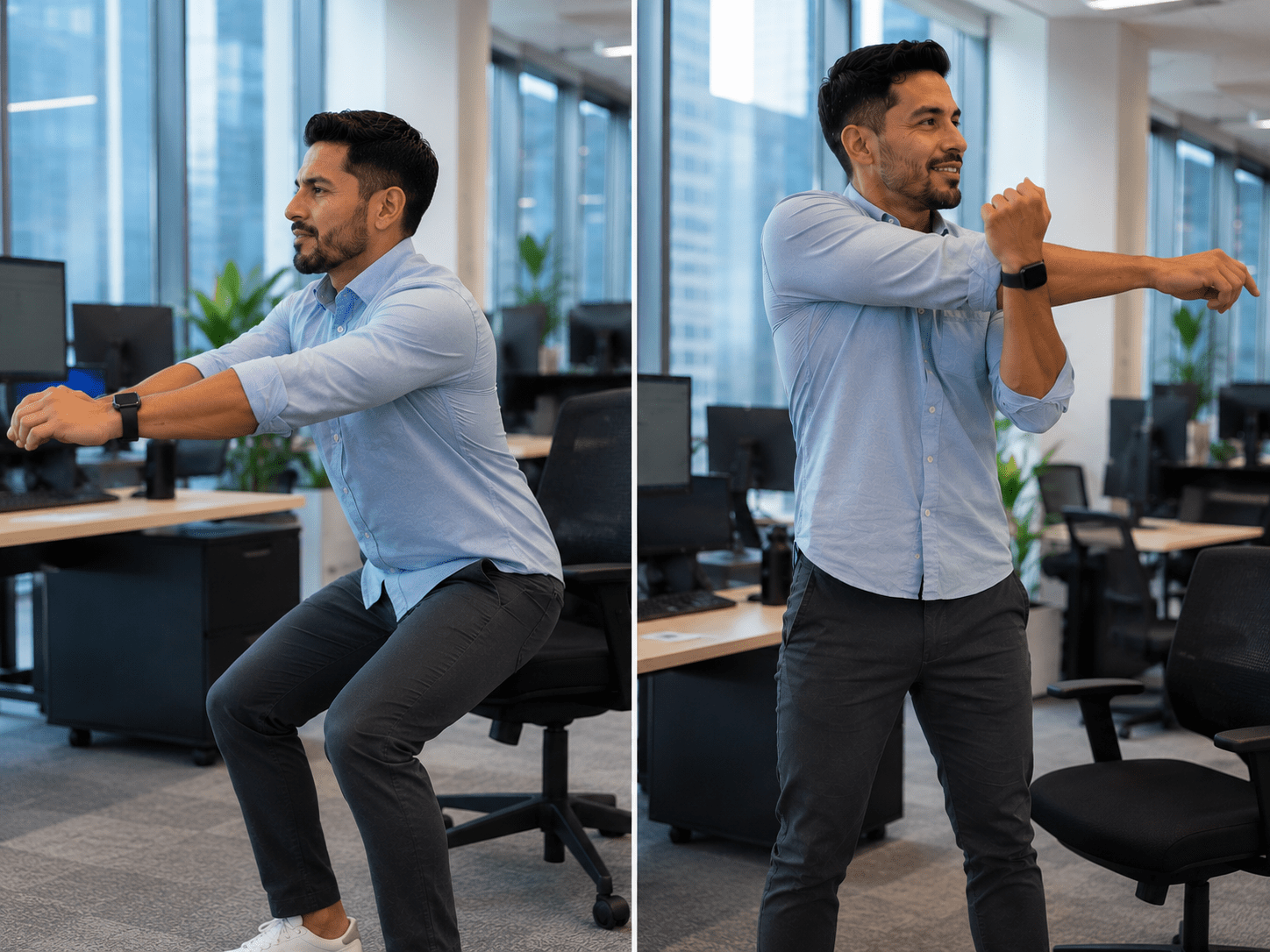
- Squats
- Lunges
- Pushups
- Glute bridges
- Planks
These exercises help improve strength while reducing the risks associated with prolonged sitting.
Mobility Circuits
Mobility focused workouts help restore movement quality.
Common exercises include:
- Hip mobility drills
- Shoulder mobility exercises
- Thoracic spine rotations
- Dynamic stretching
These sessions are particularly beneficial for office workers.
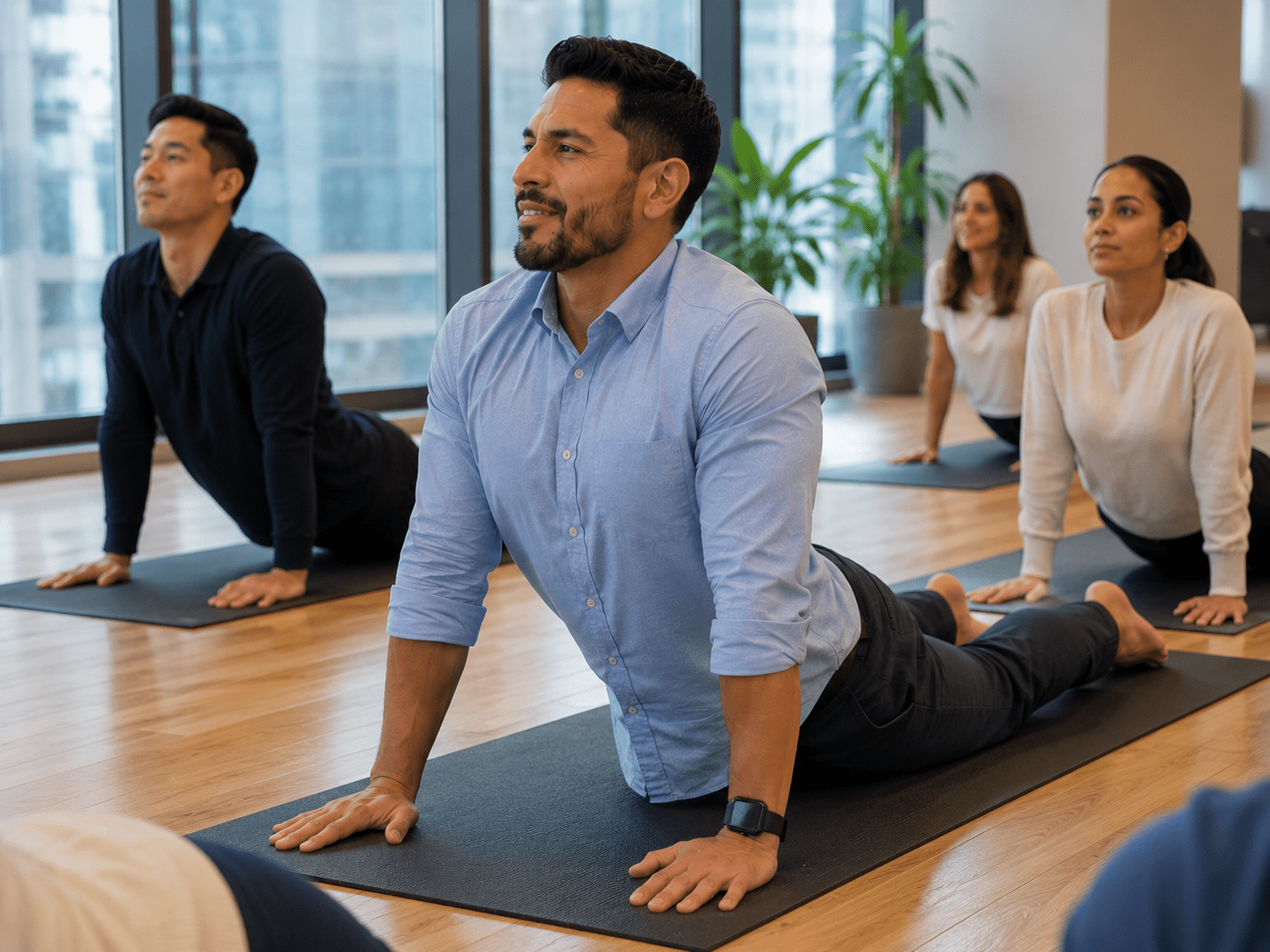
Yoga Sessions
Yoga remains one of the most popular group workout classes worldwide.
Benefits include:
- Improved flexibility
- Better posture
- Reduced stress
- Increased mobility
Yoga is suitable for beginners and experienced exercisers alike.
The Connection Between Fitness and Productivity
One of the biggest misconceptions about workplace fitness programs is that they reduce productivity.
The opposite is often true.
Employees who move regularly throughout the day frequently report:
- Better concentration
- Improved focus
- Higher energy levels
- Reduced fatigue
- Better mood
Physical activity improves blood circulation and oxygen delivery throughout the body.
This can support mental performance during demanding workdays.
Many companies now view workplace fitness as a productivity investment rather than an employee perk.
Building a Workplace Fitness Program That Employees Actually Use
Many wellness initiatives fail because they are designed around company goals instead of employee needs.
Successful workplace fitness programs focus on simplicity and accessibility.
Make Participation Easy
Employees should not need expensive equipment or advanced fitness knowledge.
Simple programs usually achieve better participation rates.
Offer Multiple Options
Different employees have different interests.
Providing several activities helps increase engagement.
Examples include:
- Walking groups
- Yoga classes
- Stretching sessions
- Fitness challenges
- Strength training
Support Remote Employees
Remote workers should have access to the same opportunities as office based staff.
Virtual fitness sessions and online communities can help bridge this gap.
Encourage Leadership Participation
Employees are more likely to participate when managers and leaders actively support wellness initiatives.
Leadership involvement sends a strong message that employee health matters.
Common Workplace Fitness Program Mistakes
Even well intentioned programs can fail when important factors are overlooked.
Focusing Only on Weight Loss
Workplace wellness should focus on overall health rather than appearance.
Making Programs Too Complicated
Complex systems often discourage participation.
Simple programs tend to achieve better long term results.
Ignoring Employee Feedback
Employees should have input into wellness initiatives.
Their feedback helps organizations create programs people actually want.
Expecting Immediate Results
Building healthy habits takes time.
Organizations should focus on long term consistency rather than short term outcomes.
Workplace Wellness Works Best Alongside Healthy Daily Habits
Exercise is only one piece of the puzzle.
Employees should also focus on:
- Nutrition
- Hydration
- Sleep
- Stress management
- Recovery
For practical guidance, readers can explore Healthy Workday Routine for Office Workers.
Nutrition also plays an important role in maintaining energy throughout the day. Employees can learn more from Healthy Snacks for Office Workers to Boost Energy.
Combining healthy eating with regular physical activity creates a strong foundation for long term wellbeing.
Future Workplace Fitness Trends
Workplace wellness continues to evolve as organizations recognize the connection between employee health, productivity, and long term business success.
Several emerging trends are shaping the future of workplace fitness programs.
Companies that embrace these changes are more likely to create healthier and more engaged workforces.
Personalized Fitness Programs
Traditional wellness programs often offered the same solution to every employee.
Today’s programs are becoming increasingly personalized.
Employees now expect fitness recommendations based on:
- Activity levels
- Fitness goals
- Health metrics
- Work schedules
- Personal preferences
Fitness technology and wearable devices make personalization easier than ever.
Hybrid Fitness Models
Hybrid work environments are now common.
As a result, workplace fitness programs must support both office based and remote employees.
Many organizations are combining:
- In person fitness classes
- Virtual training sessions
- Mobile fitness apps
- Online workout communities
This approach provides flexibility while maintaining engagement.
Data Driven Wellness Programs
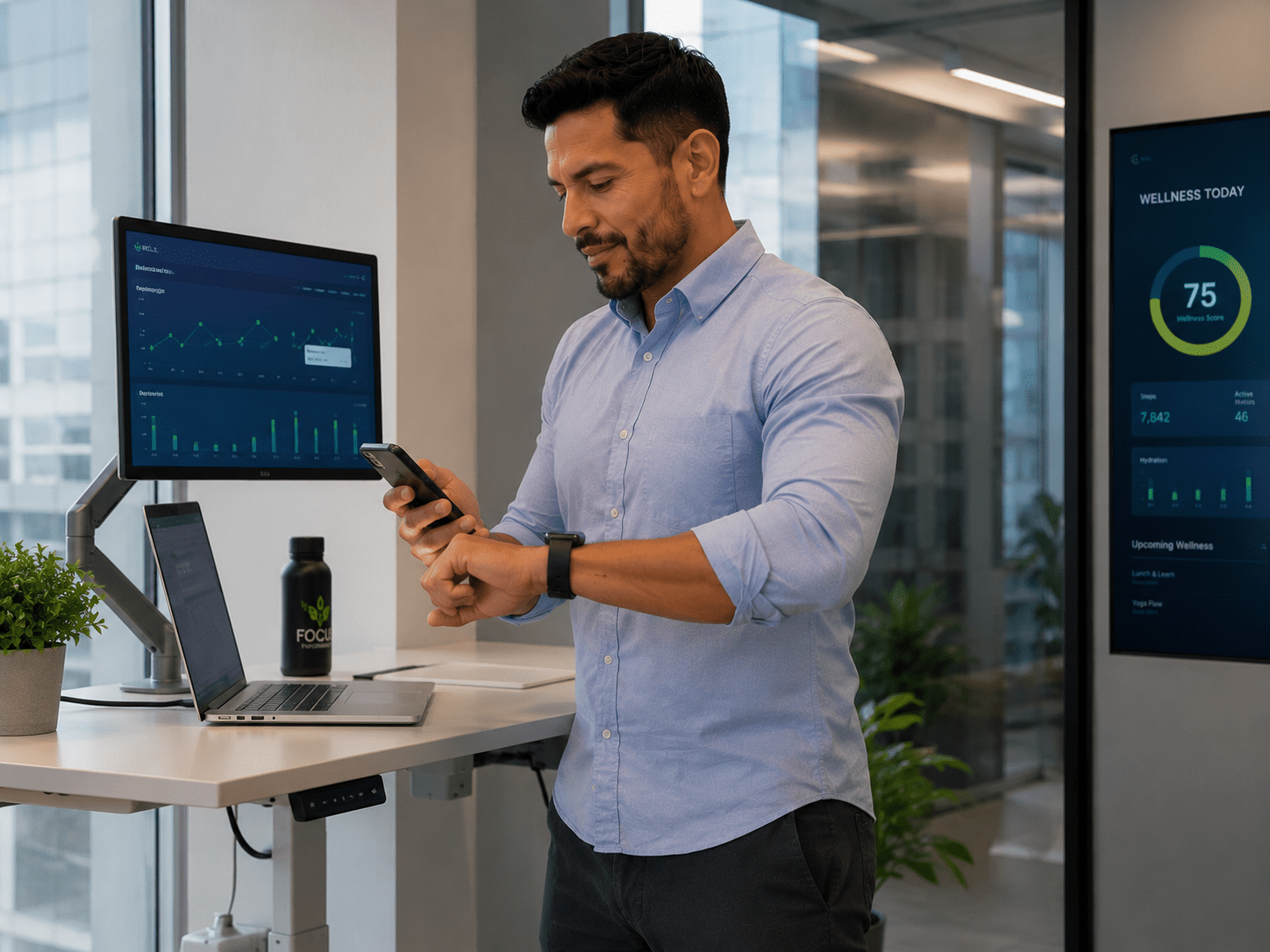
Modern fitness technology provides valuable insights into employee activity patterns.
Organizations can use anonymous wellness data to:
- Improve participation
- Identify trends
- Measure engagement
- Enhance program effectiveness
Data driven wellness strategies are expected to become more common in the coming years.
Mental Health Integration
Employers increasingly understand that physical and mental health are closely connected.
Future workplace wellness programs will likely combine:
- Exercise
- Stress management
- Mindfulness
- Recovery strategies
- Mental wellbeing education
This holistic approach can help employees achieve better overall health.
Group Fitness Trends Shaping Modern Workplaces
Search trends show increasing interest in group fitness trends and workplace wellness activities.
Several developments are influencing how organizations approach employee fitness.
Micro Workouts
Employees no longer need one hour workout sessions to improve their health.
Short movement sessions lasting five to ten minutes are becoming increasingly popular.
These micro workouts can be performed:
- At a desk
- In a meeting room
- During breaks
- At home
The focus is on consistency rather than duration.
Mobility Focused Training
More employees are experiencing issues related to prolonged sitting.
As a result, mobility training is becoming a core component of workplace fitness programs.
Mobility exercises help improve:
- Joint health
- Flexibility
- Movement quality
- Posture
Social Fitness Experiences
Fitness is becoming more community focused.
Employees increasingly prefer:
- Group fitness programs
- Team challenges
- Shared goals
- Online workout communities
These experiences create accountability and improve participation rates.
Wearable Technology Integration
Wearable devices continue to influence workplace wellness.
Fitness trackers can encourage employees to:
- Move more frequently
- Monitor activity levels
- Improve sleep habits
- Develop healthier routines
Organizations are increasingly integrating wearable technology into wellness initiatives.

Latest Exercise Trends for Office Workers
Several exercise trends are particularly relevant for employees who spend long hours sitting.
Functional Fitness
Functional fitness focuses on movements used in everyday life.
Examples include:
- Squatting
- Reaching
- Carrying
- Rotating
- Lifting
These exercises help improve practical strength and movement efficiency.
Low Impact Strength Training
Low impact training allows employees to build strength without excessive stress on the joints.
This approach is accessible for a wide range of fitness levels.
Mobility Based Exercise
Mobility exercises are becoming increasingly popular among office workers because they directly address the effects of prolonged sitting.
Walking Based Wellness Programs
Walking remains one of the most effective and sustainable forms of exercise.
Many organizations now encourage:
- Walking meetings
- Step challenges
- Outdoor breaks
- Team walks
Walking programs are simple, affordable, and highly effective.
How to Start a Workplace Fitness Program
Whether you are an employer or an individual employee, getting started does not need to be complicated.
Step 1: Assess Current Habits
Identify common challenges such as:
- Prolonged sitting
- Low activity levels
- Poor posture
- Stress
- Low energy
Understanding existing habits helps determine the most effective solutions.
Step 2: Set Clear Goals
Examples include:
- Improving employee wellbeing
- Increasing daily movement
- Reducing discomfort
- Supporting productivity
Clear goals help guide program development.
Step 3: Choose Appropriate Activities
Select activities that match employee needs and workplace culture.
Popular options include:
- Group workout classes
- Walking programs
- Mobility sessions
- Stretching routines
- Fitness challenges
Step 4: Use Technology
Fitness technology can simplify participation and tracking.
Examples include:
- Mobile fitness apps
- Wearable devices
- Wellness platforms
- Online workout communities
Step 5: Encourage Consistency
Long term success depends on consistency.
Small daily habits often produce better results than occasional intense efforts.
Frequently Asked Questions
What are workplace fitness programs?
Workplace fitness programs are wellness initiatives designed to help employees stay physically active and improve their overall health while working.
Do workplace fitness programs improve productivity?
Many studies suggest that regular physical activity can improve focus, energy levels, and overall workplace performance.
What are the best group fitness programs for office workers?
Popular options include yoga, mobility training, walking programs, stretching sessions, and low impact strength training.
How often should office workers exercise?
Most health experts recommend regular physical activity throughout the week along with movement breaks during the workday.
Can remote employees participate in workplace fitness programs?
Yes. Virtual fitness classes, online workout communities, fitness apps, and wellness challenges make participation possible from any location.
Are fitness trackers useful for office workers?
Fitness trackers can help employees monitor activity levels, encourage movement, and develop healthier habits.
Recommended External Resources
For additional evidence based information, readers can explore:
Physical Activity Guidelines for Americans
Centers for Disease Control and Prevention Physical Activity Resources
World Health Organization Physical Activity Facts
Final Thoughts
Modern work has created new challenges for employee health.
Long hours at desks, increased screen time, and reduced movement can negatively impact physical and mental wellbeing.
Fortunately, workplace fitness programs provide practical solutions.
From group fitness programs and group workout classes to fitness technology and online workout communities, employees now have more opportunities than ever to stay active throughout the workday.
The most successful programs focus on consistency, accessibility, and long term habit formation.
Employees do not need complicated workout plans or expensive equipment.
Simple actions such as taking movement breaks, participating in group exercise programs, using a mobile fitness app, and engaging in workplace wellness initiatives can produce meaningful improvements over time.
When combined with healthy nutrition, quality sleep, and regular physical activity, workplace fitness programs can help employees feel better, move better, and perform better both inside and outside the workplace.
For additional workplace wellness guidance, readers should also explore:
Best Morning Exercises for Office Workers
Healthy Workday Routine for Office Workers
Best Fitness Trackers for Office Workers
By making movement a regular part of the workday, office workers can build healthier habits that support long term success and overall wellbeing.