
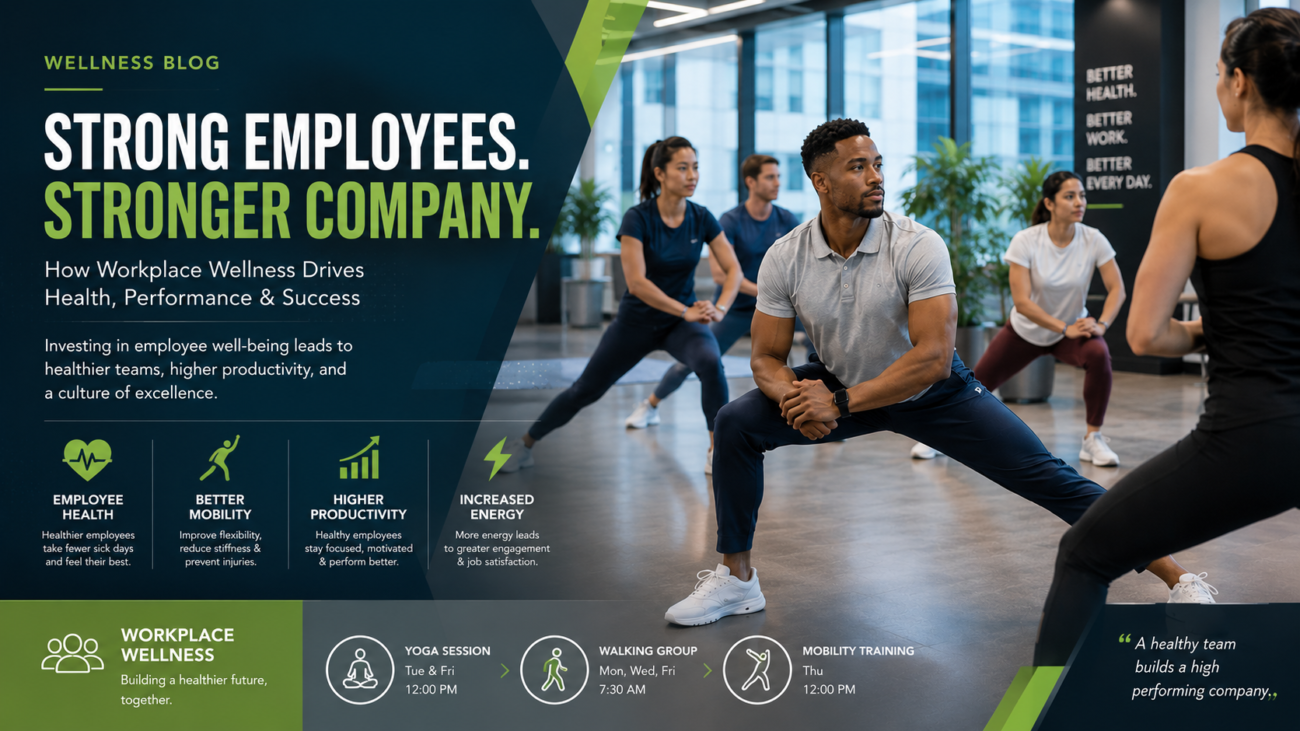
Employee health has become one of the most important priorities for modern organizations.
Businesses are increasingly recognizing that healthy employees tend to be more productive, engaged, and resilient. At the same time, workers are looking for practical ways to stay active despite long hours spent at desks, in meetings, and in front of computer screens.
This growing focus on workplace wellness has led to increased interest in group fitness workouts.
Unlike traditional exercise programs that rely on individual motivation, group fitness workouts create accountability, social support, and structured routines that make it easier for employees to stay consistent.
For office workers, these workouts can provide a powerful solution to many common challenges associated with sedentary work.
Regular participation can help improve:
- Physical health
- Energy levels
- Mobility
- Posture
- Mental wellbeing
- Workplace productivity
Whether employees work in traditional offices, hybrid environments, or remotely, group fitness workouts can play an important role in building healthier habits.
In this guide, we’ll explore the most effective workplace fitness workouts, their benefits, and how organizations can use them to support employee health.

Why Employee Health Matters More Than Ever
Modern work environments often require employees to spend extended periods sitting.
While technology has improved efficiency, it has also reduced daily movement.
Many office workers experience:
- Lower back pain
- Neck tension
- Reduced mobility
- Poor posture
- Fatigue
- Stress
These issues may seem minor at first.
However, over time they can affect both personal wellbeing and workplace performance.
Healthy employees are more likely to:
- Maintain focus
- Manage stress effectively
- Stay engaged
- Perform consistently
This is why workplace wellness initiatives continue to expand across industries.
Organizations that invest in employee health are often investing in long term business success as well.
For a broader overview of workplace wellness strategies, explore Workplace Fitness Programs for Office Workers.
What Are Group Fitness Workouts?
Group fitness workouts are structured exercise sessions completed with multiple participants under the guidance of an instructor or organized program.
Unlike individual workouts, group exercise programs create a shared experience.
Participants work toward similar goals while benefiting from:
- Professional instruction
- Accountability
- Motivation
- Community support
Workplace group fitness workouts may include:
- Mobility training
- Stretching sessions
- Strength workouts
- Walking groups
- Functional fitness
- Yoga classes
- Circuit training
- Virtual workout programs
These workouts can be adapted for different fitness levels and workplace environments.
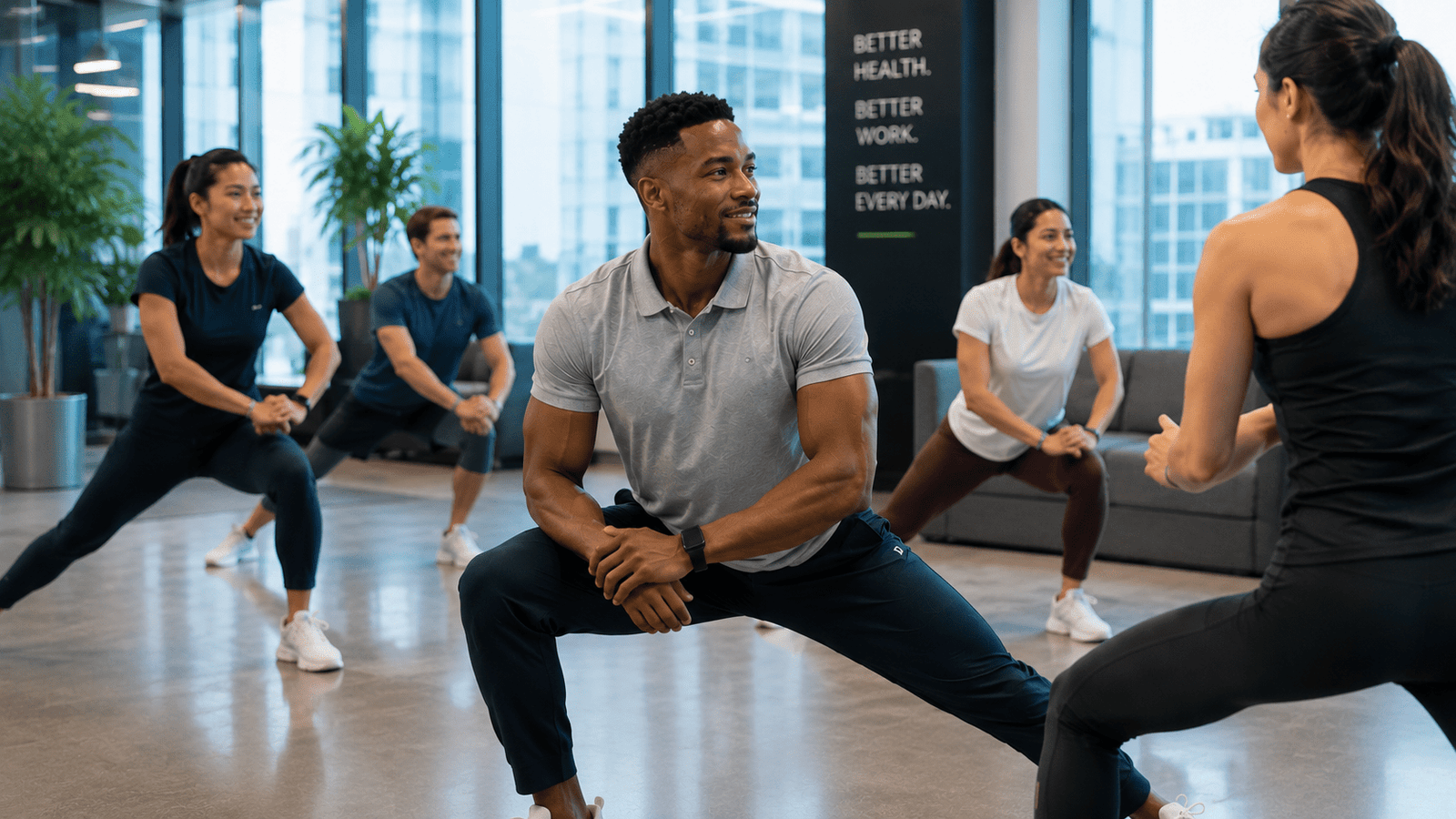
The Benefits of Group Fitness Workouts
Increased Participation
Many employees struggle to maintain exercise routines on their own.
Group settings often improve participation because employees feel accountable to the team.
Better Physical Health
Consistent exercise supports:
- Cardiovascular health
- Muscle strength
- Joint function
- Flexibility
- Mobility
These benefits help employees feel better throughout the workday.
Improved Mental Wellbeing
Physical activity helps reduce:
- Stress
- Anxiety
- Mental fatigue
Employees frequently report improved mood after participating in workplace exercise sessions.
Stronger Workplace Relationships
Group workouts create opportunities for employees to interact outside normal work responsibilities.
This often strengthens communication and teamwork.
Improved Productivity
Regular movement helps improve focus and energy levels.
Many employees find they perform better after incorporating exercise into their daily routines.
What Makes a Good Workplace Fitness Workout?
Not every workout is ideal for office workers.
The most effective workplace fitness workouts share several characteristics.
Accessibility
Employees of different fitness levels should be able to participate.
Safety
Workouts should minimize injury risk.
Scalability
Programs should accommodate both beginners and experienced participants.
Time Efficiency
Most employees benefit from sessions lasting between 15 and 45 minutes.
Practical Benefits
Exercises should address common workplace challenges such as poor posture, stiffness, and inactivity.
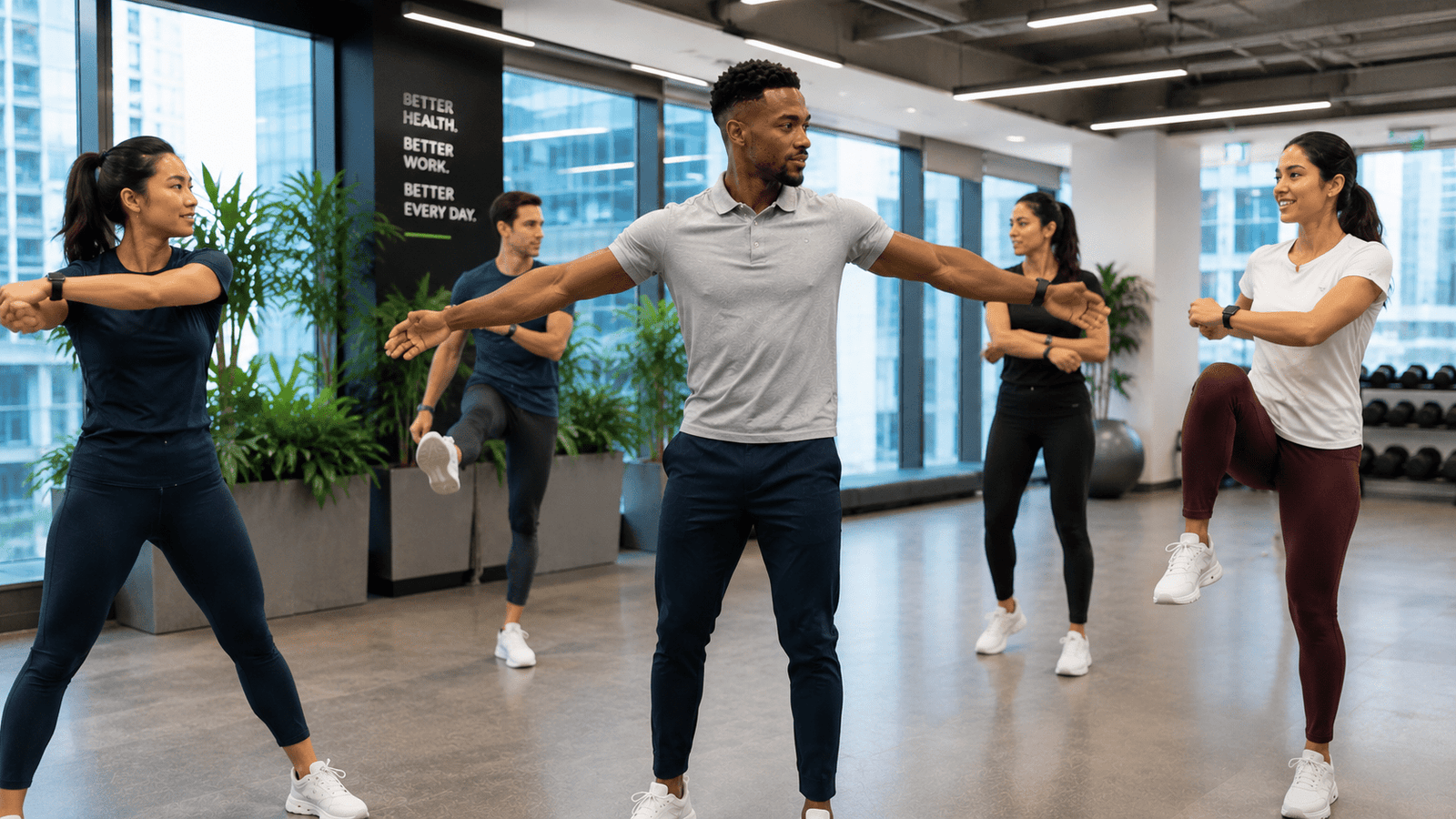
1. Mobility Based Group Fitness Workouts
Mobility workouts are among the most valuable exercise programs for office workers.
They focus on improving movement quality and joint function.
Common mobility exercises include:
- Hip openers
- Shoulder circles
- Thoracic rotations
- Dynamic stretching
- Ankle mobility drills
Benefits include:
- Better posture
- Reduced stiffness
- Improved flexibility
- Enhanced movement quality
Many employees notice improvements within a few weeks of consistent practice.
For additional guidance, readers can explore Daily Mobility Routine for Desk Workers.
2. Group Stretching Workouts
Stretching remains one of the simplest and most effective workplace fitness activities.
These sessions help:
- Increase flexibility
- Improve circulation
- Reduce muscle tension
- Support recovery
Stretching workouts are particularly effective for employees who spend long hours sitting.
Popular areas of focus include:
- Neck
- Shoulders
- Back
- Hips
- Hamstrings
For practical stretching techniques, see Best Stretches for Office Workers.
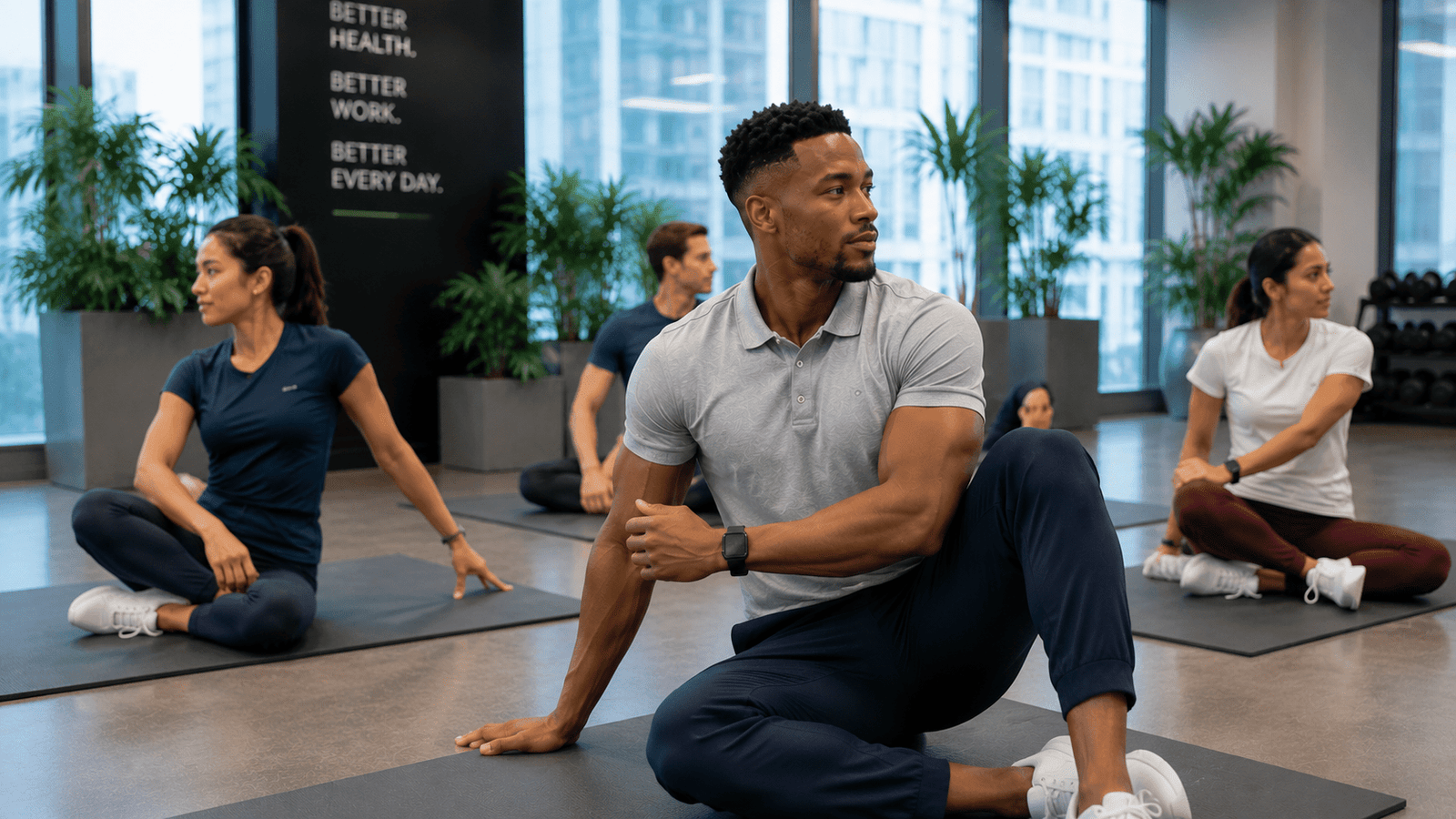
3. Walking Based Group Fitness Programs
Walking is one of the most underrated forms of exercise.
Despite its simplicity, walking offers numerous benefits.
Workplace walking programs may include:
- Team walking challenges
- Walking meetings
- Lunchtime walks
- Step competitions
Benefits include:
- Improved cardiovascular health
- Better circulation
- Increased daily activity
- Reduced stress
Walking programs are highly accessible and suitable for nearly all employees.
4. Functional Fitness Workouts
Functional fitness trains movements used in everyday life.
Examples include:
- Squats
- Lunges
- Reaching movements
- Carrying exercises
- Rotational movements
For office workers, functional training can help reverse many of the physical limitations associated with prolonged sitting.
Benefits include:
- Improved strength
- Better balance
- Enhanced mobility
- Reduced injury risk
Functional fitness is increasingly common within workplace wellness programs.
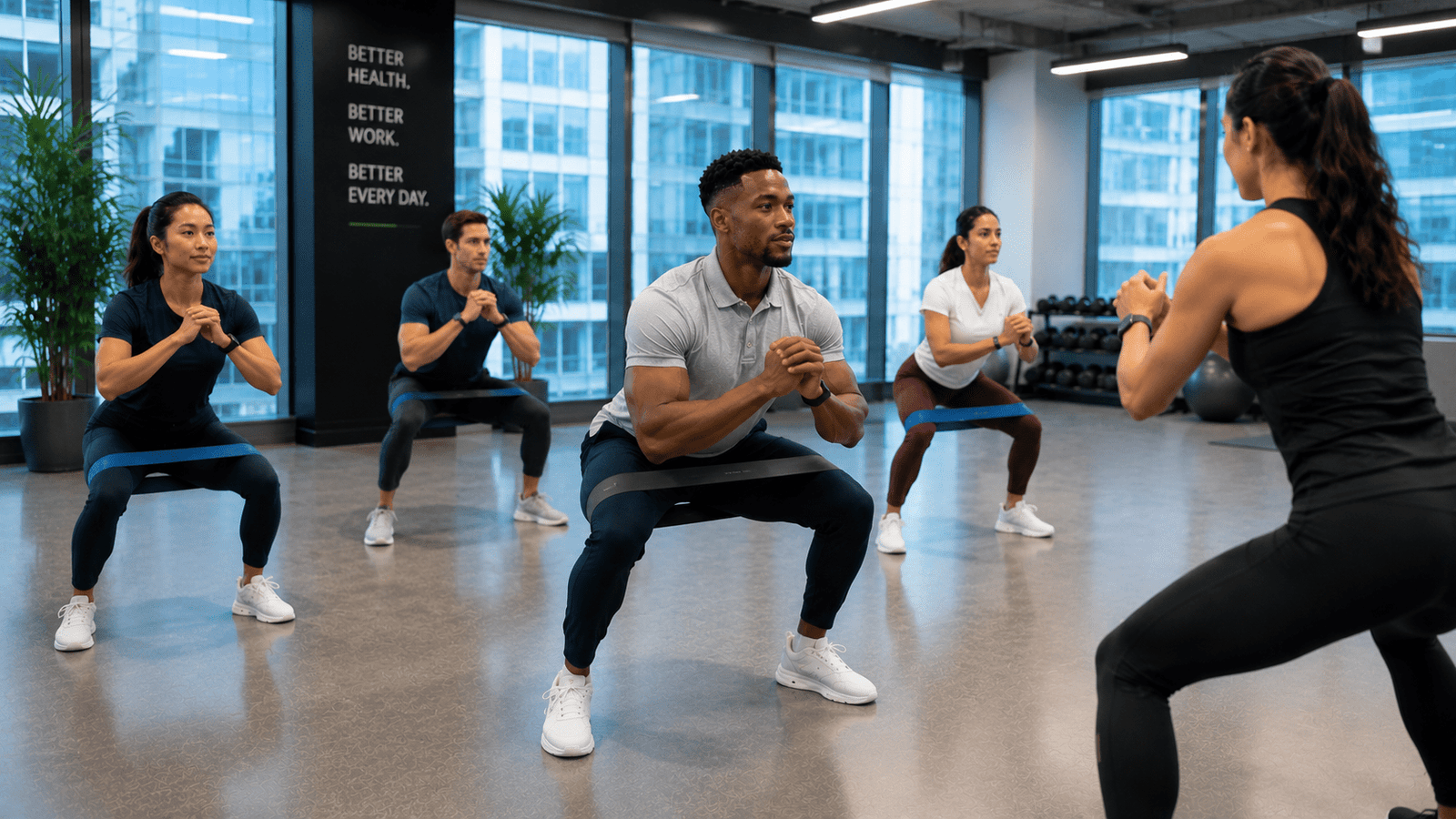
5. Strength Training Group Workouts
Strength training is one of the most effective ways to improve long term health.
Unfortunately, many office workers overlook it because they assume it requires a gym or heavy equipment.
In reality, workplace strength workouts can be simple, safe, and highly effective.
Popular exercises include:
- Bodyweight squats
- Wall pushups
- Resistance band rows
- Glute bridges
- Planks
- Step ups
Benefits include:
- Better posture
- Increased muscle strength
- Improved joint support
- Reduced injury risk
- Higher energy levels
For employees who spend long hours sitting, strength training can help address muscle imbalances that develop over time.
Many workplace wellness programs now include beginner friendly strength sessions because they are easy to implement and suitable for a wide range of fitness levels.
6. Circuit Training Workouts
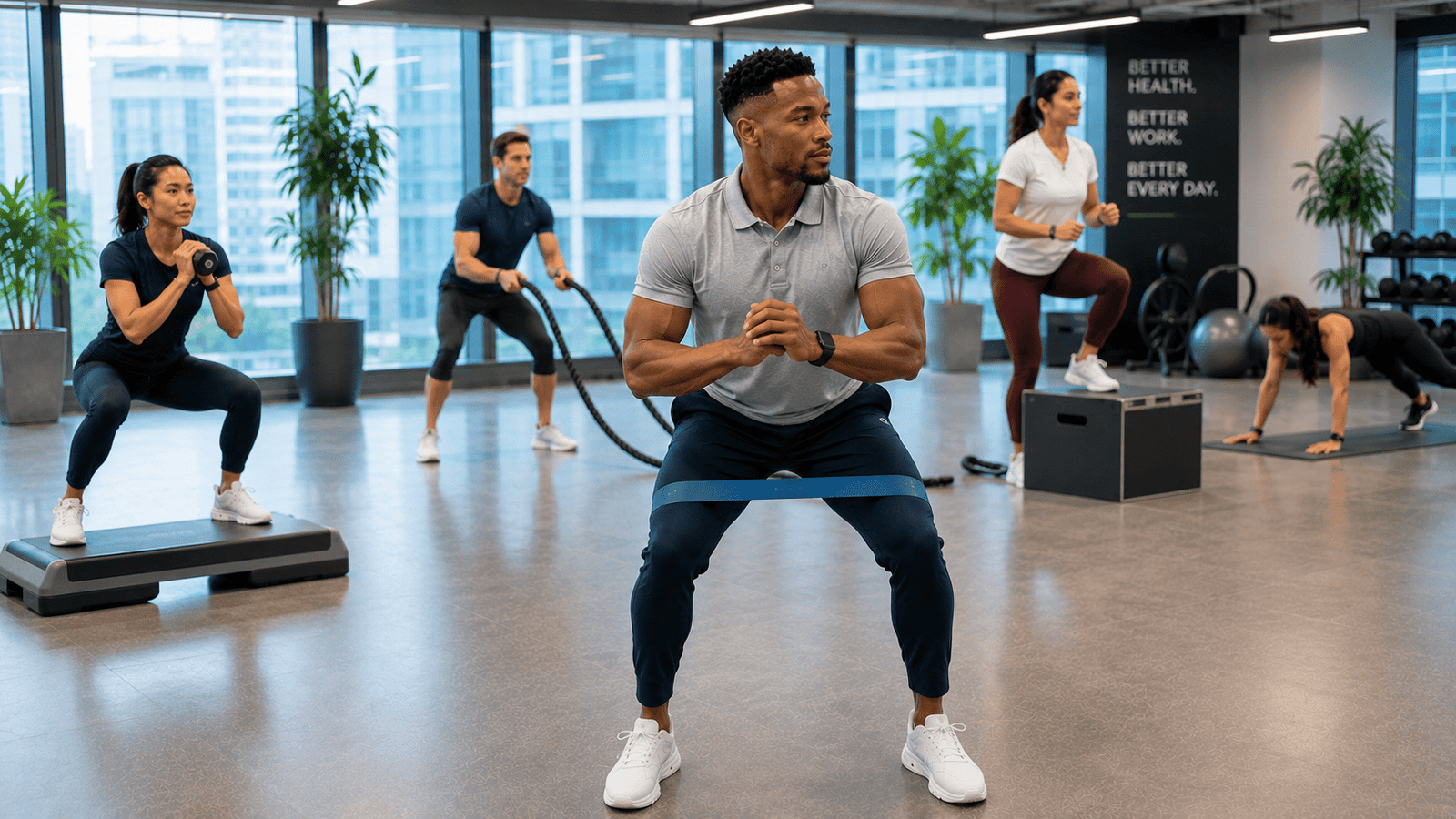
Circuit training combines multiple exercises into a structured sequence.
Participants move from one exercise to another with minimal rest.
A typical workplace circuit may include:
- Squats
- Marching in place
- Shoulder mobility drills
- Resistance band exercises
- Balance movements
Benefits include:
- Improved cardiovascular fitness
- Increased strength
- Better endurance
- Higher calorie expenditure
Circuit workouts are popular because they maximize results within a relatively short period.
Most workplace circuits can be completed in 20 to 30 minutes.
7. Workplace Yoga Programs
Yoga continues to be one of the most popular workplace wellness activities.
Unlike many fitness programs, yoga simultaneously improves physical and mental wellbeing.
Benefits include:
- Better flexibility
- Improved posture
- Increased mobility
- Reduced stress
- Better balance
Many office workers experience tight hips, stiff shoulders, and poor posture.
Yoga directly addresses these issues through controlled movements and stretching exercises.
Workplace yoga classes are often designed specifically for desk workers.
Sessions may focus on:
- Hip mobility
- Back health
- Neck tension relief
- Stress management
For employees seeking additional movement ideas, Best Morning Exercises for Office Workers provides practical routines that complement workplace yoga sessions.
8. Virtual Group Fitness Workouts
The rise of remote and hybrid work has changed how organizations approach employee wellness.
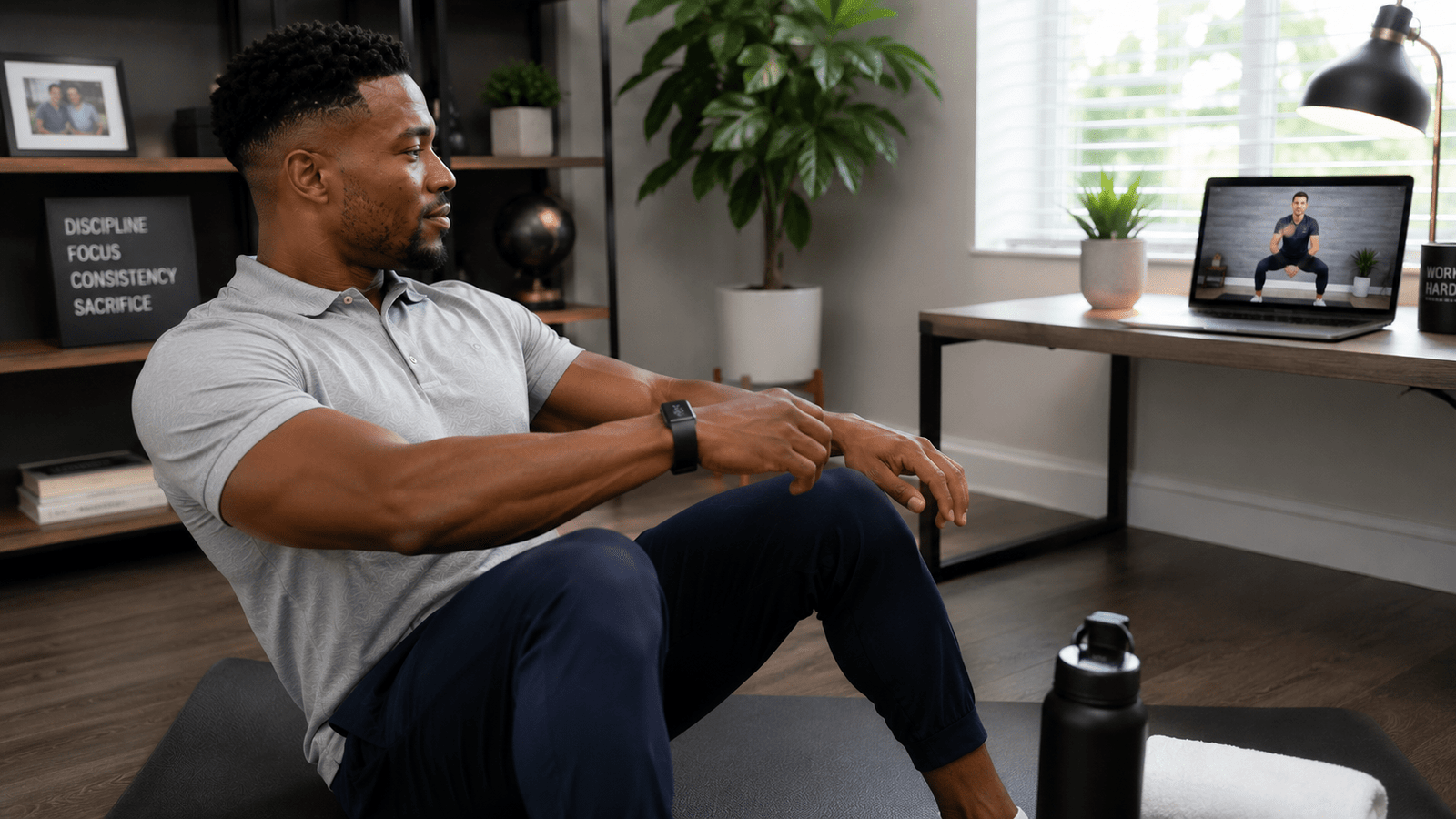
Virtual group fitness workouts allow employees to participate regardless of location.
Popular virtual options include:
- Yoga classes
- Stretching sessions
- Mobility training
- Bodyweight workouts
- Wellness challenges
Benefits include:
- Greater accessibility
- Increased participation
- Flexible scheduling
- Support for remote teams
Organizations with distributed workforces often find virtual fitness programs highly effective.
Employees can join from home, hotel rooms, or office environments.
How Group Fitness Workouts Improve Workplace Productivity
Employee wellness and productivity are closely connected.
Workers who feel physically and mentally well often perform better throughout the day.
Regular exercise can help:
- Increase focus
- Improve concentration
- Reduce fatigue
- Support memory
- Improve mood
Movement also improves blood circulation and oxygen delivery throughout the body.
This can help employees remain alert during demanding workdays.
Many organizations now view workplace fitness as an investment rather than an employee benefit.
The goal is not simply to encourage exercise.
The goal is to create healthier and more productive teams.
Common Mistakes Employees Make
Doing Too Much Too Soon
Many employees begin fitness programs with unrealistic expectations.
Consistency is more important than intensity.
Small improvements performed regularly produce better long term results.
Ignoring Recovery
Exercise is only one part of the wellness equation.
Recovery is equally important.
Employees should prioritize:
- Quality sleep
- Proper hydration
- Balanced nutrition
- Stress management
Sitting Too Long Between Workouts
Even employees who exercise regularly can experience problems from excessive sitting.
Movement throughout the day remains important.
Choosing Workouts They Dislike
The most effective workout is the one people consistently perform.
Employees should choose activities they genuinely enjoy.
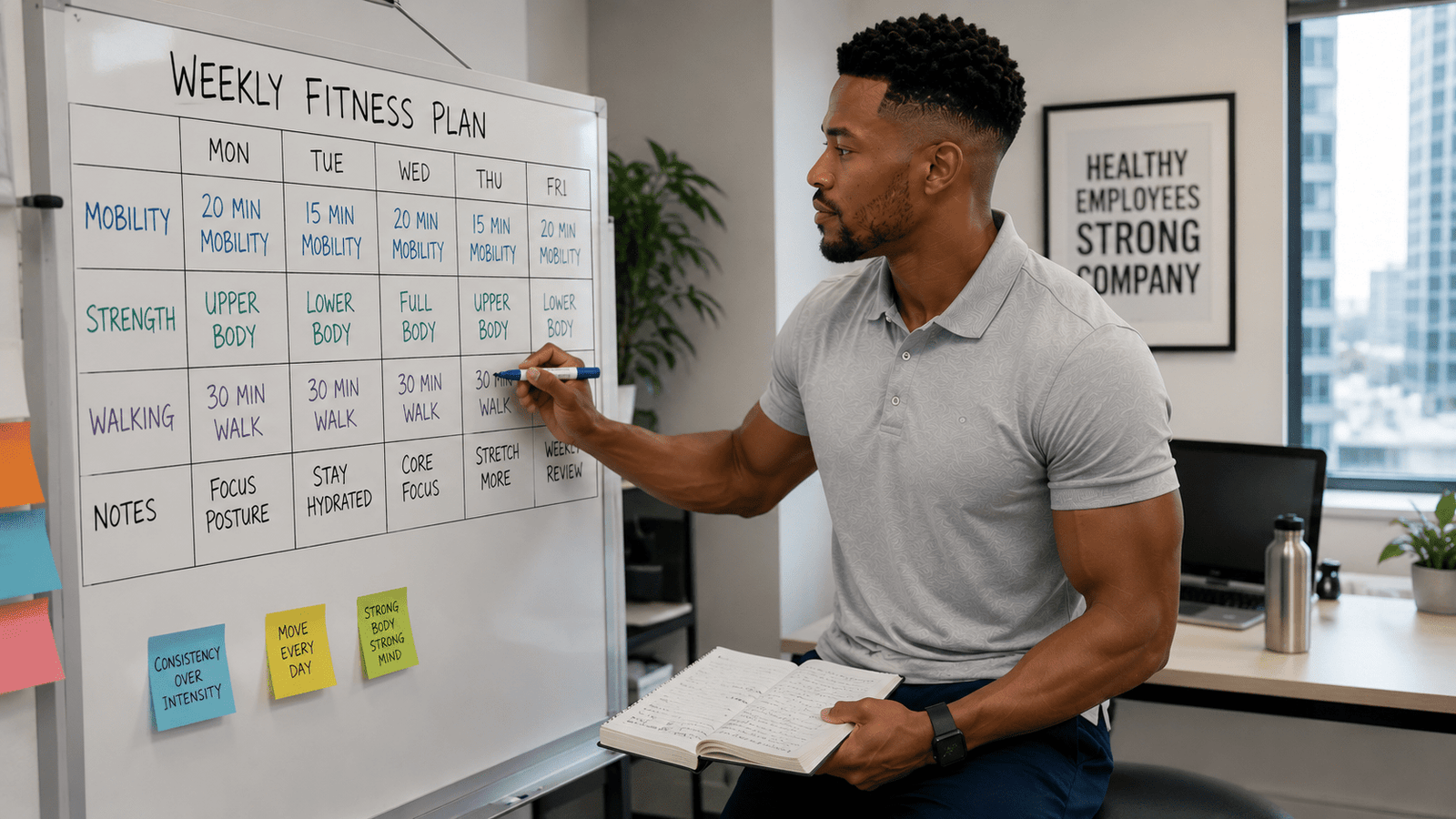
Building a Successful Workplace Fitness Routine
A balanced employee wellness routine may include:
| Day | Activity |
|---|---|
| Monday | Mobility Workout |
| Tuesday | Strength Training |
| Wednesday | Walking Group |
| Thursday | Yoga Session |
| Friday | Circuit Training |
| Saturday | Recreational Activity |
| Sunday | Recovery and Stretching |
This approach provides variety while supporting overall health.
Employees can modify schedules based on personal goals and availability.
For additional workplace wellness strategies, readers should explore Healthy Workday Routine for Office Workers.
Frequently Asked Questions
What are group fitness workouts?
Group fitness workouts are structured exercise sessions completed with multiple participants under the guidance of an instructor or organized program.
Are group fitness workouts effective for office workers?
Yes. They help improve mobility, posture, strength, flexibility, and overall health while reducing the effects of prolonged sitting.
What is the best workplace fitness workout?
The best option depends on individual goals. Mobility training, walking programs, yoga, strength training, and functional fitness all provide valuable benefits.
How often should employees participate?
Most employees benefit from participating in structured exercise programs two to four times per week while maintaining daily movement habits.
Are virtual fitness workouts effective?
Yes. Virtual programs can improve participation and provide flexibility for remote and hybrid employees.
Do workplace fitness programs improve productivity?
Many employees report better focus, increased energy, and improved concentration after incorporating regular exercise into their routines.
Recommended External Resources
For evidence based fitness information, explore:
Physical Activity Guidelines for Americans
CDC Physical Activity Resources
World Health Organization Physical Activity Facts
Final Thoughts
Employee health plays a critical role in workplace success.
As organizations continue to prioritize wellbeing, group fitness workouts have emerged as one of the most effective tools for encouraging healthy habits.
Whether through mobility training, stretching sessions, walking programs, strength workouts, yoga classes, or virtual fitness initiatives, employees now have more opportunities than ever to stay active throughout the workday.
The most successful programs focus on consistency, accessibility, and long term participation.
Small actions performed regularly can produce meaningful improvements in health, energy, productivity, and overall quality of life.
Employees who want a complete workplace wellness strategy should also explore:
Workplace Fitness Programs for Office Workers
Best Group Workout Classes for Office Workers
Best Fitness Trackers for Office Workers
By making movement a regular part of the workday, employees can build healthier habits that support both professional performance and long term wellbeing.