
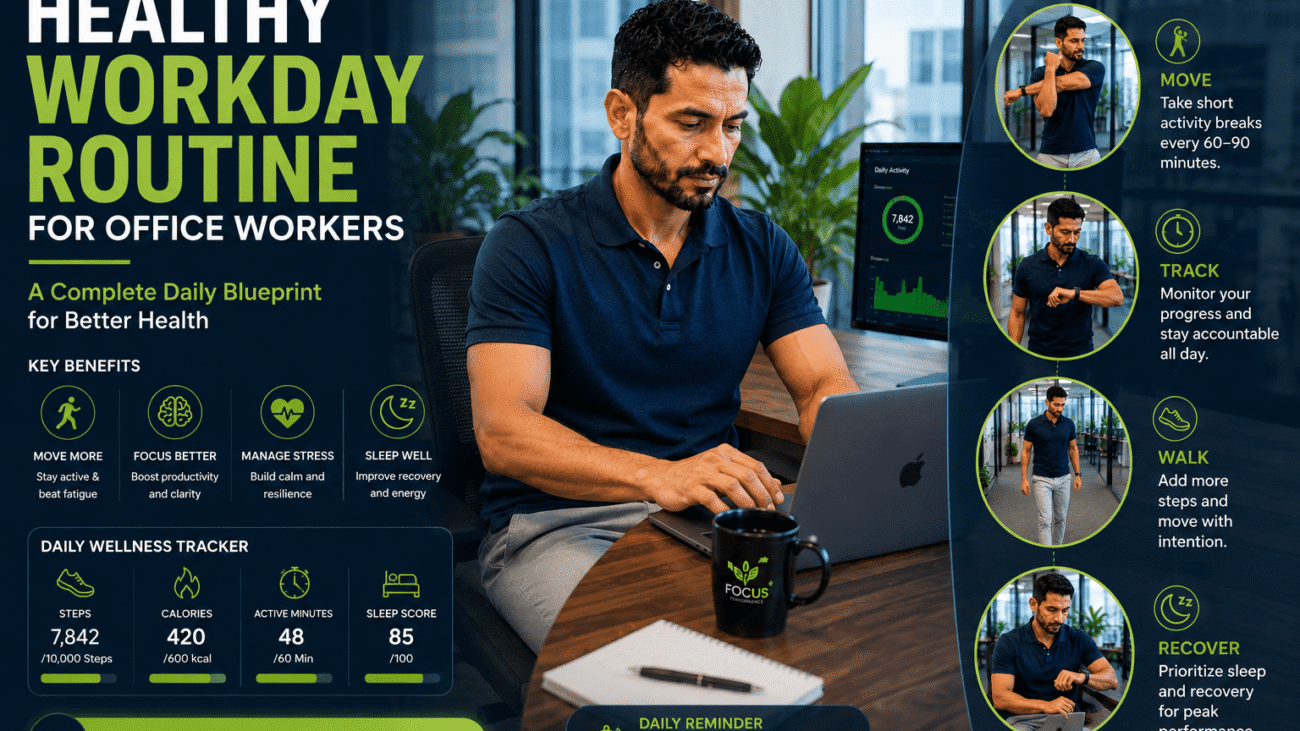
For many office workers, the workday follows a familiar pattern.
Wake up.
Commute or walk to a home office.
Sit for hours.
Answer emails.
Attend meetings.
Work through lunch.
Finish the day feeling tired, stiff, and mentally drained.
The problem isn’t usually a lack of effort.
The problem is that many office workers spend most of their day sitting while neglecting movement, posture, nutrition, and recovery.
The good news is that small daily habits can make a significant difference.
You don’t need an extreme fitness plan or a complete lifestyle overhaul.
A few simple adjustments throughout the day can improve energy, reduce discomfort, support productivity, and help protect long-term health.
If you’re new to workplace wellness, start with our pillar guide on Health and Fitness for Office Workers.
This article brings together everything we’ve covered throughout this office worker health series and provides a practical daily blueprint you can follow.
Table of Contents
- Why Office Workers Need a Healthy Routine
- The Ideal Morning Routine
- Healthy Work Habits During the Day
- Nutrition and Hydration
- Staying Active at Work
- Evening Recovery Habits
- Sample Healthy Workday Schedule
- Common Mistakes
- FAQs
- Conclusion
Why Office Workers Need a Healthy Routine
Modern office jobs often involve:
- Prolonged sitting
- Screen exposure
- Mental stress
- Reduced physical activity
- Irregular eating habits
Over time these factors can contribute to:
- Poor posture
- Weight gain
- Low energy
- Back pain
- Neck tension
- Reduced mobility
- Poor sleep quality
According to World Health Organization (WHO), physical inactivity is a major risk factor for many chronic health conditions.
Building a healthy daily routine helps counter many of the challenges associated with desk-based work.

The Ideal Morning Routine for Office Workers
How you start the morning often influences the rest of the day.
Step 1: Hydrate Immediately After Waking Up
After several hours of sleep, the body needs hydration.
A glass of water first thing in the morning is a simple habit that supports overall wellness.
Benefits include:
- Improved alertness
- Better hydration
- Support for normal bodily functions
Step 2: Perform Morning Exercises
Morning movement helps wake up the body and reduce stiffness.
You don’t need a long workout.
Even 10 minutes can help.
Our guide on Best Morning Exercises for Office Workers provides a complete routine.
Step 3: Eat a Balanced Breakfast
A balanced breakfast may include:
- Protein
- Fiber
- Healthy fats
Examples:
- Eggs and whole-grain toast
- Greek yogurt and berries
- Oatmeal with nuts

Setting Up for Success Before Work Begins
Before starting work, prepare your environment.
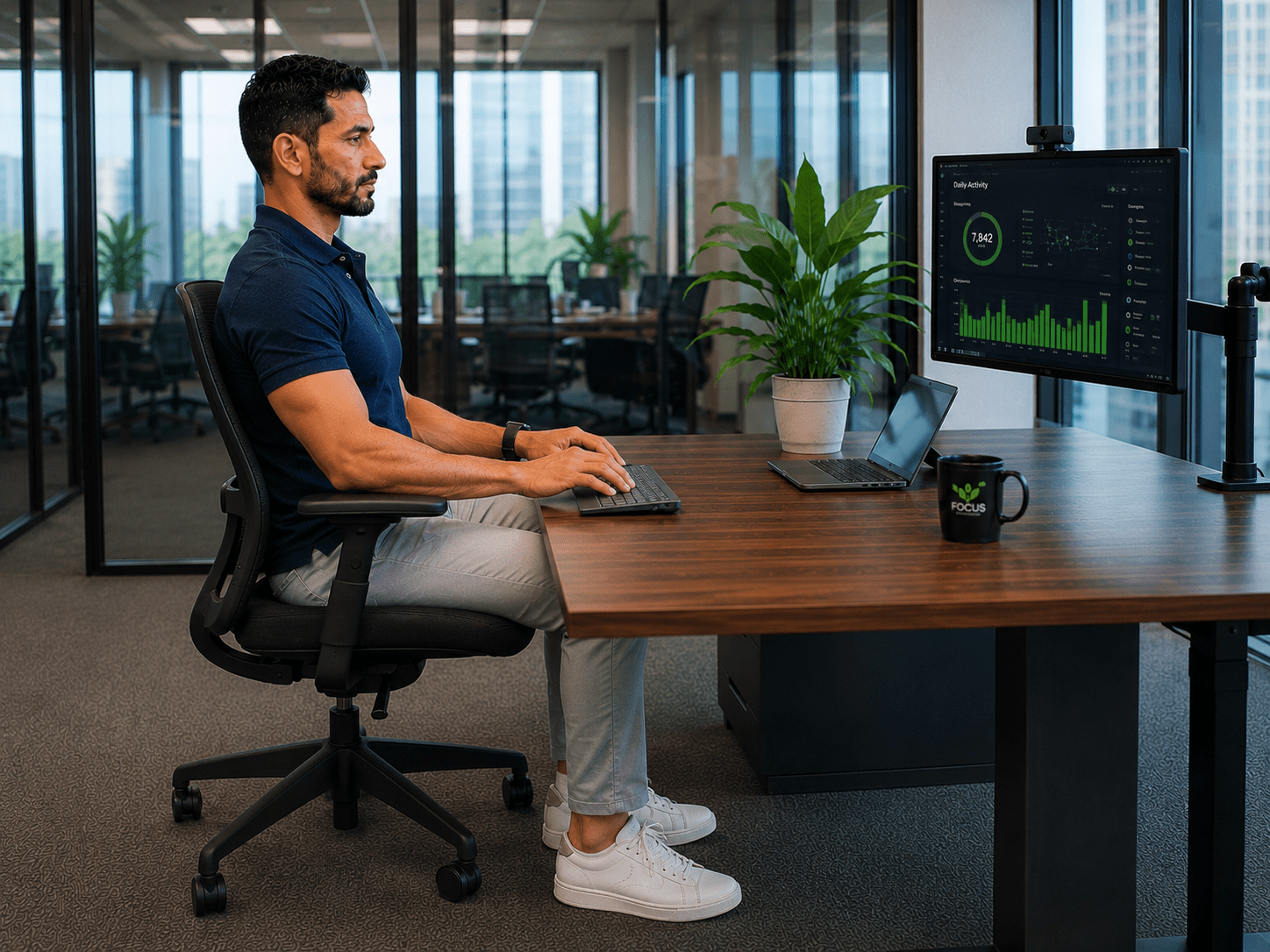
Create an Ergonomic Workspace
Your workstation should support healthy posture.
Monitor placement, chair position, keyboard placement, and desk organization all matter.
Read our Complete Ergonomic Desk Setup Guide for Better Health for a full setup walkthrough.
Improve Posture
Poor posture can contribute to discomfort and fatigue.
Our guide on How to Improve Posture While Working at a Computer explains practical adjustments that support healthier alignment.
Healthy Habits During the Workday
The goal isn’t avoiding sitting completely.
The goal is avoiding prolonged inactivity.
Follow the 30 to 60 Minute Movement Rule
Try to move every 30 to 60 minutes.
Examples:
- Stand up
- Walk briefly
- Stretch
- Refill your water bottle
Small movement breaks add up throughout the day.
Use Fitness Tracker Reminders
Modern smartwatches and fitness trackers can encourage movement.
These reminders are especially useful for busy professionals.
Our guide on Best Fitness Trackers for Office Workers compares some of the best options available.

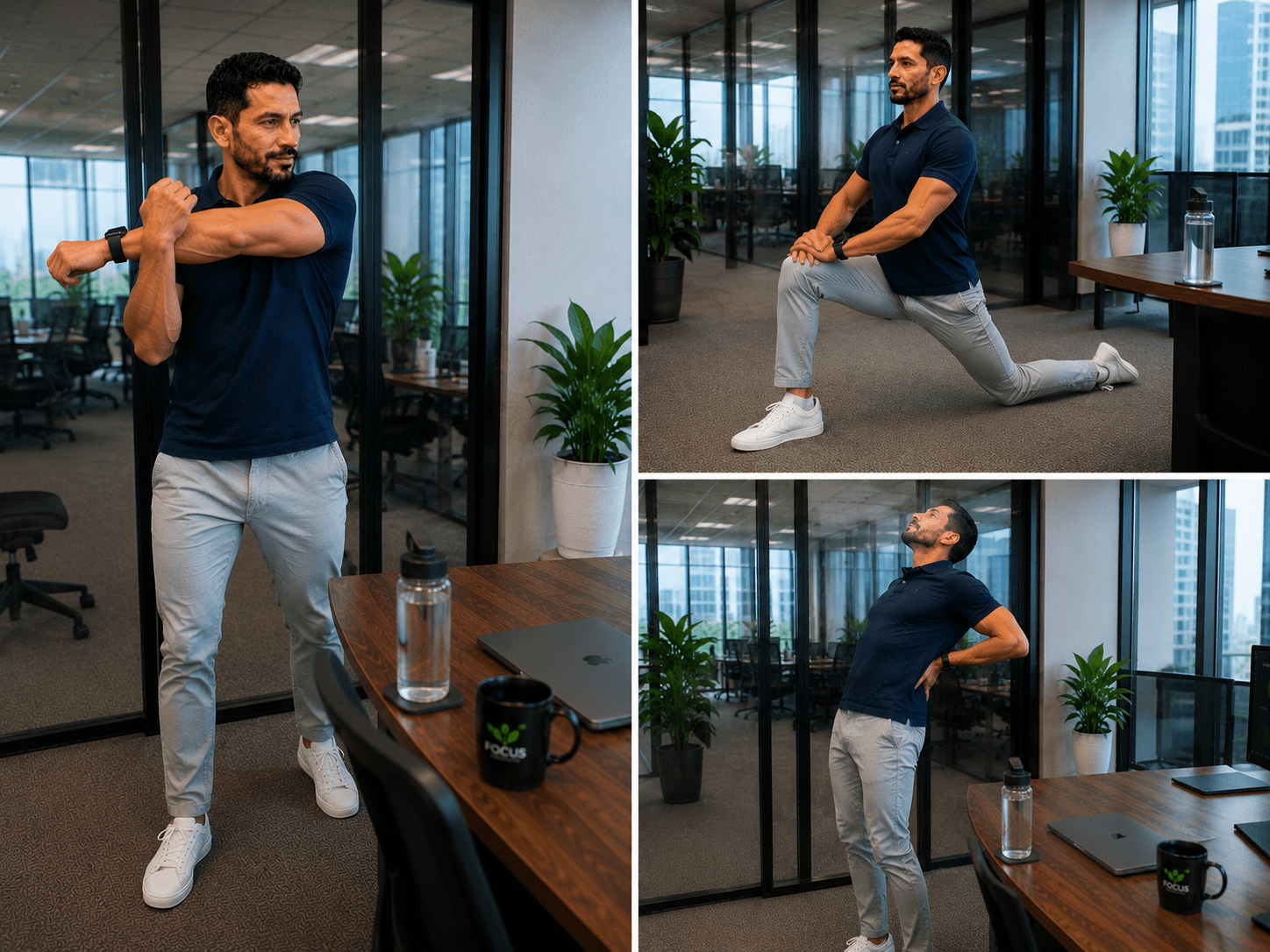
Mobility and Stretching During Work
Movement quality matters just as much as movement quantity.
Daily Mobility Routine
Mobility exercises help maintain healthy movement patterns.
Our Daily Mobility Routine for Desk Workers provides a simple plan that fits into most schedules.
Stretch Tight Areas
Office workers commonly experience tightness in:
- Neck
- Shoulders
- Upper back
- Lower back
- Hips
Our guide on Best Stretches for Office Workers covers effective stretches for these areas.
Prevent Back Pain
If discomfort is already developing, short movement sessions can help.
Our guide on 5 Minute Desk Workouts to Relieve Back Pain for Remote Workers includes quick exercises that fit into busy schedules.
Nutrition and Hydration Throughout the Day
Food choices influence energy, concentration, and productivity.
Stay Hydrated
Keep a water bottle nearby.
Many workers unintentionally spend hours without drinking enough water.
Choose Healthy Snacks
Healthy snacks can help maintain energy and reduce cravings.
Examples:
- Greek yogurt
- Nuts
- Fruit
- Vegetables and hummus
For more ideas, read our guide on Healthy Snacks for Office Workers to Boost Energy.
Avoid Constant Grazing
Planned snacks are usually better than mindless snacking throughout the day.

Healthy Evening Habits
The workday doesn’t end when you log off.
Recovery matters.
Go for a Walk
A short walk helps separate work from personal time.
Benefits include:
- Additional movement
- Stress reduction
- Mental refreshment
Limit Evening Screen Time
Excessive screen use before bed may affect sleep quality.
Prioritize Sleep
Sleep supports:
- Recovery
- Energy
- Focus
- Productivity
According to National Sleep Foundation, consistent sleep habits are important for overall health and performance.

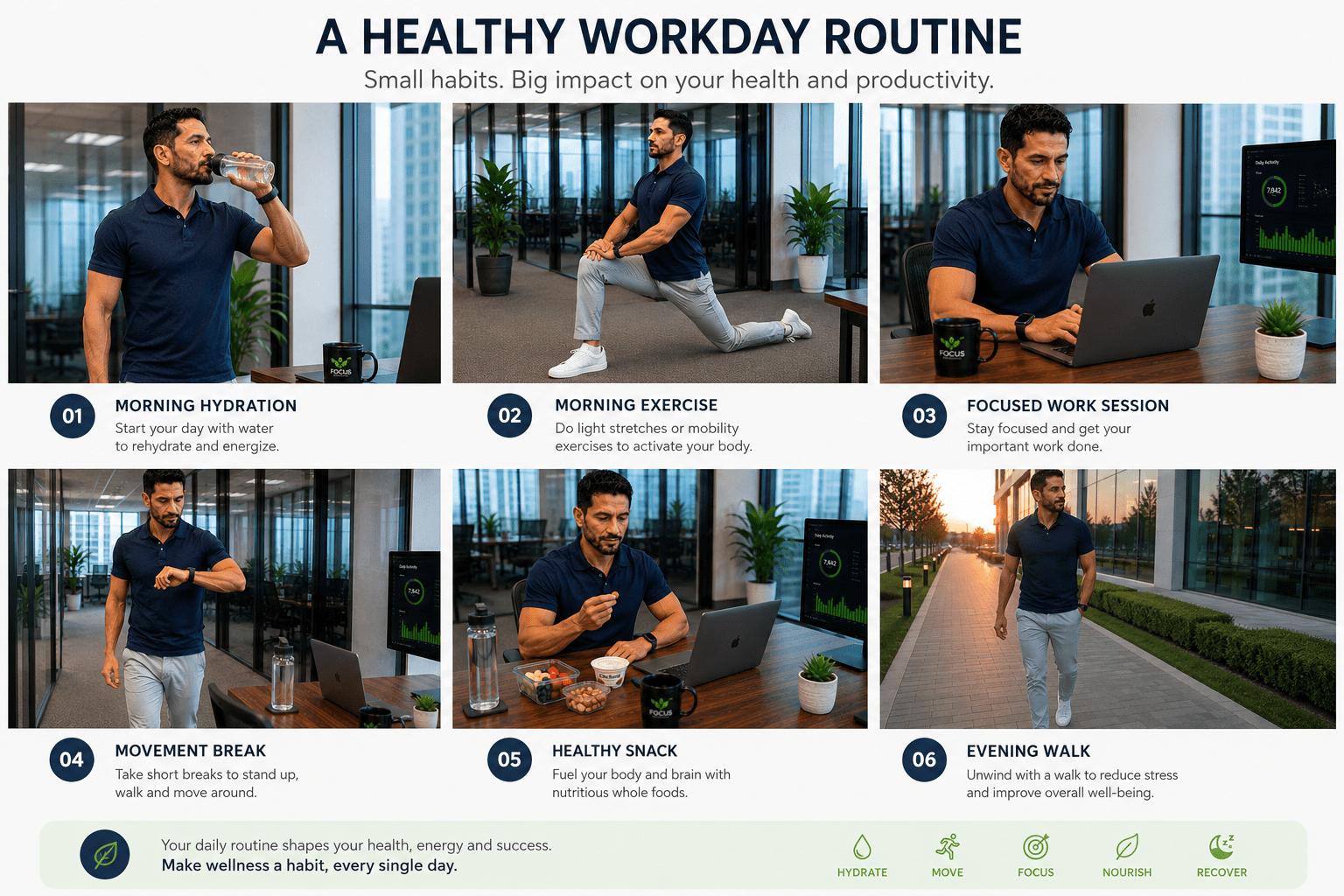
Sample Healthy Workday Schedule
| Time | Activity |
|---|---|
| 7:00 AM | Wake up and hydrate |
| 7:10 AM | Morning exercises |
| 7:30 AM | Healthy breakfast |
| 8:30 AM | Begin work |
| Every 30-60 Minutes | Movement break |
| 12:30 PM | Balanced lunch |
| Afternoon | Healthy snack and hydration |
| End of Workday | Walk or light activity |
| Evening | Relaxation and recovery |
| Night | Consistent bedtime |
Common Mistakes Office Workers Make
Sitting for Hours Without Moving
Even perfect posture cannot replace movement.
Ignoring Early Signs of Discomfort
Address small issues before they become larger problems.
Skipping Exercise Because of Time
Short workouts are often enough to provide benefits.
Neglecting Sleep
Recovery is a key part of long-term health.
Expecting Perfection
Consistency matters more than perfection.
Small habits performed daily produce meaningful results.
Important Points to Remember
- Morning movement improves energy.
- Ergonomics supports comfort.
- Posture matters.
- Movement breaks are essential.
- Mobility and stretching support healthy movement.
- Healthy snacks improve energy.
- Sleep supports recovery.
- Consistency creates results.
Frequently Asked Questions
How can office workers stay healthy while sitting all day?
Combining movement breaks, exercise, healthy nutrition, posture improvement, and ergonomic workstation setup can help support overall health.
How often should office workers move?
Many experts recommend standing or moving every 30 to 60 minutes.
What’s the best exercise for office workers?
The best exercise is one you can perform consistently. Walking, mobility exercises, stretching, and strength training are all beneficial.
Do fitness trackers help office workers?
Many workers find fitness trackers useful for increasing awareness of activity levels and movement habits.
How important is posture?
Good posture helps reduce unnecessary strain and supports long-term comfort.
Disclaimer
This article is for educational purposes only and should not be considered medical advice. Consult a qualified healthcare professional regarding individual health concerns or medical conditions.
Conclusion
A healthy workday doesn’t require perfection.
Small habits repeated consistently can have a significant impact on how you feel, work, and recover.
Start by improving one area at a time.
Add morning movement.
Improve your workstation.
Take regular movement breaks.
Choose healthier snacks.
Prioritize sleep.
Over time, these simple actions can help create a healthier, more productive, and more sustainable work life.
For a complete foundation, begin with our guide on Health and Fitness for Office Workers.