
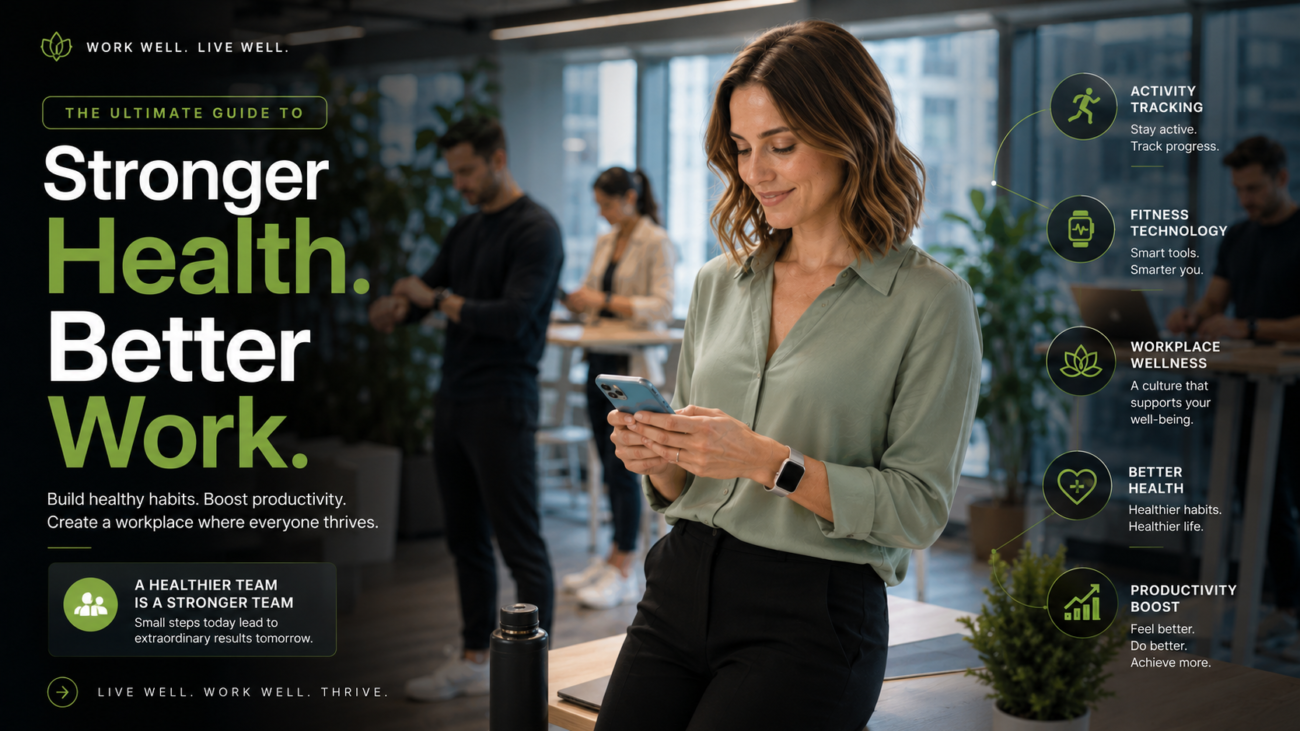
Staying active can be challenging when most of the workday is spent sitting at a desk.
Between meetings, deadlines, emails, and projects, many office workers struggle to find time for exercise and healthy habits. While workplace wellness programs and fitness classes can help, technology is becoming an increasingly important part of employee health.
This is where a mobile fitness app can make a significant difference.
Modern fitness apps help employees track activity, monitor progress, build healthy habits, and stay accountable throughout the day.
Whether someone wants to improve fitness, increase daily movement, reduce sedentary behavior, or support long term health goals, mobile fitness apps provide convenient tools that fit into busy schedules.
Combined with wearable devices and workplace wellness initiatives, fitness technology is changing how office workers approach health and wellbeing.
In this guide, we’ll explore how fitness apps support employee health, the features that matter most, and the best ways to use fitness technology in the workplace.
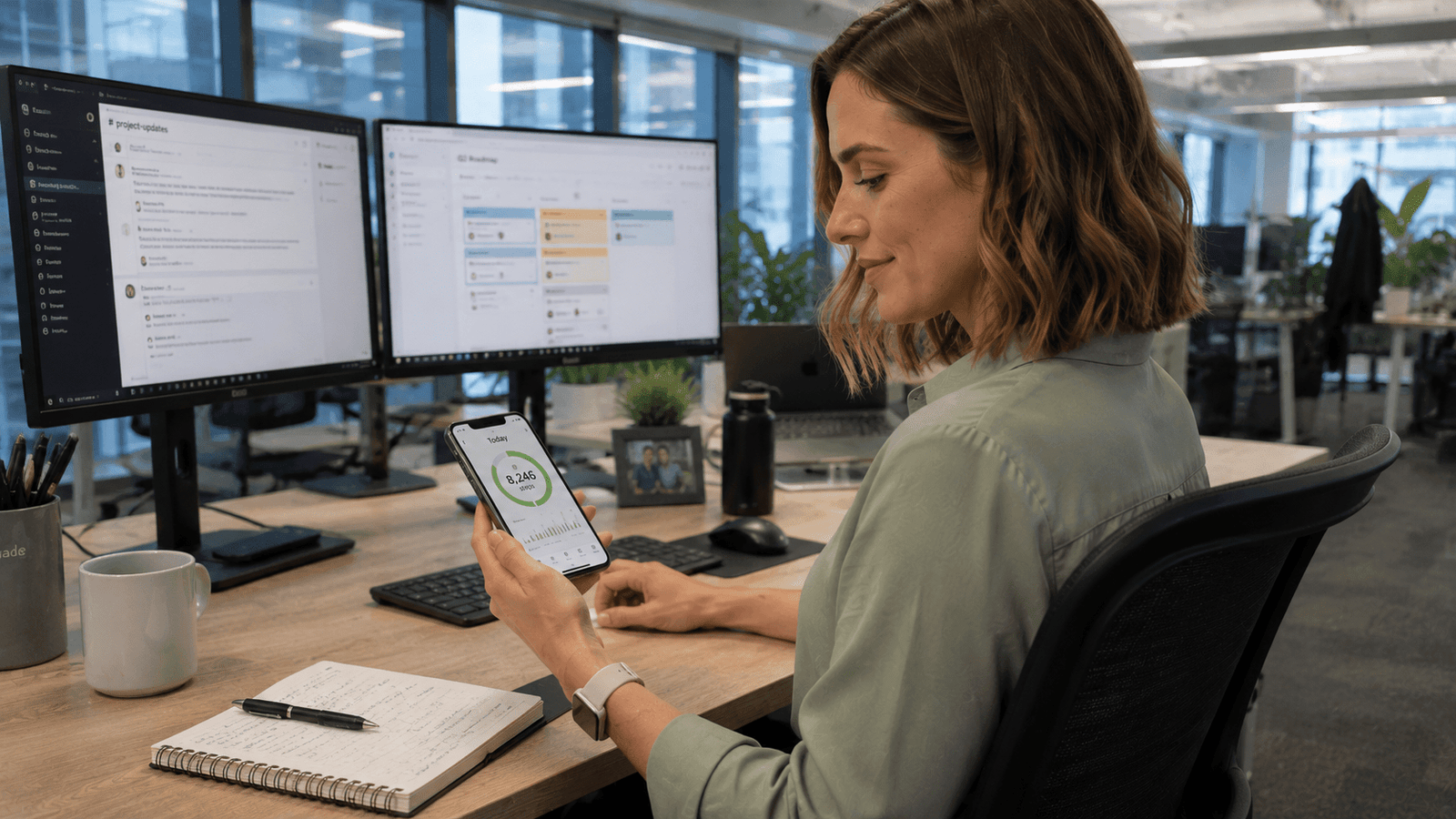
Why Office Workers Need Fitness Technology
Many office workers understand the importance of exercise.
The challenge is often consistency.
Long periods of sitting, demanding schedules, and limited free time can make it difficult to maintain healthy habits.
Fitness technology helps bridge this gap.
Instead of relying on memory or motivation alone, employees can use technology to:
- Track activity levels
- Monitor movement
- Set goals
- Receive reminders
- Build healthy routines
These small interventions often encourage positive behavior changes throughout the day.
Technology does not replace exercise.
It helps people become more aware of their habits and make better decisions consistently.
What Is a Mobile Fitness App?
A mobile fitness app is a smartphone application designed to help users improve health, fitness, and physical activity.
These apps can support various goals, including:
- Weight management
- Daily movement
- Strength training
- Walking programs
- Running
- Mobility training
- Wellness tracking
Some apps focus on exercise programs.
Others emphasize habit formation, activity tracking, and overall wellness.
Many employees use mobile fitness apps because they provide flexibility and convenience.
Fitness guidance is available anytime and anywhere.

How Mobile Fitness Apps Improve Employee Health
Fitness apps can support healthier lifestyles in several ways.
Increased Daily Movement
Many apps encourage users to move more frequently.
Features may include:
- Step tracking
- Movement reminders
- Activity goals
- Daily challenges
These tools help employees reduce prolonged sitting.
Better Accountability
Tracking progress creates awareness.
Employees who monitor their activity levels often become more consistent with healthy habits.
Improved Motivation
Many apps include:
- Achievement badges
- Progress tracking
- Goal setting
- Wellness challenges
These features can increase motivation and engagement.
Support for Workplace Wellness
Many organizations now incorporate fitness technology into employee wellness initiatives.
Employees can participate in workplace challenges and health programs using their devices.
Essential Features to Look for in a Mobile Fitness App
Not all fitness apps are created equally.
The best options typically include several key features.
Activity Tracking
A quality app should monitor:
- Steps
- Distance
- Active minutes
- Calories burned
Goal Setting
Goal based systems help users stay focused and motivated.
Progress Monitoring
Employees should be able to view trends over time.
Integration With Wearable Devices
Many users connect fitness apps with:
- Smartwatches
- Fitness trackers
- Heart rate monitors
Wellness Insights
Advanced apps provide data that helps users understand their habits and identify areas for improvement.
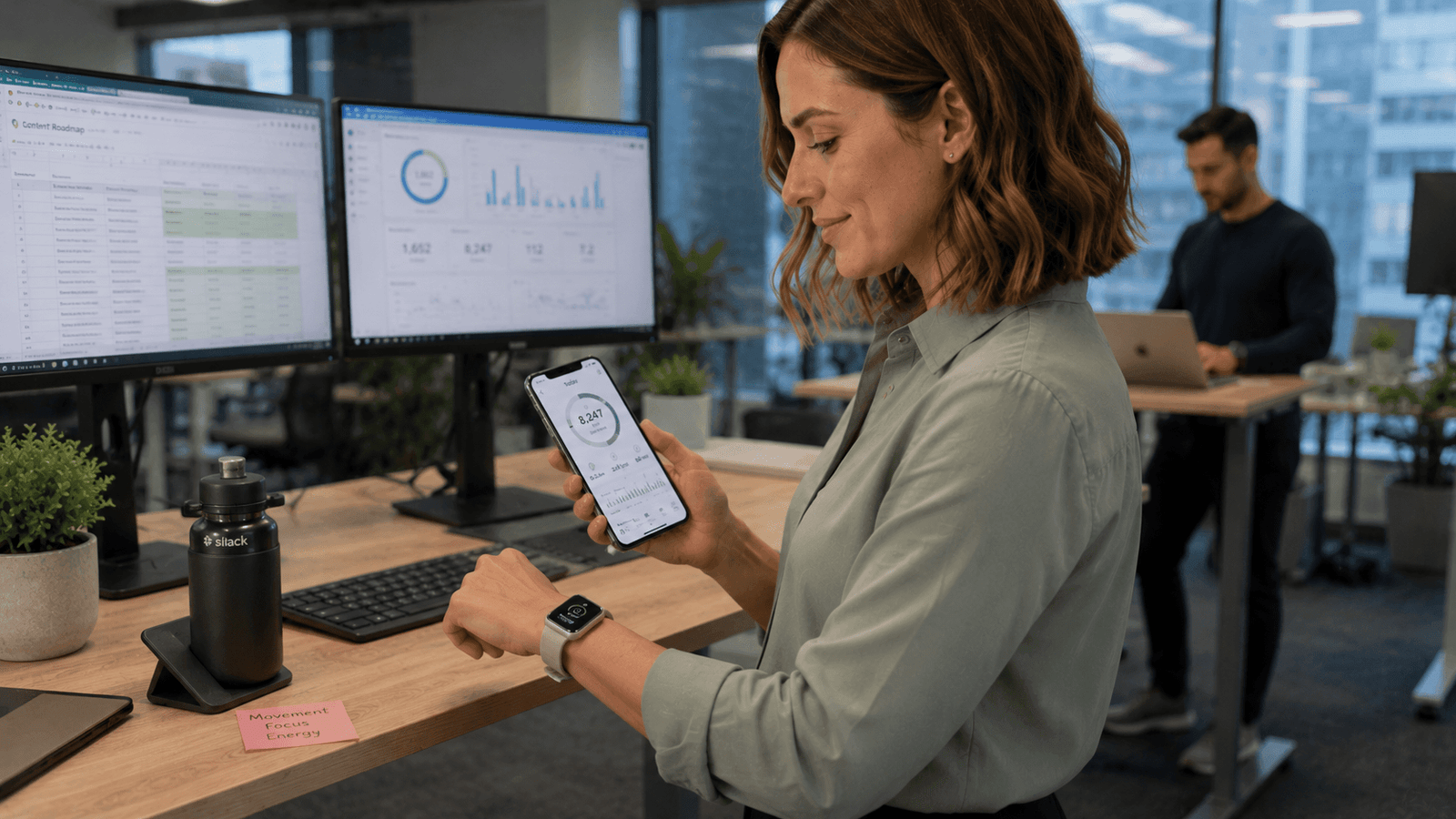
The Growing Role of Fitness Tech in Workplace Wellness
Fitness technology continues to evolve rapidly.
Many workplace wellness programs now include:
- Activity tracking
- Wearable devices
- Wellness dashboards
- Digital challenges
- Mobile fitness apps
Employers increasingly use technology to encourage healthy habits and improve participation.
Fitness tech provides measurable data that helps employees stay engaged and motivated.
It also helps organizations evaluate the effectiveness of wellness initiatives.
For a broader look at workplace wellness strategies, explore Workplace Fitness Programs for Office Workers.
How Fitness Apps Support Productivity
Employee health and productivity are closely connected.
Physical activity can help improve:
- Energy levels
- Focus
- Mental clarity
- Stress management
Many fitness apps encourage movement breaks throughout the day.
These reminders help employees avoid extended periods of inactivity.
Even short movement breaks can contribute to better concentration and reduced fatigue.
This is one reason why fitness technology has become increasingly popular among employers and employees alike.

Using Fitness Apps Alongside Workplace Fitness Programs
Fitness apps work best when combined with other wellness initiatives.
Examples include:
- Group fitness workouts
- Mobility training
- Stretching sessions
- Walking programs
- Workplace challenges
Technology helps employees remain accountable between organized activities.
For example:
An employee may attend a workplace workout class twice per week while using a fitness app to track daily movement on other days.
This combination often produces better long term results.
Employees interested in structured exercise programs should also explore Group Fitness Workouts That Improve Employee Health.
The Best Use Cases for Office Workers
Different employees have different goals.
Fitness apps can support a wide range of needs.
For Desk Workers
Movement reminders can help reduce prolonged sitting.
For Beginners
Simple activity tracking helps build awareness.
For Busy Professionals
Quick workouts and guided programs fit into limited schedules.
For Remote Employees
Fitness apps provide structure and accountability regardless of location.
For Wellness Challenges
Organizations can use apps to coordinate workplace health initiatives.
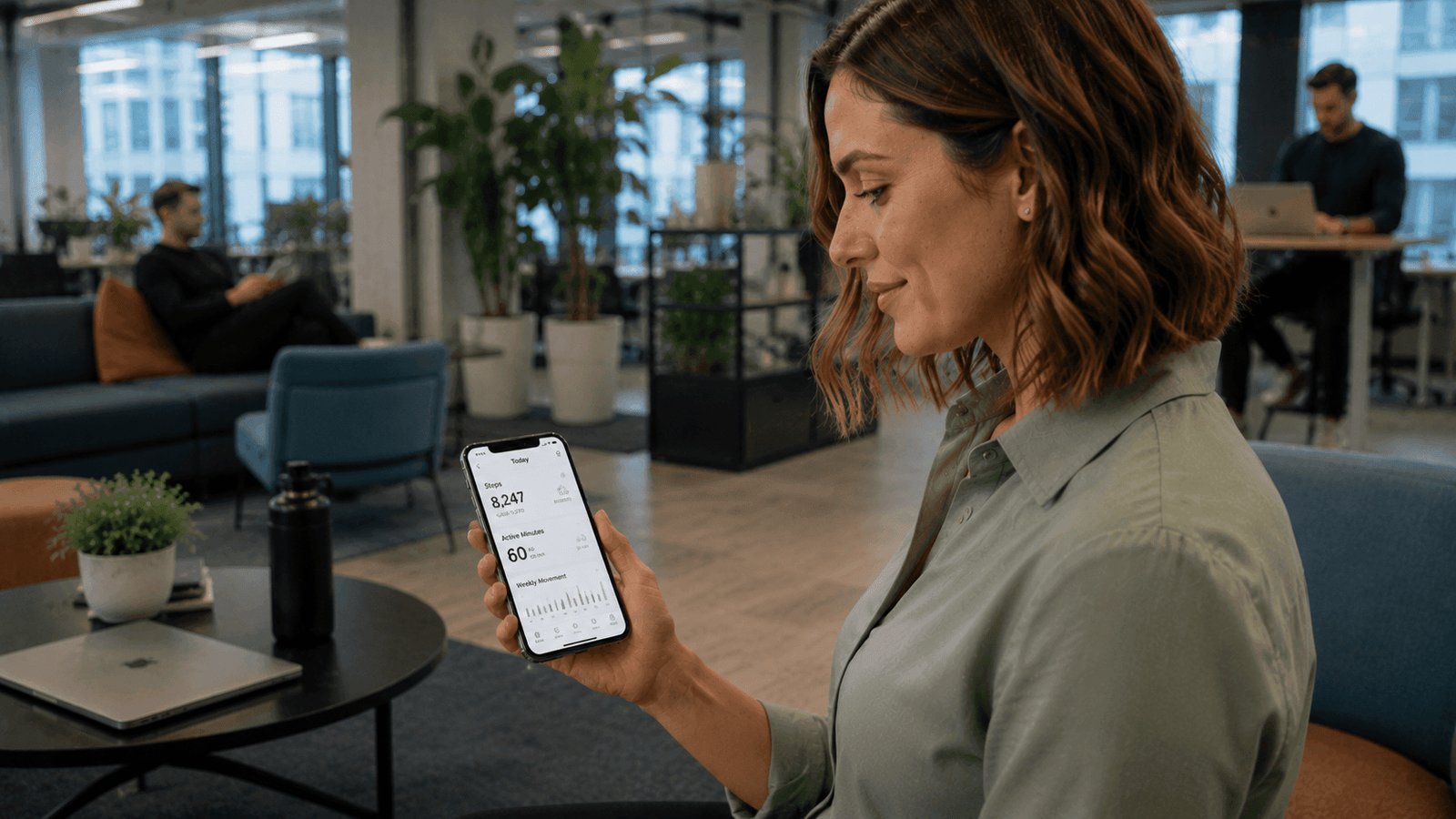
Fitness Tracking Apps and Why They Matter
One of the most valuable features of modern fitness technology is activity tracking.
Many office workers underestimate how much time they spend sitting during the day.
Fitness tracking apps help remove the guesswork.
Instead of estimating activity levels, employees can see actual data regarding:
- Daily steps
- Active minutes
- Calories burned
- Walking distance
- Exercise sessions
This information often creates awareness that leads to positive behavior changes.
For example, an employee who discovers they only walk 2,000 steps per day may become motivated to increase movement through walking meetings, lunch breaks, or workplace fitness activities.
Fitness tracking transforms health from a vague goal into something measurable.
Employee Wellness Apps Beyond Exercise
Many people think fitness apps only focus on workouts.
Modern employee wellness apps often provide much broader support.
Features may include:
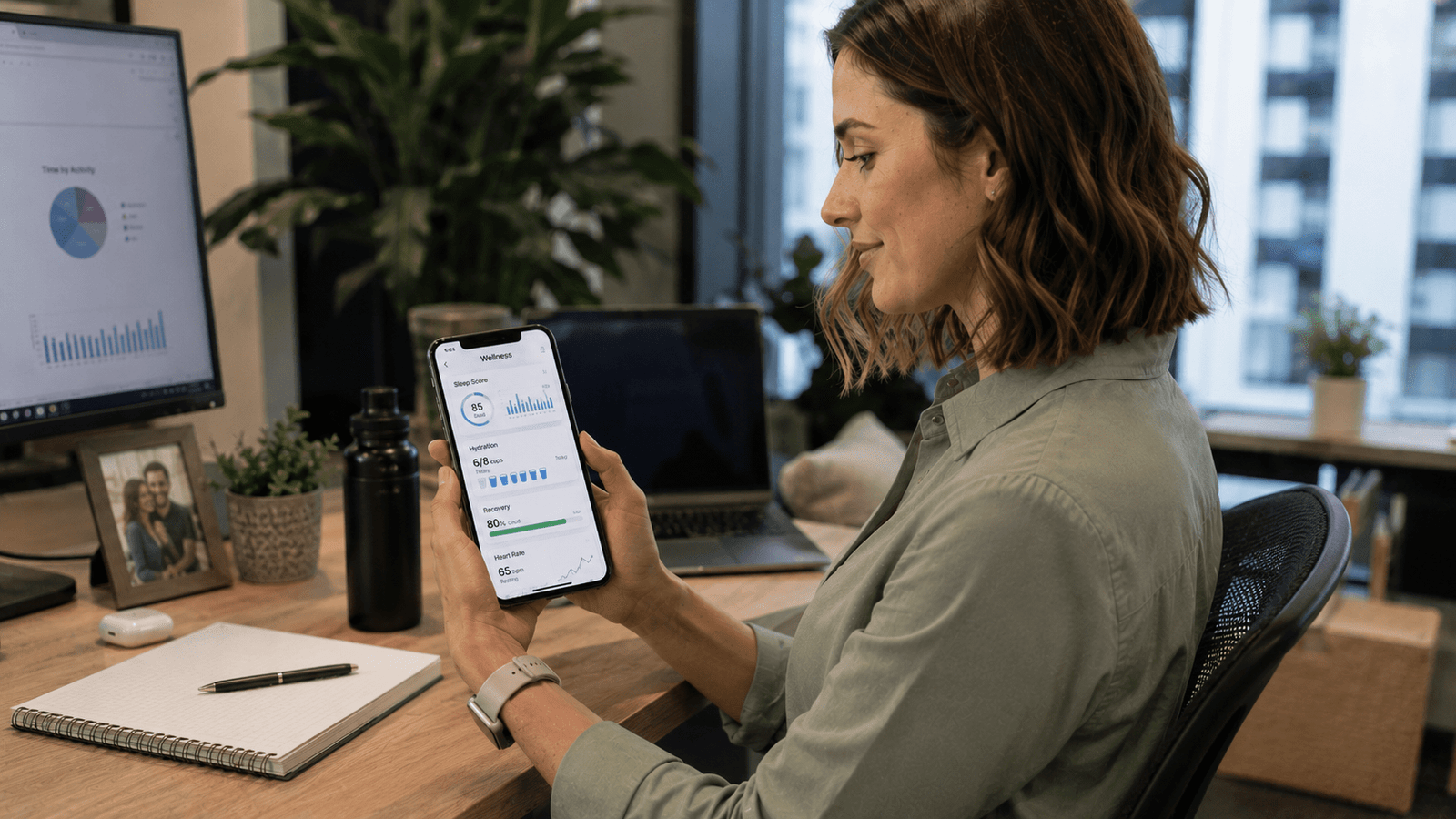
- Sleep tracking
- Stress management
- Hydration reminders
- Breathing exercises
- Habit tracking
- Mental wellness tools
This reflects a growing understanding that employee wellbeing involves more than physical activity alone.
Sleep quality, stress levels, nutrition, and recovery all contribute to overall health.
Organizations that embrace holistic wellness often see stronger long term results.
How Wearable Technology Enhances Fitness Apps
Mobile fitness apps become even more powerful when paired with wearable devices.
Popular examples include:
- Smartwatches
- Fitness trackers
- Heart rate monitors
These devices collect health information automatically.
Benefits include:
- Real time activity tracking
- Heart rate monitoring
- Sleep analysis
- Movement reminders
- Workout tracking
Many employees find wearable devices more convenient because tracking happens automatically throughout the day.
For employees considering wearable technology, Best Fitness Trackers for Office Workers provides detailed guidance.
Workplace Wellness Challenges Powered by Apps
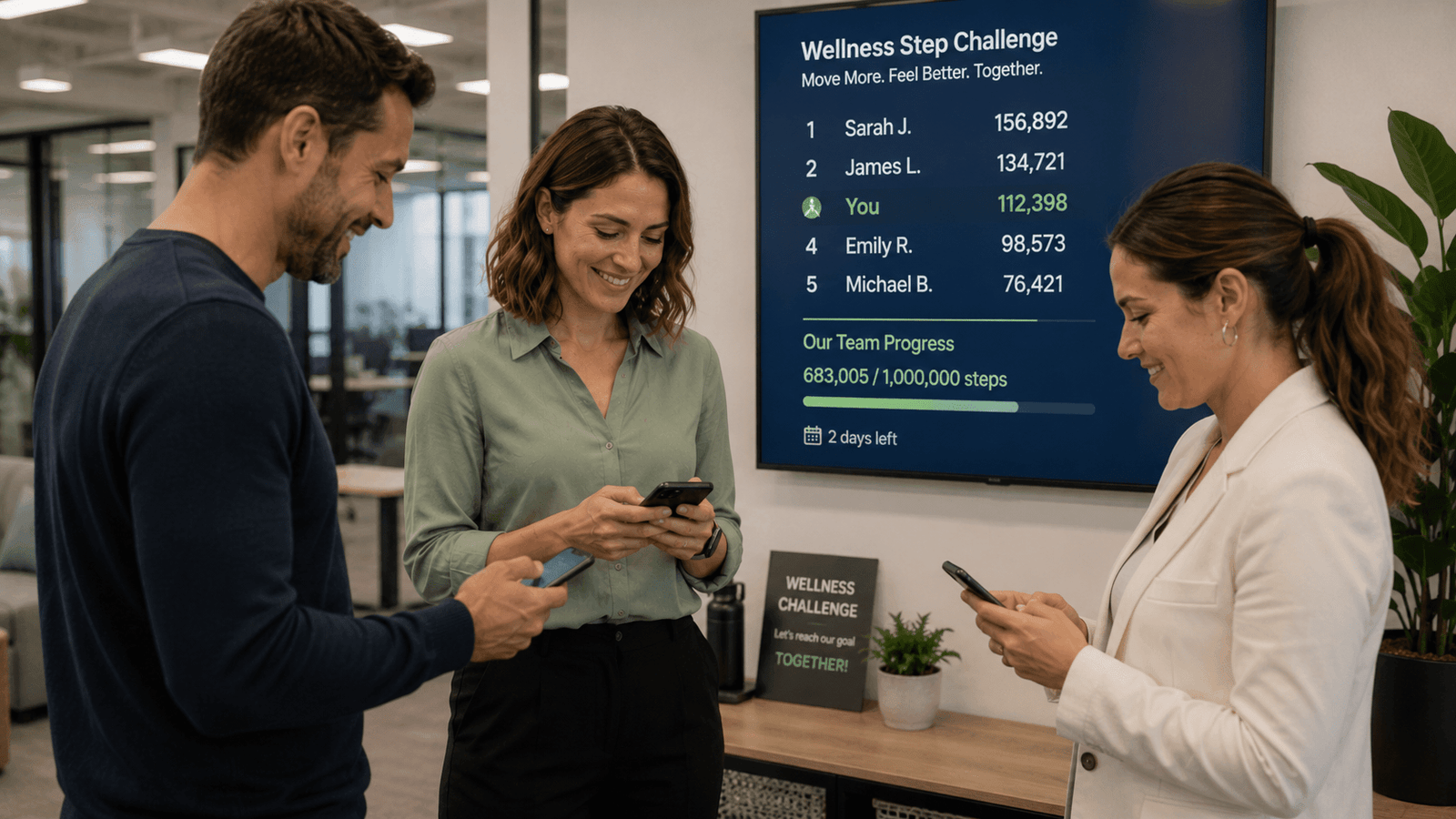
Workplace wellness challenges have become increasingly popular.
Mobile fitness apps make these programs easier to organize and manage.
Common workplace challenges include:
Step Challenges
Employees compete individually or in teams to reach daily step goals.
Movement Challenges
Participants focus on reducing prolonged sitting.
Hydration Challenges
Employees track water consumption throughout the day.
Activity Streak Challenges
Workers aim to maintain consistent exercise habits over several weeks.
These challenges create engagement, accountability, and healthy competition.
Common Mistakes When Using Fitness Apps
Technology can be extremely useful.
However, many people use fitness apps incorrectly.
Obsessing Over Numbers
Tracking is helpful.
Obsessing over every metric is not.
Fitness apps should support healthy habits rather than create stress.
Setting Unrealistic Goals
Employees often start with goals that are difficult to maintain.
Smaller, realistic targets typically produce better results.
Ignoring Recovery
Exercise data is important, but recovery matters too.
Employees should pay attention to:
- Sleep
- Stress
- Hydration
- Rest days
Relying Only on Technology
Apps provide guidance and accountability.
Actual movement and healthy habits still require action.
Best Practices for Office Workers
To get the most value from a mobile fitness app:
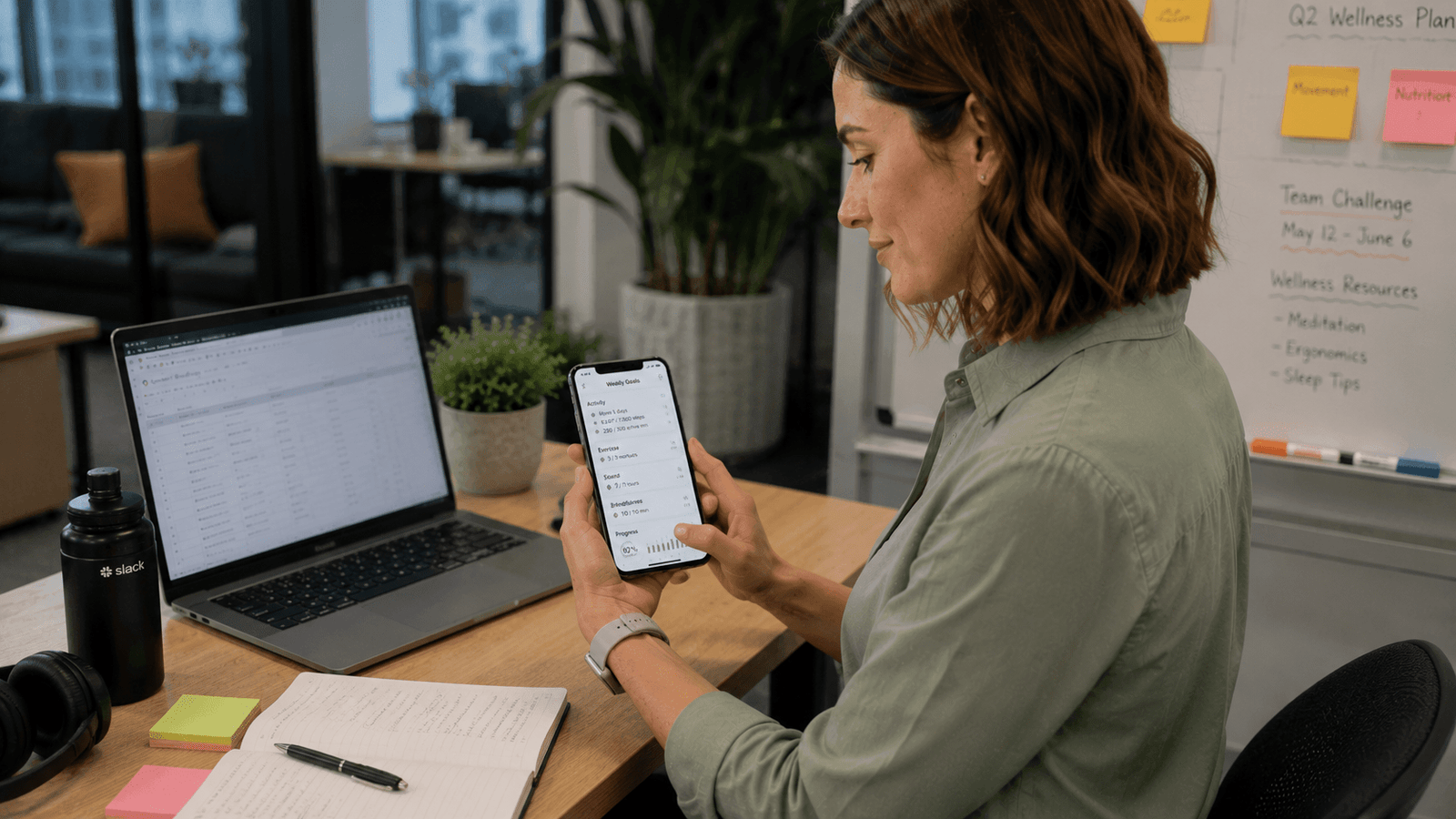
Set Daily Movement Goals
Simple goals encourage consistency.
Use Reminders
Movement reminders can help reduce prolonged sitting.
Track Progress Weekly
Weekly trends often provide more useful insights than daily fluctuations.
Combine Apps With Real Activity
Technology works best when paired with:
- Walking programs
- Group workouts
- Mobility training
- Workplace fitness initiatives
Focus on Long Term Habits
Sustainable routines matter more than short term results.
Mobile Fitness Apps and Workplace Productivity
Employee productivity often improves when physical health improves.
Fitness apps help employees:
- Move more frequently
- Develop healthy routines
- Reduce sedentary behavior
- Stay engaged with wellness goals
These improvements can contribute to:
- Better concentration
- Increased energy
- Reduced fatigue
- Improved mental wellbeing
Small daily habits frequently produce meaningful long term benefits.
This is why many organizations now view wellness technology as an important component of employee support programs.
Frequently Asked Questions
What is a mobile fitness app?
A mobile fitness app is a smartphone application designed to help users track activity, improve fitness, monitor health habits, and achieve wellness goals.
Are fitness apps useful for office workers?
Yes. They help employees monitor activity levels, reduce prolonged sitting, and maintain healthier daily routines.
Do fitness apps improve productivity?
Many employees report increased energy, better focus, and improved consistency with healthy habits.
Can fitness apps replace exercise programs?
No. Fitness apps are tools that support healthy behavior. They work best when combined with regular physical activity.
Are wearable devices necessary?
No. Many apps function well without wearable devices, although wearables often provide more detailed data.
What features should office workers look for?
Useful features include:
- Activity tracking
- Movement reminders
- Goal setting
- Progress monitoring
- Wellness insights
Recommended External Resources
For evidence based health and fitness information, explore:
Physical Activity Guidelines for Americans
CDC Physical Activity Resources
World Health Organization Physical Activity Facts
Final Thoughts
Modern office work often makes it difficult to stay active.
Fortunately, fitness technology provides practical tools that help employees maintain healthier habits.
A quality mobile fitness app can support:
- Daily movement
- Exercise consistency
- Workplace wellness
- Activity tracking
- Long term health goals
When combined with workplace fitness programs, wearable technology, and healthy routines, these tools can play a valuable role in improving employee wellbeing.
For additional workplace wellness guidance, readers should also explore:
Workplace Fitness Programs for Office Workers
Best Group Workout Classes for Office Workers
Group Fitness Workouts That Improve Employee Health
By using technology strategically and maintaining consistent healthy habits, office workers can improve their health, energy levels, and overall quality of life.