
Introduction
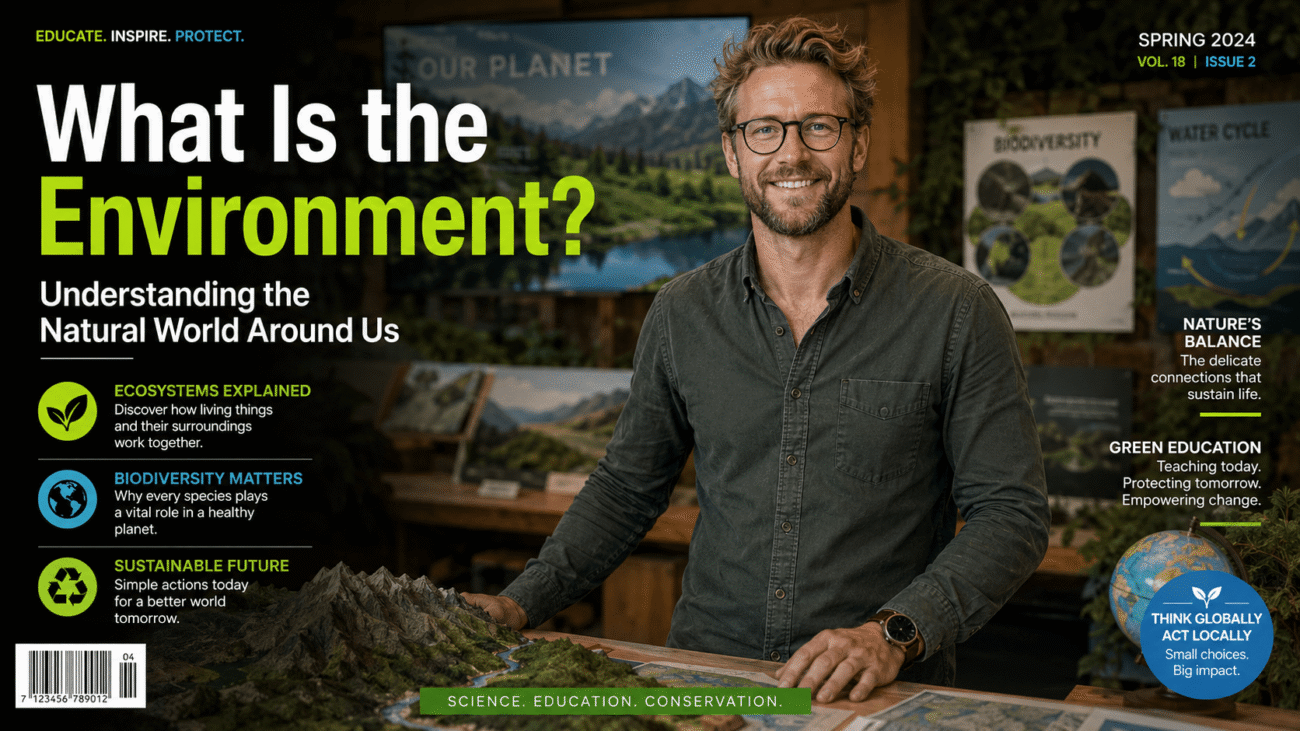
The environment surrounds us every day, yet many people rarely stop to think about how important it is.
The air we breathe, the water we drink, the food we eat, and the natural resources we depend on all come from the environment.
Understanding the environment is essential because it influences human health, economic development, biodiversity, and the future of life on Earth.
Environmental awareness helps individuals make informed decisions that support sustainability and environmental protection.
For a broader understanding of environmental topics, readers should begin with our Environment: The Complete Guide to Environmental Protection, Sustainability, and Climate Change.
What Is the Environment?
The environment refers to everything that surrounds living organisms and affects their survival and development.
It includes both natural and human made elements.
The environment consists of:
• Air
• Water
• Land
• Plants
• Animals
• Microorganisms
• Natural resources
• Human communities
All these elements interact to create the systems that support life on Earth.
According to the United Nations Environment Programme, healthy ecosystems are essential for human well being and sustainable development.
Why Is the Environment Important?
The environment provides resources and services that make life possible.
Without healthy environmental systems, humans and other species could not survive.
Clean Air
Plants and ecosystems help maintain atmospheric balance.
Fresh Water
Natural water systems supply drinking water and support agriculture.
Food Production
Healthy soil and ecosystems help produce food.
Climate Regulation
Natural systems help regulate global temperatures.
Economic Benefits
Many industries depend on natural resources and ecosystem services.
Protecting the environment benefits both current and future generations.
The Main Components of the Environment
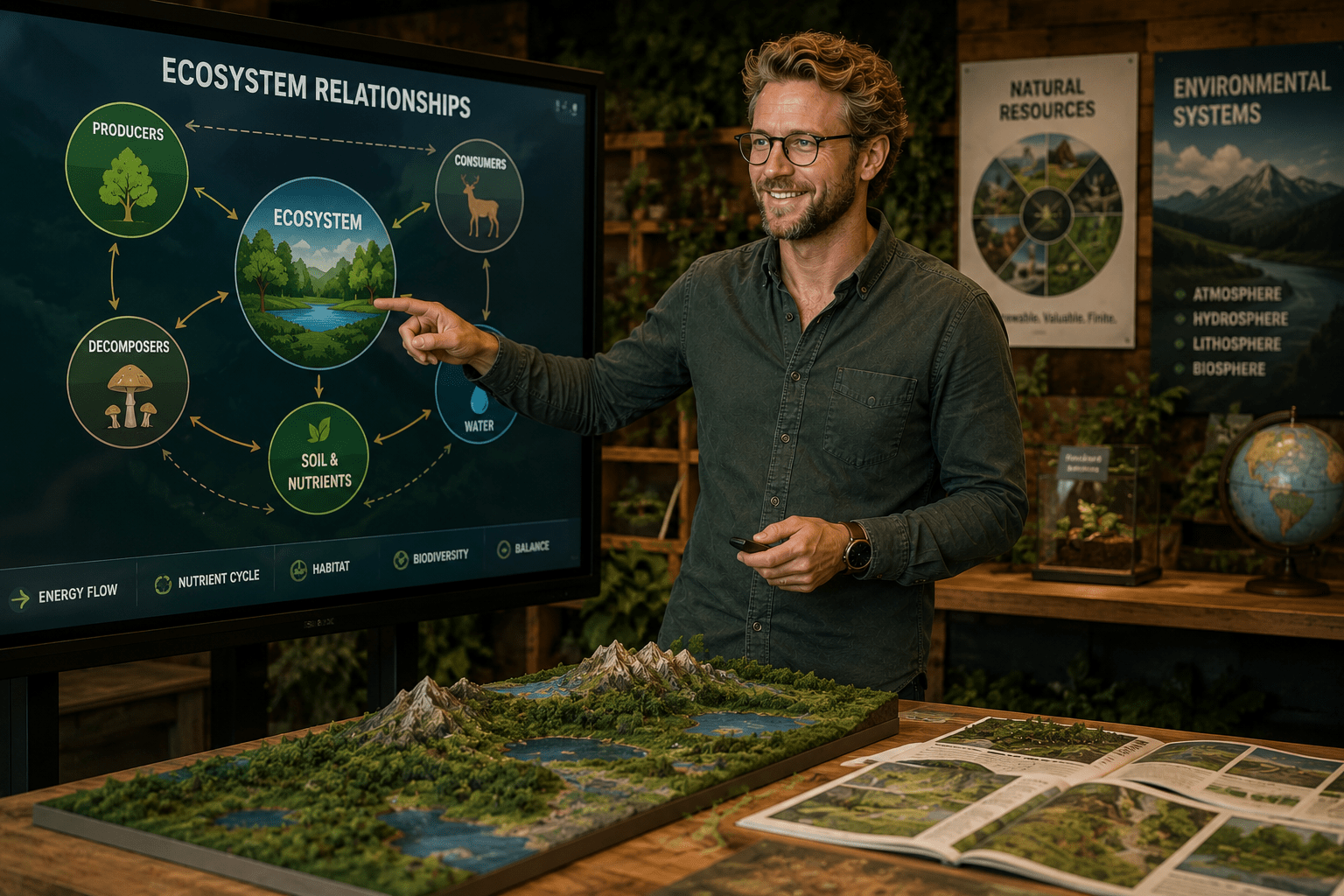
Environmental scientists often divide the environment into four major components.
Atmosphere
The atmosphere is the layer of gases surrounding Earth.
Its functions include:
• Providing oxygen
• Regulating temperature
• Supporting weather systems
• Protecting Earth from harmful solar radiation
Changes in atmospheric conditions can affect climate and environmental health.
Hydrosphere
The hydrosphere includes all water resources.
Examples include:
• Oceans
• Rivers
• Lakes
• Groundwater
• Ice caps
Water is essential for life and economic activity.
Lithosphere
The lithosphere includes Earth’s surface and soil.
It provides:
• Land for agriculture
• Natural resources
• Minerals
• Habitats for living organisms
Healthy soil supports food production and biodiversity.
Biosphere
The biosphere includes all living organisms on Earth.
This includes:
• Plants
• Animals
• Humans
• Microorganisms
The biosphere depends on interactions between air, water, and land systems.
Natural Environment vs Human Made Environment
The environment can be divided into two broad categories.
Natural Environment
The natural environment includes elements that occur naturally.
Examples include:
• Forests
• Mountains
• Oceans
• Rivers
• Wildlife
• Ecosystems
Human Made Environment
The human made environment includes structures and systems created by people.
Examples include:
• Cities
• Roads
• Buildings
• Factories
• Transportation systems
Balancing human development with environmental protection is one of the major challenges facing society today.

Environmental Science and Its Importance
Environmental science is the study of interactions between humans and the environment.
It combines knowledge from:
• Biology
• Chemistry
• Geography
• Ecology
• Physics
• Earth science
Environmental science helps researchers understand environmental problems and develop solutions.
The World Health Organization Environmental Health Program highlights the strong connection between environmental quality and human health.
Environmental Challenges Facing the World
The environment faces numerous challenges.
Some of the most significant include:
Climate Change
Rising global temperatures are affecting ecosystems worldwide.
Readers can learn more in our future article on What Is Climate Change?
Pollution
Air, water, soil, and plastic pollution affect environmental health.
Deforestation
Forest loss threatens biodiversity and climate stability.
Biodiversity Loss
Many species face extinction due to habitat destruction and environmental pressures.
Resource Depletion
Unsustainable consumption threatens long term resource availability.
Ecosystems and Environmental Balance
An ecosystem consists of living organisms interacting with their environment.
Examples include:
• Forest ecosystems
• Desert ecosystems
• Marine ecosystems
• Wetland ecosystems
Healthy ecosystems provide valuable services such as:
• Pollination
• Water purification
• Climate regulation
• Soil formation
Protecting ecosystems helps maintain environmental balance.
How Individuals Can Help Protect the Environment
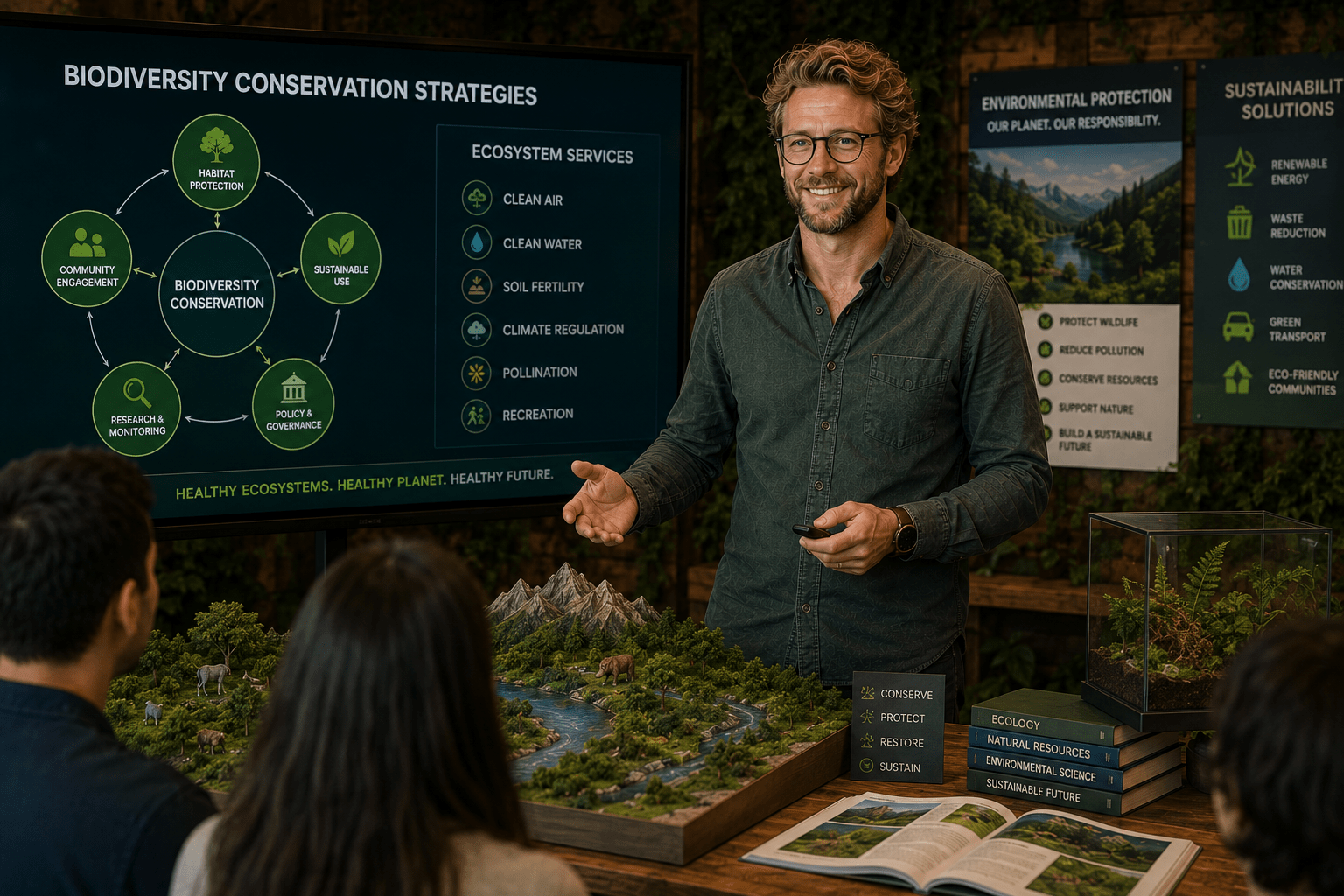
Every person can contribute to environmental protection.
Reduce Waste
Use reusable products whenever possible.
Save Energy
Turn off unnecessary lights and appliances.
Conserve Water
Avoid wasting water in daily activities.
Support Sustainable Products
Choose environmentally responsible products and services.
Participate in Conservation Activities
Support local environmental initiatives and conservation projects.
Small actions performed consistently can create meaningful environmental benefits.
The United Nations Sustainable Development Goals emphasize environmental sustainability as a global priority.
Frequently Asked Questions
What is the environment in simple terms?
The environment includes everything around us that supports life, including air, water, land, plants, animals, and ecosystems.
Why is the environment important?
The environment provides essential resources such as clean air, water, food, and climate regulation.
What are the four main components of the environment?
Atmosphere, hydrosphere, lithosphere, and biosphere.
What is environmental science?
Environmental science studies the relationship between humans and the natural world.
Environmental Disclaimer
This article is for educational purposes only. Environmental policies, scientific findings, and environmental conditions may change over time. Readers should consult official environmental organizations and scientific resources for the latest information.
Conclusion
The environment is the foundation of life on Earth.
It provides the resources, ecosystems, and natural systems that support human well being and biodiversity.
By understanding the environment and the challenges it faces, individuals can make more informed decisions that contribute to a healthier and more sustainable future.