
Introduction
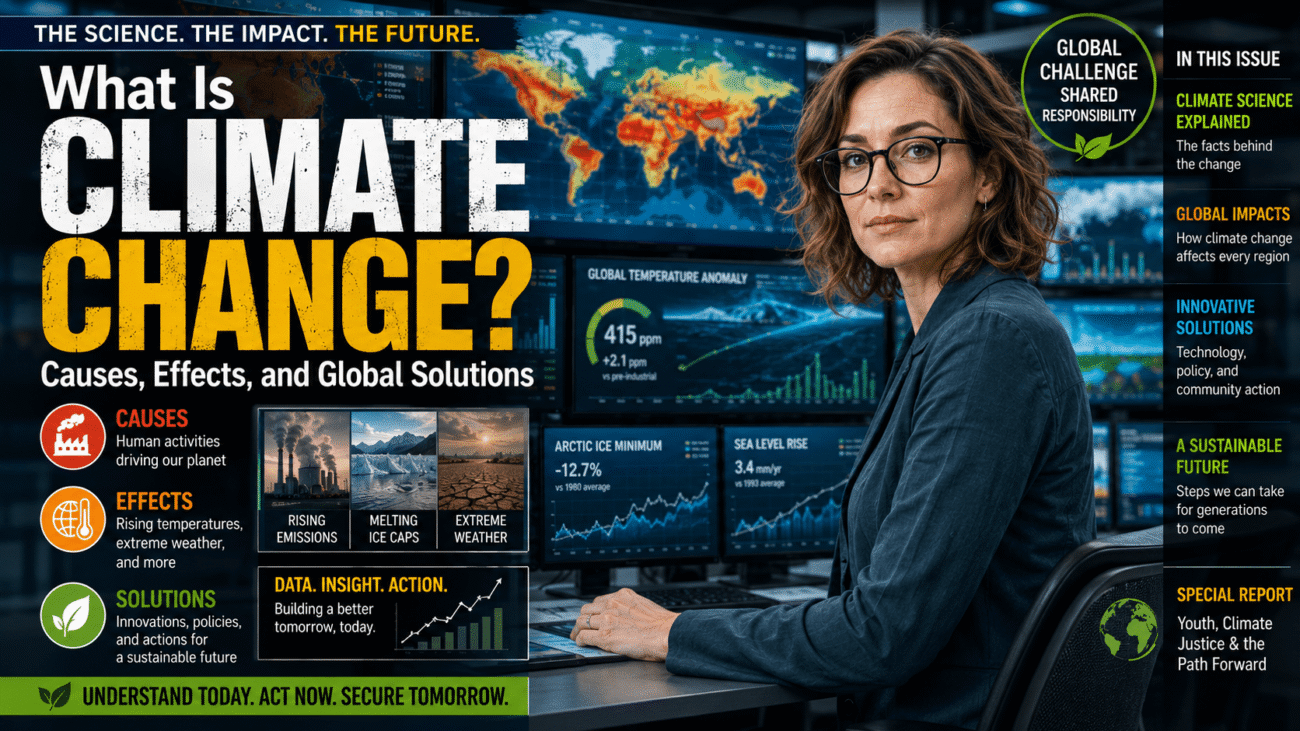
Climate change is one of the most important environmental issues facing the world today.
Rising global temperatures, changing weather patterns, melting glaciers, and increasing extreme weather events are affecting ecosystems, economies, and communities across the planet.
While Earth’s climate has changed naturally throughout history, current climate change is occurring at a much faster rate and is strongly linked to human activities.
Understanding climate change is essential for developing solutions that support environmental sustainability and future generations.
For a complete overview of environmental topics, readers should begin with our Environment: The Complete Guide to Environmental Protection, Sustainability, and Climate Change.
What Is Climate Change?
Climate change refers to long term changes in average global temperatures and weather patterns.
These changes can affect:
• Temperature
• Rainfall
• Storm frequency
• Sea levels
• Ecosystem behavior
• Seasonal patterns
Although natural climate variations have occurred throughout Earth’s history, scientists have found strong evidence that modern climate change is largely driven by human activities.
According to the Intergovernmental Panel on Climate Change (IPCC), human influence has warmed the atmosphere, oceans, and land on a global scale.

Climate Change vs Global Warming
The terms climate change and global warming are often used interchangeably, but they are not exactly the same.
Global Warming
Global warming refers specifically to the increase in Earth’s average surface temperature.
Climate Change
Climate change includes global warming as well as broader changes in weather patterns, ecosystems, and climate systems.
In simple terms:
Global warming is part of climate change.
What Causes Climate Change?
Climate change can result from both natural and human causes.
However, modern climate change is primarily associated with human activities.
Burning Fossil Fuels
The largest contributor to climate change is the burning of fossil fuels such as:
• Coal
• Oil
• Natural gas
These activities release greenhouse gases into the atmosphere.
Deforestation
Forests absorb carbon dioxide from the atmosphere.
When forests are removed, less carbon dioxide is absorbed and more remains in the atmosphere.
Agriculture
Agricultural activities can release greenhouse gases such as methane and nitrous oxide.
Examples include:
• Livestock farming
• Fertilizer use
• Land clearing
Industrial Activities
Manufacturing processes often produce emissions that contribute to climate change.
What Are Greenhouse Gases?
Greenhouse gases trap heat in Earth’s atmosphere.
This process is known as the greenhouse effect.
Major greenhouse gases include:
• Carbon dioxide (CO₂)
• Methane (CH₄)
• Nitrous oxide (N₂O)
• Fluorinated gases
Without the natural greenhouse effect, Earth would be too cold to support life.
However, excessive greenhouse gas emissions can intensify warming.
The United Nations Climate Change Program provides extensive information on greenhouse gases and climate action.
Effects of Climate Change
Climate change affects natural systems and human societies in many ways.
Rising Temperatures
Global average temperatures have increased significantly over recent decades.
This affects ecosystems, agriculture, and public health.
More Extreme Weather Events
Climate change is associated with increased risks of:
• Heatwaves
• Droughts
• Floods
• Storms
• Wildfires
Melting Ice and Rising Sea Levels
Glaciers and polar ice sheets are losing mass in many regions.
Rising sea levels can threaten coastal communities and ecosystems.
Biodiversity Loss
Many species face challenges adapting to changing environmental conditions.
Climate change can alter habitats and migration patterns.
Food and Water Security Risks
Changes in temperature and rainfall patterns can affect agriculture and water availability.
How Climate Change Affects Daily Life
Many people assume climate change only affects distant locations.
In reality, it can influence daily life through:
• Energy costs
• Food prices
• Water resources
• Health risks
• Insurance costs
• Infrastructure challenges
Climate change impacts can vary depending on location and local environmental conditions.
Global Solutions to Climate Change
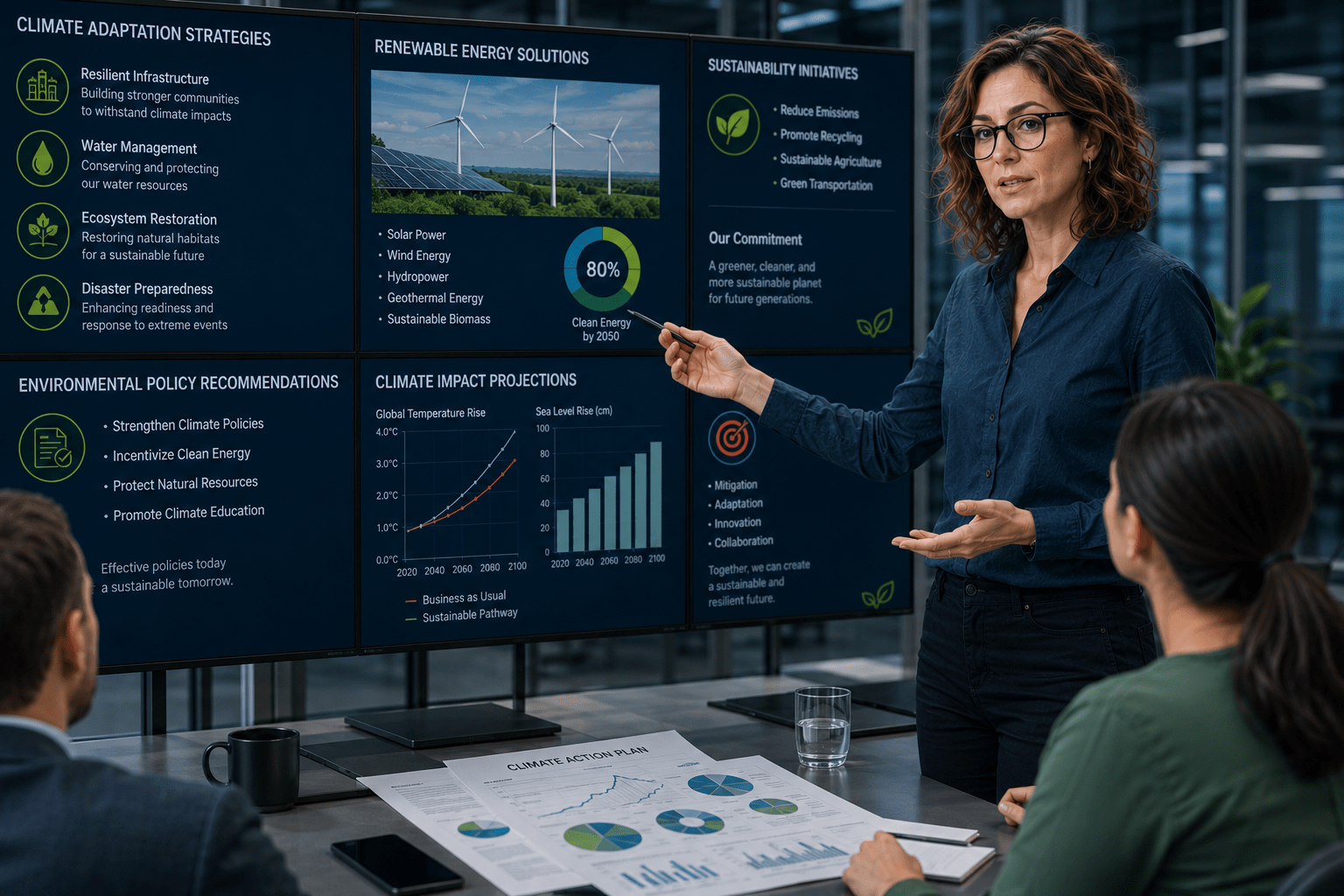
Addressing climate change requires action at multiple levels.
Renewable Energy
Replacing fossil fuels with renewable energy can reduce emissions.
Examples include:
• Solar power
• Wind power
• Hydroelectric energy
Readers will be able to learn more in our future Renewable Energy Explained guide.
Energy Efficiency
Improving efficiency reduces energy consumption and emissions.
Reforestation
Planting and protecting forests helps absorb carbon dioxide.
Sustainable Transportation
Public transportation, electric vehicles, and cycling can reduce emissions.
International Cooperation
Global environmental challenges require cooperation among countries, businesses, and communities.
The United Nations Sustainable Development Goals emphasize climate action as a key global priority.
Why Climate Action Matters
Climate action helps:
Protect Ecosystems
Healthy ecosystems support biodiversity and environmental stability.
Improve Public Health
Reducing pollution often improves health outcomes.
Strengthen Economic Resilience
Sustainable development supports long term prosperity.
Support Future Generations
Climate action helps preserve environmental quality for the future.
Frequently Asked Questions
What is climate change?
Climate change refers to long term changes in global temperatures and weather patterns.
What causes climate change?
Modern climate change is primarily caused by greenhouse gas emissions from human activities.
Is climate change the same as global warming?
No. Global warming refers specifically to rising temperatures, while climate change includes broader environmental changes.
Can climate change be slowed?
Yes. Emission reductions, renewable energy, conservation, and sustainable practices can help reduce climate risks.
Environmental Disclaimer
This article is for educational purposes only. Climate science continues to evolve as new research becomes available. Readers should consult official scientific organizations and environmental agencies for the latest information.
Conclusion
Climate change is one of the defining environmental challenges of our time.
Understanding its causes, effects, and potential solutions is essential for creating a sustainable future.
By supporting renewable energy, environmental protection, sustainable development, and climate action, societies can help reduce risks and build a more resilient world.