
Introduction
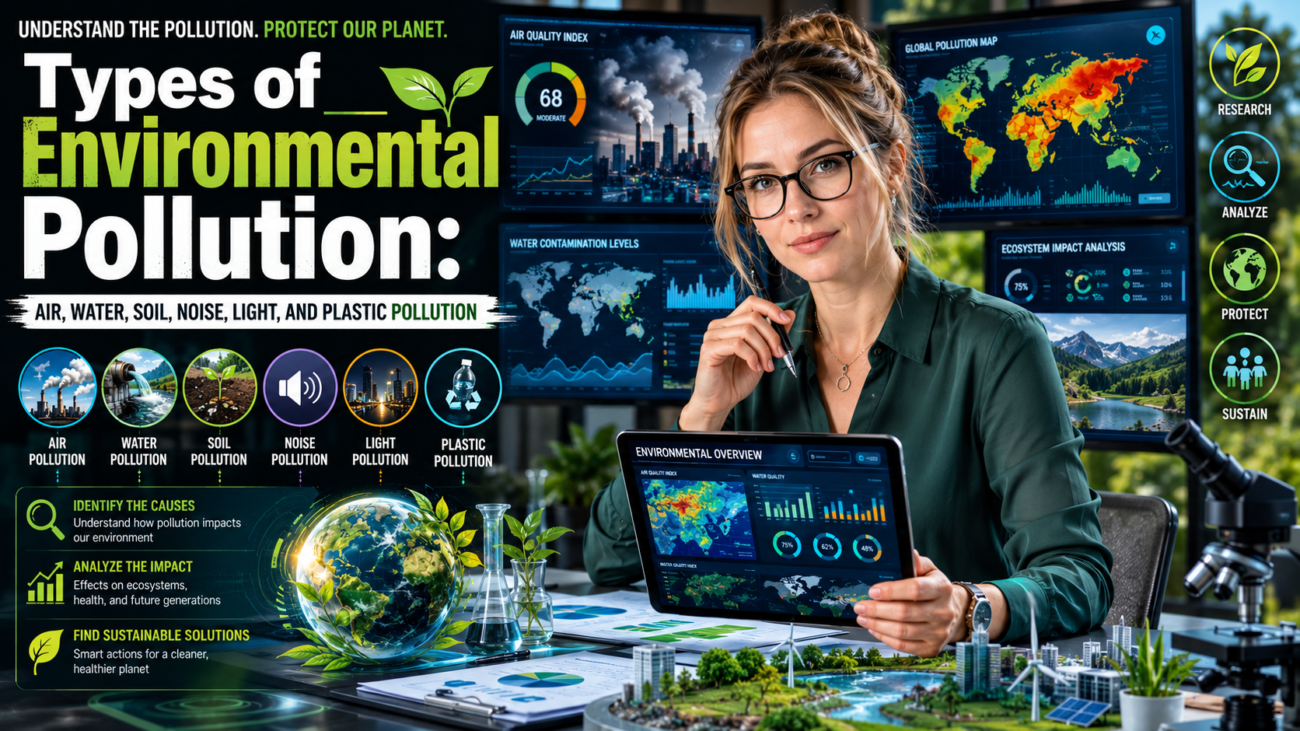
Environmental pollution affects ecosystems, wildlife, natural resources, and human health across the world.
Pollution occurs when harmful substances or forms of energy enter the environment and create negative impacts.
Understanding the different types of pollution is essential for identifying environmental risks and developing effective solutions.
Each type of pollution affects the environment in unique ways, but together they contribute to environmental degradation and sustainability challenges.
For a broader overview, readers should first explore our Environmental Pollution Explained: Causes, Types, Effects, and Solutions guide.
What Is Environmental Pollution?
Environmental pollution occurs when contaminants enter the environment and negatively affect ecosystems, wildlife, and human health.
Pollutants may be:
• Chemical substances
• Physical materials
• Biological contaminants
• Excess energy
According to the United Nations Environment Programme, pollution remains one of the most significant environmental threats facing the world today.

1. Air Pollution
Air pollution occurs when harmful gases, particles, or chemicals contaminate the atmosphere.
Common Causes
• Vehicle emissions
• Industrial activities
• Power plants
• Burning fossil fuels
• Wildfires
Common Air Pollutants
• Carbon monoxide
• Sulfur dioxide
• Nitrogen oxides
• Particulate matter
• Ground level ozone
Effects of Air Pollution
• Respiratory diseases
• Cardiovascular problems
• Reduced air quality
• Climate impacts
• Damage to ecosystems
The World Health Organization Air Quality Resources highlight air pollution as one of the leading environmental health risks globally.
Readers will be able to learn more in our upcoming article on Air Pollution Explained.
2. Water Pollution
Water pollution occurs when harmful substances contaminate water resources.
Common Causes
• Industrial waste
• Agricultural runoff
• Sewage discharge
• Oil spills
• Plastic waste
Effects of Water Pollution
• Unsafe drinking water
• Harm to aquatic ecosystems
• Fish population decline
• Public health concerns
• Biodiversity loss
Water pollution affects rivers, lakes, oceans, and groundwater systems.
Readers can explore this topic further in our future Water Pollution Explained guide.
3. Soil Pollution
Soil pollution occurs when land becomes contaminated by harmful substances.
Common Causes
• Industrial waste
• Chemical fertilizers
• Pesticides
• Mining activities
• Improper waste disposal
Effects of Soil Pollution
• Reduced agricultural productivity
• Food contamination
• Ecosystem degradation
• Loss of soil fertility
Healthy soil is essential for food production and environmental sustainability.
4. Noise Pollution
Noise pollution refers to excessive or harmful sound levels in the environment.
Common Sources
• Traffic
• Aircraft
• Construction activities
• Industrial operations
• Urban development
Effects of Noise Pollution
• Stress
• Sleep disturbances
• Hearing damage
• Reduced quality of life
• Negative impacts on wildlife
Noise pollution is often overlooked but can significantly affect health and well being.
5. Light Pollution
Light pollution occurs when excessive artificial lighting disrupts natural darkness.
Common Causes
• Street lighting
• Commercial buildings
• Advertising displays
• Residential lighting
Effects of Light Pollution
• Disrupted ecosystems
• Impacts on wildlife behavior
• Sleep disturbances
• Reduced visibility of the night sky
Proper lighting design can help reduce light pollution while maintaining safety.
6. Plastic Pollution
Plastic pollution is one of the fastest growing environmental challenges.
Millions of tons of plastic waste enter natural environments each year.
Common Sources
• Single use plastics
• Packaging waste
• Fishing equipment
• Improper waste disposal
Effects of Plastic Pollution
• Harm to marine life
• Ecosystem damage
• Food chain contamination
• Long term environmental impacts
The United Nations Sustainable Development Goals emphasize the importance of reducing pollution and improving environmental sustainability.
Which Type of Pollution Is Most Harmful?
There is no single answer because different forms of pollution affect the environment in different ways.
For example:
• Air pollution directly impacts human health.
• Water pollution threatens drinking water supplies.
• Soil pollution affects food production.
• Plastic pollution harms wildlife and ecosystems.
• Noise and light pollution influence both humans and animals.
Addressing all forms of pollution is necessary for long term environmental protection.
How Pollution Can Be Reduced
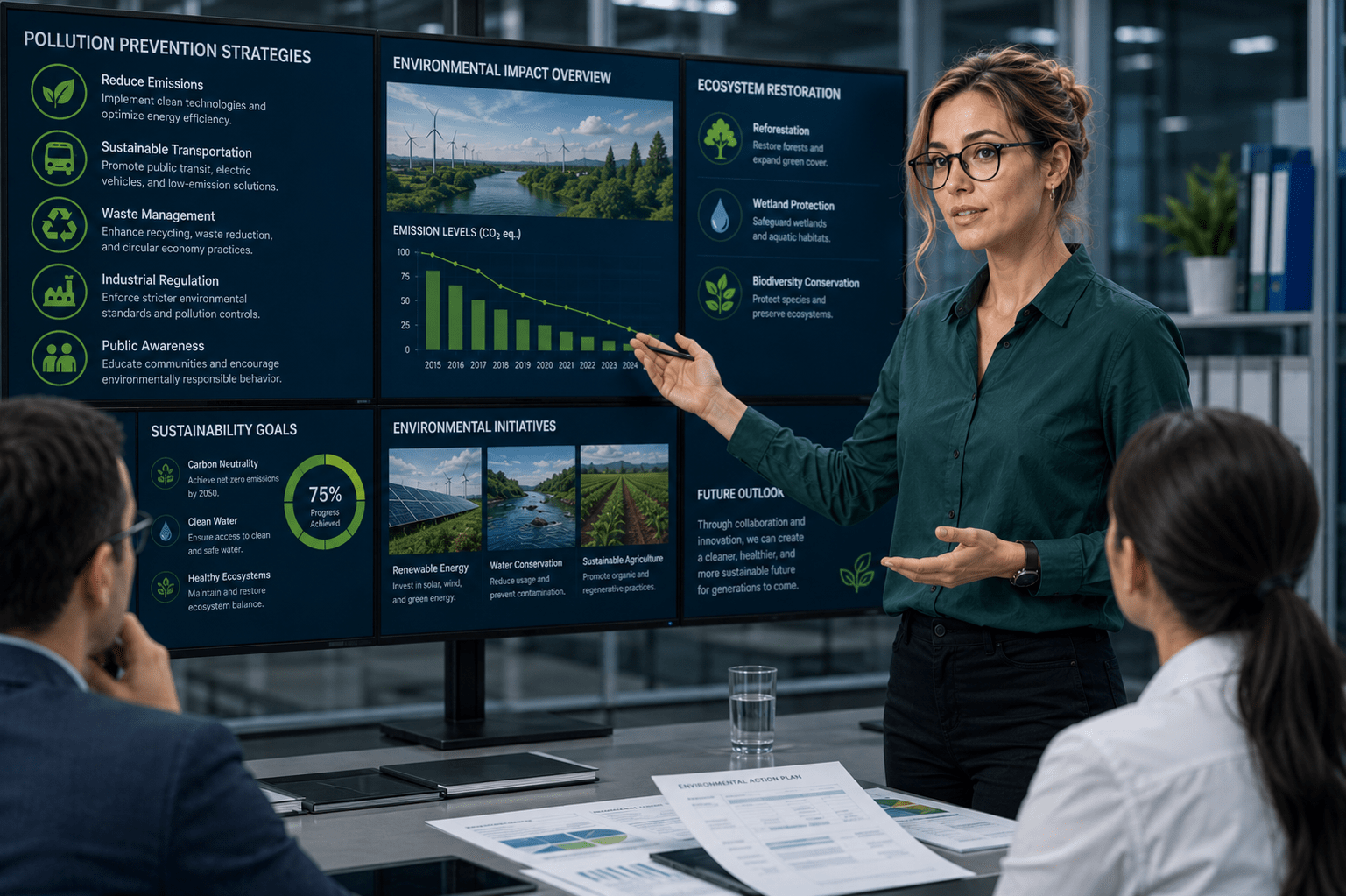
Strengthen Environmental Regulations
Governments can implement stricter environmental standards.
Improve Waste Management
Proper disposal and recycling reduce contamination.
Promote Renewable Energy
Cleaner energy sources reduce air pollution.
Increase Environmental Awareness
Education encourages responsible behavior.
Support Sustainable Practices
Businesses and individuals can reduce environmental impacts through sustainable choices.
Frequently Asked Questions
What are the main types of environmental pollution?
Air pollution, water pollution, soil pollution, noise pollution, light pollution, and plastic pollution.
Which type of pollution is most dangerous?
All forms of pollution can be harmful depending on the situation and level of exposure.
How does pollution affect human health?
Pollution can contribute to respiratory illnesses, cardiovascular diseases, sleep disturbances, and other health problems.
Can pollution be prevented?
Pollution can be significantly reduced through regulations, technology, education, and sustainable practices.
Environmental Disclaimer
This article is for educational purposes only. Environmental conditions, regulations, and scientific understanding may evolve over time. Readers should consult official environmental organizations and scientific resources for the latest information.
Conclusion
Environmental pollution takes many forms, each affecting ecosystems, wildlife, and human health in different ways.
Understanding the major types of pollution is an important step toward creating effective environmental solutions and building a more sustainable future.
Reducing pollution requires cooperation among governments, businesses, communities, and individuals worldwide.