
Introduction
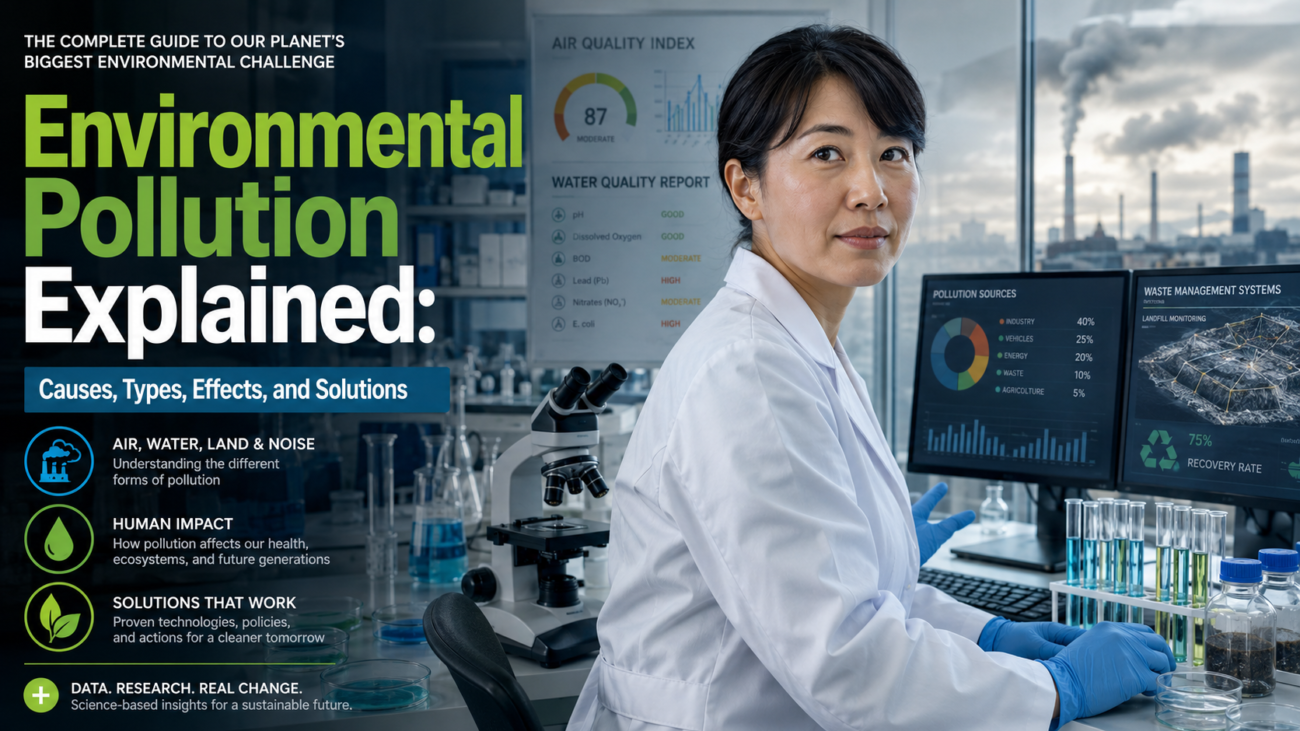
Environmental pollution is one of the most serious challenges facing the world today.
Human activities have introduced large amounts of harmful substances into the air, water, and land, affecting ecosystems, wildlife, and human health.
Pollution is linked to climate change, biodiversity loss, environmental degradation, and many public health concerns.
Understanding pollution and its impacts is essential for developing effective solutions and creating a cleaner, healthier future.
For a broader understanding of environmental issues, readers should begin with our Environment: The Complete Guide to Environmental Protection, Sustainability, and Climate Change.
What Is Environmental Pollution?
Environmental pollution occurs when harmful substances or contaminants enter the environment and cause negative effects.
These pollutants can affect:
• Air
• Water
• Soil
• Ecosystems
• Wildlife
• Human health
Pollution can originate from natural events, but most modern pollution is caused by human activities.
According to the United Nations Environment Programme, pollution is one of the major threats to environmental sustainability and human well being.
Major Causes of Environmental Pollution
Many different activities contribute to pollution.
Industrial Activities
Factories and manufacturing facilities can release pollutants into the environment.
Transportation
Cars, trucks, ships, and aircraft produce emissions that affect air quality.
Waste Disposal
Improper disposal of waste can contaminate land and water.
Agricultural Activities
Fertilizers, pesticides, and livestock operations can create environmental pollution.
Urbanization
Rapid urban growth often increases waste generation and resource consumption.

Types of Environmental Pollution
Environmental pollution can be divided into several categories.
Readers interested in a deeper breakdown will be able to explore our future article on Types of Environmental Pollution.
Air Pollution
Air pollution occurs when harmful gases, chemicals, and particles enter the atmosphere.
Common sources include:
• Vehicle emissions
• Industrial processes
• Power plants
• Burning fossil fuels
Effects of Air Pollution
• Respiratory diseases
• Reduced air quality
• Climate impacts
• Environmental damage
The World Health Organization Air Pollution Resources highlight the significant health risks associated with poor air quality.
Water Pollution
Water pollution occurs when contaminants enter rivers, lakes, oceans, and groundwater.
Common sources include:
• Industrial waste
• Sewage
• Agricultural runoff
• Plastic waste
Effects of Water Pollution
• Unsafe drinking water
• Harm to aquatic life
• Ecosystem disruption
• Public health risks
Soil Pollution
Soil pollution occurs when harmful substances contaminate land.
Sources include:
• Industrial waste
• Agricultural chemicals
• Mining activities
• Improper waste disposal
Effects of Soil Pollution
• Reduced agricultural productivity
• Ecosystem damage
• Food contamination
Plastic Pollution
Plastic pollution has become a major environmental concern.
Millions of tons of plastic enter the environment every year.
Plastic waste affects:
• Oceans
• Rivers
• Wildlife
• Food chains
• Human health

Effects of Environmental Pollution
Pollution affects both natural ecosystems and human societies.
Human Health Impacts
Pollution can contribute to:
• Respiratory illnesses
• Cardiovascular diseases
• Waterborne diseases
• Cancer risks
• Neurological disorders
Environmental Impacts
Environmental pollution can:
• Damage ecosystems
• Reduce biodiversity
• Harm wildlife
• Disrupt food chains
• Contribute to climate change
Economic Impacts
Pollution also creates financial costs.
Examples include:
• Healthcare expenses
• Environmental cleanup costs
• Reduced agricultural productivity
• Loss of tourism revenue
Pollution and Climate Change
Pollution and climate change are closely connected.
Many pollutants contribute directly to global warming through greenhouse gas emissions.
Examples include:
• Carbon dioxide
• Methane
• Nitrous oxide
Readers can learn more in our future article on What Is Climate Change?
Solutions to Environmental Pollution
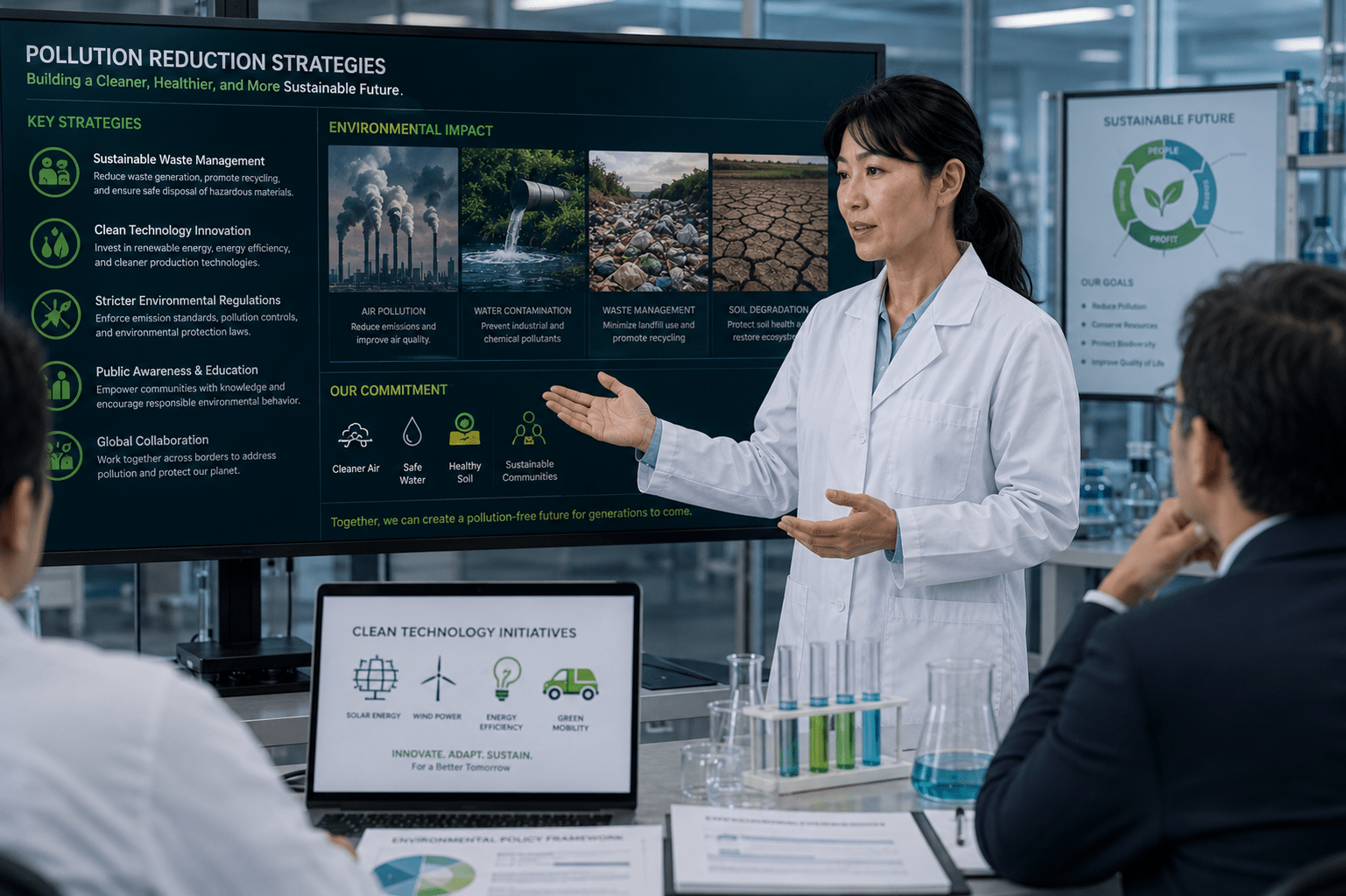
Reducing pollution requires action at multiple levels.
Government Action
Governments can:
• Strengthen environmental regulations
• Improve waste management systems
• Promote renewable energy
• Support conservation programs
Business Responsibility
Organizations can:
• Reduce emissions
• Improve resource efficiency
• Adopt sustainable practices
• Invest in clean technologies
Individual Action
Individuals can help by:
• Recycling
• Reducing waste
• Conserving energy
• Using sustainable transportation
• Supporting environmentally responsible products
The United Nations Sustainable Development Goals encourage global efforts to reduce pollution and improve sustainability.
Why Pollution Reduction Matters
Reducing pollution helps:
Improve Public Health
Cleaner environments support healthier communities.
Protect Biodiversity
Wildlife and ecosystems benefit from reduced contamination.
Support Sustainable Development
Lower pollution levels contribute to long term sustainability.
Improve Quality of Life
Cleaner air, water, and land improve overall well being.
Frequently Asked Questions
What is environmental pollution?
Environmental pollution occurs when harmful substances contaminate the environment and negatively affect living organisms and ecosystems.
What are the main types of pollution?
Air pollution, water pollution, soil pollution, and plastic pollution.
How does pollution affect human health?
Pollution can contribute to respiratory illnesses, cardiovascular diseases, and other health problems.
Can pollution be reduced?
Yes. Governments, businesses, and individuals can all take actions to reduce pollution.
Environmental Disclaimer
This article is for educational purposes only. Environmental conditions, regulations, and scientific understanding may change over time. Readers should consult official environmental organizations and scientific resources for the most current information.
Conclusion
Environmental pollution is one of the most significant challenges facing modern society.
Understanding its causes, effects, and solutions is essential for protecting human health, preserving ecosystems, and supporting a sustainable future.
Through responsible actions and long term commitment, pollution can be reduced and environmental quality can be improved for future generations.